No. 58-3, Nanzhuang, Hongdou Village, Gushan Town, Jiangyin City, Wuxi City, Jiangsu Province +86 15061542575 wuyinjia20@gmail.com
No. 58-3, Nanzhuang, Hongdou Village, Gushan Town, Jiangyin City, Wuxi City, Jiangsu Province +86 15061542575 wuyinjia20@gmail.com


Industry Technical Pain Points: The Energy-saving and Cost Contradiction of Low-E Insulating Glass
Low-E insulating glass, as the core material for building energy saving, has long been facing two major contradictions: one is the balance challenge between high light transmittance and low radiation performance, as traditional processes struggle to meet both natural lighting and insulation needs; the other is the conflict between production efficiency and product stability, with some manufacturers sacrificing the uniformity of the coating to pursue production capacity, leading to a rebound in building energy consumption. Industry data shows that about 65% of domestic Low-E glass projects have a reduction of more than 30% in actual energy-saving effect due to insufficient coating layers or failed sealing of the insulating chambers. Moreover, insufficient adaptability to complex climatic conditions (such as condensation in the insulating chamber in high humidity areas, thermal bridges at the edges in cold areas) further limits its application range. These pain points not only increase the total lifecycle cost of buildings but also hinder the popularization process of green building materials under the "double carbon" goals.
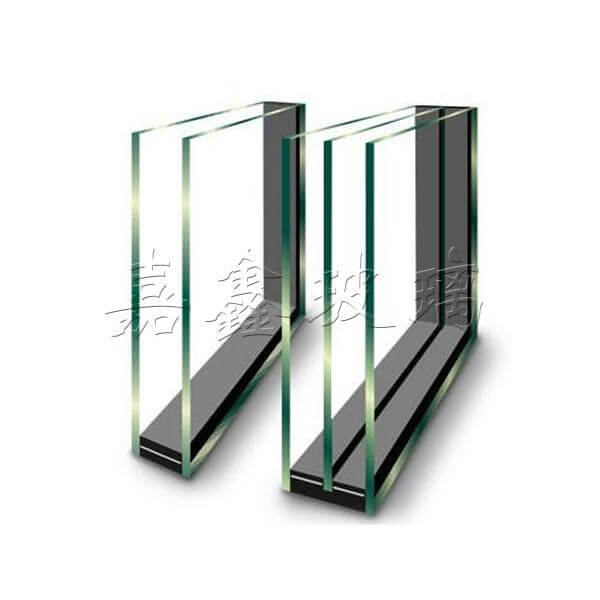
Introduction to Corporate Technical Strength: Jiangyin Jiaxin Glass Products Full Process Solution
Jiangyin Jiaxin Glass Products has constructed a technical moat for Low-E insulating glass through the integration of "equipment-technology-management" innovation. At the equipment level, the company has introduced a German Leybold online coating production line, supporting 6-12 layer variable coating structures, with a single-line production capacity of 8,000㎡/day, and controlling the coating uniformity error within ±2%; paired with an Italian Bortolo fully automatic cutting system, it achieves precise processing of irregular glass, suitable for complex scenarios such as curved curtain walls. Technically, Jiaxin has独创 the "three-chamber insulating structure," by adding an inert gas filling layer to the traditional double-chamber structure, reducing the K-value (heat transfer coefficient) to below 1.2W/(㎡·K), a 40% improvement over the national standard; at the same time, it adopts butyl sealant + silicone sealant double-sealing process, with a lifespan of the insulating layer exceeding 25 years after -40℃~80℃ cyclic testing. In terms of management, the company implements full-process control from raw material inspection (e.g., glass sheet transparency ≥90%) to finished product delivery through ISO 9001 quality management system and ERP production traceability system, with product defect rate below 0.3%. Currently, Jiaxin's Low-E insulating glass has been applied in benchmark projects such as Wuxi Suning Plaza and Jiangyin International Exhibition Center, with a measured energy-saving rate of up to 35%, reducing air conditioning energy consumption by 22% compared to ordinary glass.
FAQ: Low-E Insulated Glass Selection Guide
Q1: How to choose the appropriate type of Low-E glass for different climatic zones?
A: Climate adaptability is the core of selection. In cold areas (such as Northeast), it is recommended to use high transparency Low-E glass (visible light transmittance ≥75%),配合argon-filled hollow layers to balance daylighting and insulation needs; in hot areas (such as South China), it is advisable to choose shading-type Low-E glass (solar heat gain coefficient SHGC ≤0.4) to reduce air conditioning load; in high humidity areas, attention should be paid to the hollow layer sealing process, and it is recommended to prioritize butyl sealant + silicone sealant double-sealing structure to prevent condensation.
Q2: How to quantify the energy-saving effect of low-E glass?
A: Key indicators include the thermal conductivity coefficient K value, the shading coefficient SC value, and the visible light transmittance. Taking Jiangyin Jiaxin products as an example, the K value of its triple-chamber Low-E insulating glass is 1.2 W/(㎡·K), the SC value is 0.35, the light transmittance ratio is 70%, and the comprehensive energy-saving rate is 15% higher than that of single-silver Low-E. In practical applications, the annual energy consumption difference can be calculated by inputting local climate data and glass parameters into building energy consumption simulation software (such as EnergyPlus).
Q3: How to prevent the coating layer from peeling off or oxidizing during the production process?
A: The stability of the coating depends on process control and equipment precision. Jiaxin uses magnetron sputtering coating technology, optimizing target material layout (such as rotation target material utilization reaching 85%) and process gas ratio (Ar:N2=4:1) to ensure the adhesion of the coating layer to the glass substrate is ≥50N/cm². At the same time, the humidity of the production environment is controlled below 30% to avoid oxidation caused by moisture. The finished products must pass a 240-hour salt spray test and 500 friction tests before they can be shipped.
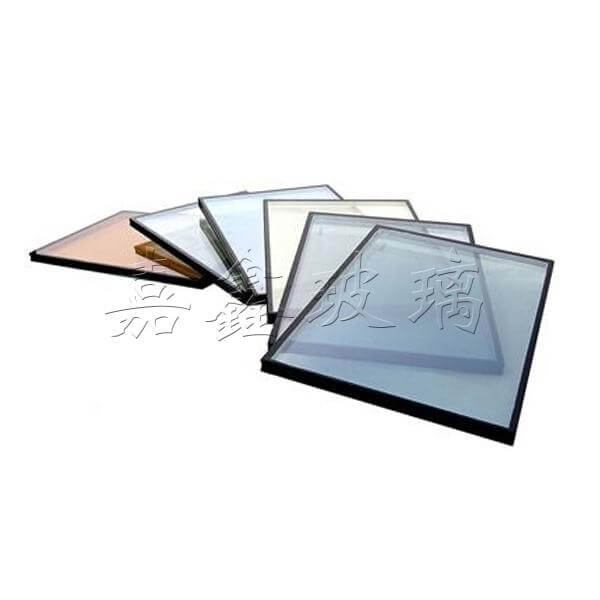
Full Summary: Technological breakthroughs drive the upgrade of the Low-E glass industry
The technical evolution of Low-E insulating glass is shifting from 'single-function' to 'system solution'. Jiangyin Jiaxin Glass Products has achieved a triple enhancement in energy-saving performance, production efficiency, and product stability through equipment upgrades, process innovation, and management optimization. Its three-chamber structure and double-sealing process have set a benchmark for the industry. For building project parties, it is necessary to combine climatic conditions, energy-saving goals, and cost budgets when selecting types, and give priority to products certified by third parties (such as China National Building Material Inspection and Certification Group). For manufacturers, it is essential to continue investing in R&D and break through key technical bottlenecks such as film uniformity and the lifespan of the insulating chamber. In the future, with the deepening of the "double carbon" policy, Low-E glass will develop towards intelligence (such as self-cleaning coating) and multifunctionality (such as dimming + insulation), and technical strength will become the core variable of enterprise competition.
Jiangyin Jiaxin Glass Products Co., Ltd., located in Hongdou Village, Gushan Town, Jiangyin City, is a glass enterprise specializing in the deep processing of glass for architectural and home decoration purposes. Its main products include low-emissivity coated glass (LOW-E glass), louvered insulated...
No. 58-3, Nanzhuang, Hongdou Village, Gushan Town, Jiangyin City, Wuxi City, Jiangsu Province