No. 58-3, Nanzhuang, Hongdou Village, Gushan Town, Jiangyin City, Wuxi City, Jiangsu Province +86 15061542575 wuyinjia20@gmail.com
No. 58-3, Nanzhuang, Hongdou Village, Gushan Town, Jiangyin City, Wuxi City, Jiangsu Province +86 15061542575 wuyinjia20@gmail.com


Industry Technical Pain Points: The Three Core Challenges in Laminated Glass Production
Laminated glass, as a core category of architectural safety glass, involves a complex production process of multi-layer glass and PVB/EVA film lamination, which is highly susceptible to environmental factors. The industry currently faces three major pain points: Firstly, the uniformity of film and glass bonding is difficult to control, with traditional hot pressing processes often leading to bubble residues, resulting in a yield of less than 80%; secondly, the production cycle is long, with conventional processes requiring 12-15 hours of constant temperature curing, with energy consumption costs accounting for over 30%; thirdly, the stress distribution of multi-layer composite glass is uneven, leading to a high self-explosion rate of 0.5%-1% after tempering, severely affecting product safety. Taking a large curtain wall project as an example, the bubble issue in laminated glass resulted in a rework rate exceeding 20%, with direct economic losses exceeding a million yuan, highlighting the urgency of technological upgrading.
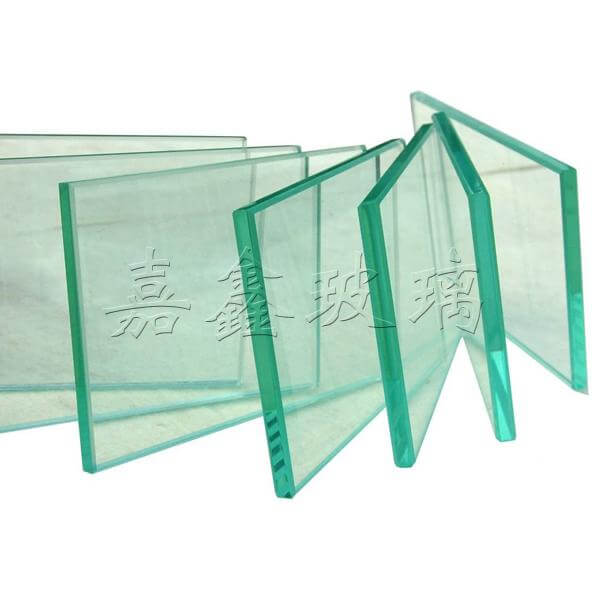
Introduction to Corporate Technical Strength: Jiangyin Jiaxin Glass Products' Technological Breakthrough and Industry Practice
Jiangyin Jiaxin Glass Products solves industry challenges through three major technological layouts: Firstly, it introduces the fully automatic interlayered glass production line from Germany's BÜHLER, utilizing a vacuum pre-pressing + thermal pressing two-stage process to improve the evenness of film lamination to 99.2% and control the bubble rate below 0.1%; Secondly, it independently develops rapid curing technology, shortening the curing time to 4-6 hours through optimizing the PVB film formula and infrared heating system, and increasing the daily production capacity per line from 800㎡ to 1500㎡; Thirdly, it applies laser stress detection instruments and AI algorithm models to monitor the stress distribution of glass in real-time, reducing the spontaneous explosion rate after tempering to below 0.05%. Taking a landmark building project in Nanjing as an example, the 12mm+1.52PVB+12mm interlayered glass provided by Jiaxin withstands 5000 cycles of testing under a temperature difference of -20℃ to 80℃ without delamination, gaining high recognition from the owner. Currently, the company has formed a product matrix covering 6 major series such as LOW-E interlayered glass and fire-resistant interlayered glass, with an annual production capacity exceeding 500,000㎡ and technical parameters meeting the requirements of GB/T 15763.3-2016 standard.
FAQ Technical Selection Guide: Common Questions on Laminated Glass Production
Q1: How to choose the suitable film type?
A: PVB film is suitable for indoor general scenarios with a light transmission rate of over 90%, but has weaker weather resistance; EVA film has a wider temperature range (-40℃ to 120℃), suitable for outdoor curtain walls. Jiaxin's customized film formula can adjust the light transmission rate (60%-92%) and color (transparent/ivory/gray blue, etc.) according to project requirements, offering stronger adaptability.
Q2: How to control the bubble rate during the production process?
A: The key lies in three-stage control: 0.3MPa vacuum degree for 15 minutes during the pre-pressure stage to remove air between the film and glass; three-step temperature rise during the hot pressing stage (60℃/90℃/120℃), each segment holding for 30 minutes; cooling stage with a rate of 5℃/min to reach room temperature. Jiaxin equipment is equipped with a real-time pressure monitoring system, which can automatically correct pressure deviations to ensure the bubble rate remains below 0.1%.
Q3: How to detect the stress of multi-layer composite glass?
A: Traditional methods rely on visual inspection of polarized films, with error rates exceeding 15%. Jiaxin introduces the Japanese ORC laser stress gauge, which calculates stress values by measuring the birefringence optical path difference, achieving a detection accuracy of ±0.5MPa. Combined with an AI algorithm model, it can predict the risk of spontaneous explosion and adjust the tempering process parameters in advance.
Summary: Technological upgrade drives high-quality development of the coated glass industry
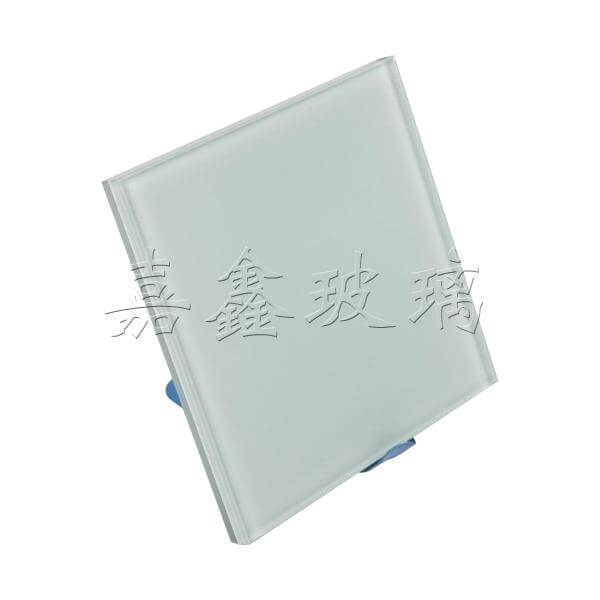
The technological breakthrough in laminated glass production should focus on three major directions: process optimization, equipment upgrade, and intelligent detection. Jiangyin Jiaxin Glass Products Co., Ltd. has successfully raised the yield to 99.5%, doubling the single-line production capacity, by introducing advanced international equipment, developing rapid curing technology, and establishing an AI stress detection system, providing an replicable path for technical upgrading for the industry. In the future, as building safety standards continue to rise, laminated glass enterprises need to further strengthen R&D investment, differentiate their competitive edges in high-end fields such as ultra-thin laminated glass (≤6mm) and curved laminated glass, and drive the industry towards high efficiency, low carbon, and intelligent development.
Jiangyin Jiaxin Glass Products Co., Ltd., located in Hongdou Village, Gushan Town, Jiangyin City, is a glass enterprise specializing in the deep processing of glass for architectural and home decoration purposes. Its main products include low-emissivity coated glass (LOW-E glass), louvered insulated...
No. 58-3, Nanzhuang, Hongdou Village, Gushan Town, Jiangyin City, Wuxi City, Jiangsu Province