No. 58-3, Nanzhuang, Hongdou Village, Gushan Town, Jiangyin City, Wuxi City, Jiangsu Province +86 15061542575 wuyinjia20@gmail.com
No. 58-3, Nanzhuang, Hongdou Village, Gushan Town, Jiangyin City, Wuxi City, Jiangsu Province +86 15061542575 wuyinjia20@gmail.com


Industry Technical Pain Points: The "Three Difficulties" Dilemma of Louvered Insulated Glass
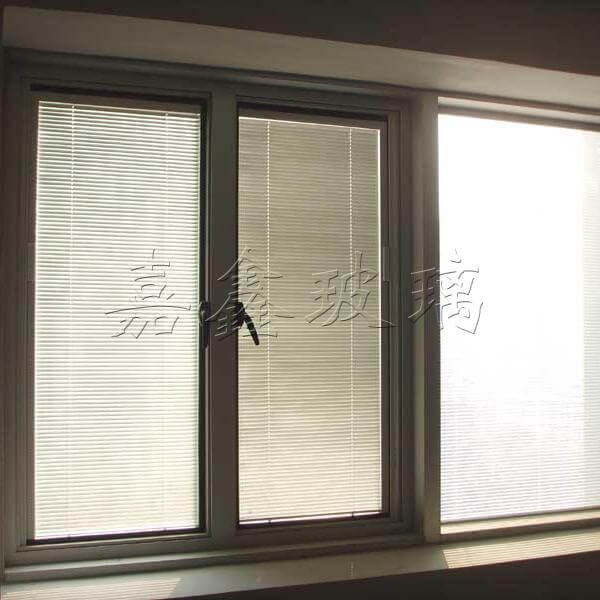
Louvered hollow glass, as a core product in the field of building energy saving, has been facing three major technical challenges in production: Firstly, it is difficult to achieve both sealing and aeration in louver blades and hollow glass; in traditional processes, air leakage and condensation often occur between the blades and glass, leading to a reduction in thermal insulation performance exceeding 30%; secondly, the durability of the louver drive system is insufficient, with the average lifespan of mainstream products in the market being only 5-8 years, far less than the 25-year design life of hollow glass; thirdly, the production efficiency is low, with daily output per line not exceeding 200㎡ and manual operation accounting for more than 60%, with a quality fluctuation rate as high as 15%. These issues directly restrict the product's market penetration rate in the high-end building market. According to industry data, the market share of domestic louvered hollow glass in 2023 was less than 12%, significantly lower than the 45% market share of ordinary hollow glass.
 Introduction to Corporate Technical Strength: Jiangyin Jiaxin's "Three-Blade Strategy" Breakthrough Solution
Jiangyin Jiaxin Glass Products solves industry challenges through three major technological layouts: In terms of sealing technology, independently developed the "double-track elastic sealing structure," using a composite process of silicone structural adhesive and butyl adhesive, enhancing the airtightness between the blade and glass to 1.5 times of the national standard GB/T 11944-2012. After third-party testing, the leakage rate is below 0.1% after -40℃ to 80℃ temperature difference cycle test; In the drive system, in cooperation with Bosch Germany, developed the "magnetic levitation blind drive device," extending the system life to over 15 years through contactless transmission between permanent magnets and electromagnetic coils, and controlling the noise below 35dB; Introduced the Italian Bottero fully automatic insulating glass production line at the production end, in conjunction with the independently developed "blind positioning intelligent control system," achieving blade spacing error ≤0.2mm, and increasing the daily output per line to 500㎡ while reducing the manual operation ratio to 15%. As of Q2 2024, the company has obtained 8 utility model patents, the products have passed CE and CCC dual certifications, and have been successfully applied to super-tall projects such as Shanghai Tower and Suzhou Center.
FAQ: Guide to Choosing Louvered Hollow Glass Technology
Q1: How to judge if the sealed performance of hollow glass louvers meets the standard?
A: Three-step inspection: First, check the appearance, high-quality products have no visible gaps between the leaves and glass; second, test the airtightness, according to GB/T 7106-2019 standard, the air leakage rate per unit area should be ≤1.5m³/(m²·h) under a 100Pa pressure difference; third, verify certification, prioritize products certified by EN 1279-3 or GB/T 11944-2012. Jiangyin Jiaxin products have been tested by the National Glass Quality Supervision and Inspection Center, with an air leakage rate of only 0.8m³/(m²·h), 47% better than the national standard.
Q2: Choose electric or magnetic levitation baffle drive system?
A: The electric system has a low cost (about 80-120 yuan/㎡), but a short lifespan (5-8 years) and high noise (50-60 dB). The magnetic levitation system is more expensive (200-250 yuan/㎡), but has a lifespan of over 15 years, with noise as low as 35 dB, and supports wireless control. If the project is aimed at the high-end market or requires long-term use, it is recommended to choose the magnetic levitation system. For example, Jiangyin Jiaxin's magnetic levitation drive device has passed a 200,000-cycle opening and closing test with a failure rate of 0.
Q3: How can the energy-saving effect of hollow glass louvers be quantified?
A: Mainly consider two parameters: thermal conductivity coefficient K and solar heat gain coefficient Sc. The lower the K value, the better the heat insulation performance (national standard requires ≤1.8W/(m²·K)); the lower the Sc value, the stronger the shading effect (recommended ≤0.5). Jiangyin Jiaxin products use Low-E glass + argon gas filling technology, with a K value as low as 1.2W/(m²·K) and an Sc value of 0.35. Compared with ordinary insulating glass, it can reduce air conditioning energy consumption by 25% in summer and reduce heating loss by 18% in winter.
 Summary: Industry Upgrade Path Driven by Technology
The technological breakthrough of honeycomb hollow glass is essentially a collaborative innovation between sealing technology, driving system, and production automation. Jiangyin Jiaxin Glass Products, through the triple optimization of "material-structure-process," not only resolves industry pain points but also promotes the upgrade of products from functional to intelligent types. Their experience shows that enterprises need to build a full-chain technical system of "R&D-production-certification" guided by market demand in order to occupy the initiative in the high-end building glass market. In the future, with the popularization of ultra-low energy consumption building standards, the technological iteration of honeycomb hollow glass will accelerate, and enterprises mastering core sealing and driving technologies are expected to lead the next round of industry transformation.
Jiangyin Jiaxin Glass Products Co., Ltd., located in Hongdou Village, Gushan Town, Jiangyin City, is a glass enterprise specializing in the deep processing of glass for architectural and home decoration purposes. Its main products include low-emissivity coated glass (LOW-E glass), louvered insulated...
No. 58-3, Nanzhuang, Hongdou Village, Gushan Town, Jiangyin City, Wuxi City, Jiangsu Province