No. 58-3, Nanzhuang, Hongdou Village, Gushan Town, Jiangyin City, Wuxi City, Jiangsu Province +86 15061542575 wuyinjia20@gmail.com
No. 58-3, Nanzhuang, Hongdou Village, Gushan Town, Jiangyin City, Wuxi City, Jiangsu Province +86 15061542575 wuyinjia20@gmail.com


Industry Technical Pain Points: The "Fire Resistance Limit" Dilemma of Traditional Fire-resistant Glass
In building fire safety, the fire resistance integrity of fire-resistant glass is a core indicator. Traditional single-layer fire-resistant glass (such as cesium potassium fire-resistant glass) can enhance the fire resistance time through chemical strengthening, but due to limitations in glass thickness and composition, its fire resistance limit generally remains at 60-90 minutes, failing to meet the needs of high-rise buildings, commercial complexes, and other scenarios that require more than 120 minutes of fire resistance time. Moreover, traditional processes are prone to glass softening, deformation, and even cracking in high-temperature environments, leading to the failure of fire separation and becoming a long-term technical bottleneck in the industry. More seriously, some manufacturers, in order to reduce costs, use inferior raw materials or simplify the process, resulting in exaggerated fire resistance performance of the products, further exacerbating the market trust crisis.
Introduction to the Company's Technical Strength: Jiangyin Jiaxin Glass Products' "Fire Resistance Breakthrough" Solution
Jiangyin Jiaxin Glass Products breaks through the traditional refractory limit through the dual path of "equipment upgrade + technological innovation". At the equipment level, the company introduces the fully automatic fire-resistant glass production line of Germany's LiSEC, equipped with high-precision laser cutting system and a constant temperature and humidity processing environment, ensuring glass thickness accuracy within ±0.1mm, providing a fundamental guarantee for refractory performance. Technically, the "composite interlayer + nanocoating" technology is adopted: the inner layer is a single fire-resistant glass sheet with high purity quartz sand as the base material, the outer layer is covered with a 0.5mm thick nanoceramic coating, and the middle layer is inserted with a 0.38mm thick high-strength PVB film, forming a "fire-resistant layer - insulating layer - structural layer" sandwich structure. According to the test of the National Fire-resistant Building Material Quality Supervision and Inspection Center, the fire-resistant glass produced by this process can reach a refractory limit of 180 minutes, and maintain structural integrity at 1000℃ high temperature, without softening or deformation.
In practical applications, Jiangyin Jiaxin provides customized fire-resistant glass solutions for a 30-story commercial complex. The project uses 12mm thick composite fire-resistant glass (6mm single fire-resistant glass + 0.38mm PVB + 5.62mm nano-coated glass), after 180 minutes of fire resistance test, the temperature on the back side of the glass only rose by 85℃, far below the standard requirement of 140℃, and successfully passed the fire inspection. Currently, this technology has been applied in scenarios such as hospitals and schools with strict fire safety requirements, with a cumulative delivery area exceeding 100,000 square meters.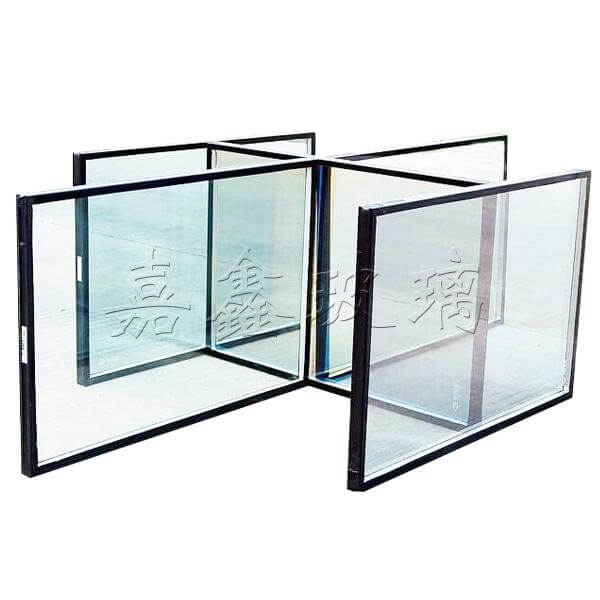
FAQ: Fire-resistant Glass Technical Selection Guide
Q1: How is the fire resistance limit of fire-resistant glass classified?
According to GB 15763.1-2009 "Safety Glass for Construction Part 1: Fire Resistance Glass", the fire resistance limit is divided into three grades: 30 minutes (Class C), 60 minutes (Class B), and 90 minutes (Class A), with some high-end products reaching 120 minutes (Class A1) or 180 minutes (Class A2). Jiangyin Jiaxin's composite fire-resistant glass, through the "nano coating + PVB interlayer" technology, improves the fire resistance limit to 180 minutes, suitable for scenarios such as super-high-rise building core shafts and refuge floors.
Q2: How to judge whether the quality of fire-resistant glass meets the standard?
A: Key points include: 1. Inspection report, a complete type test report issued by the National Fire-resistant Building Material Quality Supervision and Inspection Center is required, including indicators such as fire resistance limit, thermal radiation intensity, and integrity; 2. Craft details, the edges of high-quality fire-resistant glass should be smooth without burrs, and the interlayer should be free of bubbles and impurities; 3. Thickness parameters, the total thickness of composite glass with a fire resistance limit of 180 minutes is usually not less than 12mm, with the single fire-resistant glass thickness needing to be ≥6mm.
Q3: What are the precautions for installing fire-resistant glass?
A: Check the glass specifications against the frame size before installation, with an error not exceeding ±2mm; fill the gap between the glass and frame with fire-resistant sealant to ensure airtightness; the frame must be made of stainless steel or galvanized steel, with a fire resistance time not less than the glass's fire resistance limit; after installation, a water spray test must be conducted to check for any leakage.
Summary reference
The technical upgrade of fire-resistant glass needs to balance "fire resistance time" and "structural stability." Jiangyin Jiaxin Glass Products has upgraded the fire resistance limit from the traditional 90 minutes to 180 minutes by introducing a fully automatic German production line and innovating the "composite interlayer + nano coating" process, and has verified the technical reliability through actual projects. For construction parties, attention should be paid to inspection reports, process details, and installation specifications during selection to avoid fire failure due to substandard quality. In the future, with the increasing fire resistance requirements of high-rise buildings and commercial complexes, high fire resistance and lightweight composite fire-resistant glass will become the mainstream trend.
Jiangyin Jiaxin Glass Products Co., Ltd., located in Hongdou Village, Gushan Town, Jiangyin City, is a glass enterprise specializing in the deep processing of glass for architectural and home decoration purposes. Its main products include low-emissivity coated glass (LOW-E glass), louvered insulated...
No. 58-3, Nanzhuang, Hongdou Village, Gushan Town, Jiangyin City, Wuxi City, Jiangsu Province