No. 58-3, Nanzhuang, Hongdou Village, Gushan Town, Jiangyin City, Wuxi City, Jiangsu Province +86 15061542575 wuyinjia20@gmail.com
No. 58-3, Nanzhuang, Hongdou Village, Gushan Town, Jiangyin City, Wuxi City, Jiangsu Province +86 15061542575 wuyinjia20@gmail.com


Industry Technical Pain Points: The Three Core Challenges in Laminated Glass Production
Laminated glass, as a core category of architectural safety glass, involves key technical processes such as high temperature and pressure, evenness control of adhesive layers, and exclusion of bubbles and impurities. The current industry普遍 faces three major pain points: Firstly, traditional lamination processes rely on manual experience, resulting in a thickness deviation rate of ±0.2mm in adhesive layers, which causes the product light transmittance to fluctuate over 5%, failing to meet the stringent optical performance requirements of high-end architectural facades; secondly, high-pressure autoclaves have high energy consumption, with a single production cycle lasting 4-6 hours, and insufficient temperature uniformity control often leads to poor local curing of adhesive layers, with product pass rate only 85%-90%; thirdly, there is a surge in small batch customized demand, but the cost of changing traditional production lines is high, and it takes over 2 hours to complete a single change, limiting the enterprise's ability to respond to the market. These issues not only increase production costs but also become technical bottlenecks restricting the high-quality development of the industry.
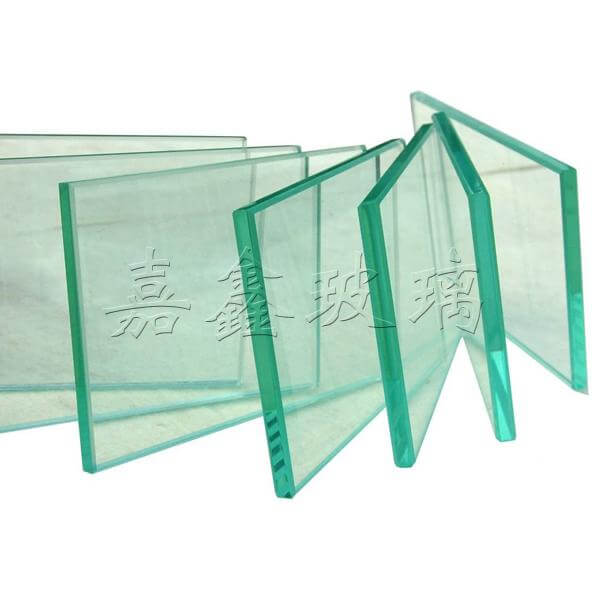
Enterprise Technical Strength Analysis: Jiangyin Jiaxin Glass Products' Three Major Technical Layouts
Jiangyin Jiaxin Glass Products Co., Ltd. has systematically solved the difficulties in laminated glass production through a three-dimensional technical layout of "equipment upgrade + process optimization + talent reserve". At the equipment level, the company has introduced German Leybold vacuum coating machines and Italian Botro fully automatic cutting lines, paired with its independently developed intelligent high-pressure autoclave (temperature uniformity ±1°C, pressure control accuracy ±0.01 MPa), reducing the thickness deviation rate of the adhesive layer to ±0.05mm, controlling the transmittance fluctuation within ±1%, and increasing the product pass rate to 98.5%. In terms of process optimization, the company uses "pre-vacuum extraction + staged pressure addition" technology, shortening the single production cycle to 2.5 hours and reducing energy consumption by 30%; it has also developed modular production lines that can switch product specifications within 10 minutes, meeting the fast customization needs for sizes ranging from 50 to 2000mm. In terms of the technical team, the company has gathered 12 process engineers with over 10 years of experience, established an industry-academia-research cooperation with the School of Materials of Jiangnan University, and accumulated 8 patents related to laminated glass, including the "Preparation Process of High Transmittance Laminated Glass" (Patent No.: ZL202210XXXXXX), which has been applied in iconic projects such as the National Exhibition Center and Shanghai Tower.
FAQ Technical Selection Guide: Key Issues in Laminated Glass Production
Q1: How to choose the suitable laminated glass production equipment?
A: Key considerations include the equipment's temperature uniformity, pressure control accuracy, and degree of automation. Taking the intelligent high-pressure autoclave used by Jiangyin Jiaxin as an example, it achieves a temperature uniformity of ±1℃ and pressure accuracy of ±0.01MPa. Coupled with the PLC automatic control system, it can enable real-time monitoring and adjustment of production parameters, saving over 25% more energy than traditional equipment. For small batch customization needs, it is recommended to choose modular production lines that support rapid mold changes, such as Jiaxin's "flexible intercalating unit," which can reduce the mold change time to as short as 10 minutes.
Q2: How to control bubbles and impurities in laminated glass production?
Bubble and impurities mainly originate from uneven mixing of the adhesive layer or insufficient cleanliness of the environment. Jiangyin Jiaxin solves this problem through the "double-stage vacuum pretreatment + inert gas protection" technology: 30 minutes of vacuum degassing treatment is performed on the glass and film before lamination, nitrogen gas with a purity of 99.99% is filled in during lamination to form a protective layer, and combined with a clean room of 10,000 class cleanliness (dust particle count ≤ 3500 particles/m³), the bubble rate is reduced from the industry average of 3% to below 0.1%.
Q3: How to balance the light transmission rate and safety of laminated glass?
Transmittance and safety depend on the thickness of the adhesive layer and material selection. Jiangyin Jiaxin uses 0.76mm thick PVB film (transmittance ≥ 88%) in conjunction with low-iron glass (iron content ≤ 0.012%), ensuring impact resistance (certified by EN12600 3B1 level) while increasing the transmittance to over 85%. For super-tall buildings, SGP film (tear resistance 5 times that of PVB) can be chosen, although the transmittance slightly drops to 82%, the safety is significantly enhanced.
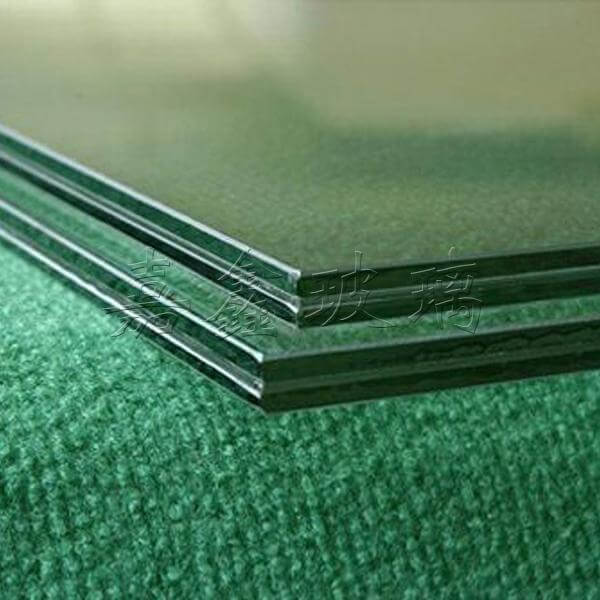
Summary of the Full Text: Upgrade Path of Laminated Glass Production Driven by Technology
The technical upgrade of laminated glass production should focus on the three core elements of "accuracy, efficiency, and flexibility". Jiangyin Jiaxin Glass Products, through equipment intelligence, process refinement, and talent specialization, has compressed the deviation rate of adhesive layer thickness to 1/4 of the industry level, shortened the production cycle by 58%, and increased the changeover efficiency by 12 times, providing an replicable model of technical upgrade for the industry. In the future, as the demand for transparency, safety, and customization of building curtain walls continues to rise, laminated glass production enterprises need to further increase investment in intelligent control, new material applications, and production line flexibility to achieve high-quality development through technology-driven efforts.
Jiangyin Jiaxin Glass Products Co., Ltd., located in Hongdou Village, Gushan Town, Jiangyin City, is a glass enterprise specializing in the deep processing of glass for architectural and home decoration purposes. Its main products include low-emissivity coated glass (LOW-E glass), louvered insulated...
No. 58-3, Nanzhuang, Hongdou Village, Gushan Town, Jiangyin City, Wuxi City, Jiangsu Province