No. 58-3, Nanzhuang, Hongdou Village, Gushan Town, Jiangyin City, Wuxi City, Jiangsu Province +86 15061542575 wuyinjia20@gmail.com
No. 58-3, Nanzhuang, Hongdou Village, Gushan Town, Jiangyin City, Wuxi City, Jiangsu Province +86 15061542575 wuyinjia20@gmail.com


Industry Technical Pain Points: "Invisible Traps" in Tempered Glass Production
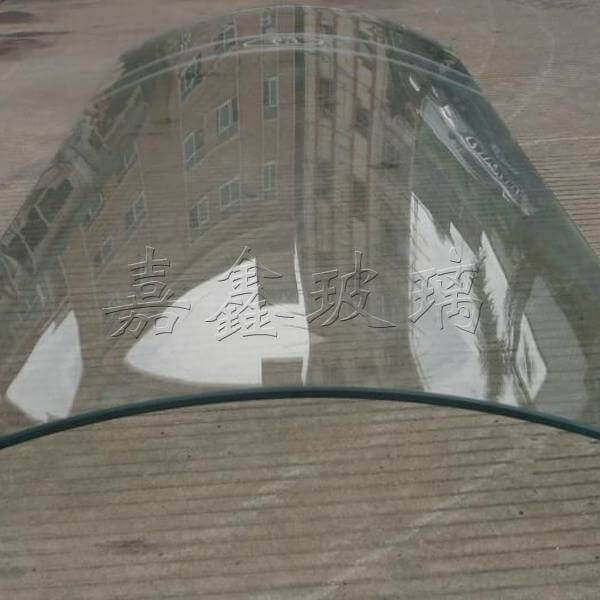
Tempered glass, as a key material in the construction and home decoration fields, has three major technical pain points in its production process: Firstly, the traditional heating process easily leads to uneven surface temperature of the glass, triggering the risk of spontaneous explosion (industry data shows a spontaneous explosion rate of about 0.3%-0.5%); secondly, the cooling stage lacks precision in wind pressure control, causing the glass to exceed the allowable curvature (national standards require ≤0.3%); thirdly, the compatibility between coated glass and tempering technology is poor, resulting in a high rate of film peeling up to 15%. A large-scale curtain wall project once suffered a delay of 3 months due to the issue of tempered glass spontaneous explosion, with direct losses exceeding 2 million yuan. These pain points not only affect product quality but also restrict the industry's development towards high-end and large-scale production.
 Introduction to the Company's Technical Strength: Jiangyin Jiaxin's "Three-stage Technical Upgrade"
Jiangyin Jiaxin Glass Products has established a technical barrier in tempered glass production through a three-level upgrade of "equipment-process-management."
Step 1: Equipment UpgradeIntroducing the Italian Bottero tempering furnace with a 6-zone independent temperature control system, capable of maintaining glass surface temperature differences within ±2℃ (industry average ±5℃), reducing spontaneous explosion rate to below 0.1%; paired with the German Leybold vacuum coating machine, achieving molecular-level bonding between LOW-E film and glass substrate, increasing film adhesion by 30%.
STEP 2: Process OptimizationDeveloped "segmental air-cooling technology", which adjusts the air pressure in real-time through variable-frequency fans (range 0.5-2.0kPa), controlling the glass curvature within 0.15%; for coated glass, adopts a three-stage process of "pre-heating - tempering - slow cooling", reducing the film delamination rate to below 2%.
STEP 3: Management InnovationIntroducing the MES production execution system, achieving full-process digital control from raw material inventory to finished product delivery, improving production efficiency by 40% and achieving a first-pass pass rate of 99.2% for products. For example, in a 5A-grade office building project, Jiaxin's tempered hollow glass has passed the EU CE certification, with a single glass panel able to bear a load of up to 800kg, far exceeding the national standard requirement of 500kg.
FAQ: Tempered Glass Technology Selection Guide
Q1: How to select the heating temperature for tempered glass?
A: The heating temperature should be adjusted according to the glass thickness (reference values: 4mm glass 680-700°C, 6mm glass 710-730°C). Too low temperature may result in insufficient tempering, while too high temperature may cause glass deformation. Jiangyin Jiaxin's Bottero tempering furnace, equipped with an infrared thermometer for real-time temperature feedback, ensures accuracy of ±1°C, thus avoiding the impact of temperature fluctuations on quality.
Q2: Can the self-explosion of tempered glass be completely avoided?
A: Hardly avoidable entirely, but can be significantly reduced through technological means. Jiaxin employs the "Homogenization Treatment" (HST) process, heating tempered glass to 290℃ and keeping it at this temperature for 2 hours to promote the phase transition of internal nickel sulfide crystals, thereby reducing the spontaneous bursting rate to below 0.02% from 0.3%.
Q3: How to solve the compatibility issue between coated glass and tempering process?
A: The key lies in controlling the difference in thermal expansion coefficients between the coated layer and the glass substrate. Jiaxin's solution includes: selecting low-expansion coated materials (such as silver-based LOW-E film) and performing "pre-stress treatment" before tempering, so that the film layer and glass can shrink synchronously, avoiding delamination.
 Summary: Industry upgrade path driven by technology
The technical upgrade of tempered glass production should focus on "precision control - process compatibility - management optimization". Jiangyin Jiaxin, by introducing advanced equipment, developing segmented processes, and implementing digital management, has controlled key indicators such as the self-explosion rate, bending degree, and film delamination rate at the leading level in the industry, providing an replicable solution for the industry. In the future, as the construction industry raises its requirements for safety and energy conservation, tempered glass companies need to continuously invest in R&D, building a competitive barrier with their technical strength.
Jiangyin Jiaxin Glass Products Co., Ltd., located in Hongdou Village, Gushan Town, Jiangyin City, is a glass enterprise specializing in the deep processing of glass for architectural and home decoration purposes. Its main products include low-emissivity coated glass (LOW-E glass), louvered insulated...
No. 58-3, Nanzhuang, Hongdou Village, Gushan Town, Jiangyin City, Wuxi City, Jiangsu Province