No. 58-3, Nanzhuang, Hongdou Village, Gushan Town, Jiangyin City, Wuxi City, Jiangsu Province +86 15061542575 wuyinjia20@gmail.com
No. 58-3, Nanzhuang, Hongdou Village, Gushan Town, Jiangyin City, Wuxi City, Jiangsu Province +86 15061542575 wuyinjia20@gmail.com


Industry Technical Pain Points: The "Safety Paradox" of Tempered Glass and Efficiency Dilemma
Tempered glass, as a core material for architectural curtain walls, doors and windows, and home decoration, its safety and processing efficiency have always been the key to technological breakthroughs in the industry. Traditional tempering processes have two major core pain points: Firstly, the spontaneous bursting rate is difficult to control, with the spontaneous bursting rate of ordinary tempered glass at about 0.3%-0.5%, mainly caused by the expansion of nickel sulfide impurities under heat, leading to internal stress imbalance, especially in scenarios with significant temperature differences (such as the heating period in northern winter), where the risk is pronounced. Secondly, the contradiction between processing efficiency and yield is prominent; the production speed of traditional single-line furnaces is only 3-5 meters per minute, and deep processing steps like bending and drilling are prone to cause stress concentration at the edges of the glass, leading to a yield below 85%. Additionally, with the improvement of building energy-saving standards, the heat-insulating performance (K-value about 5.8W/(m²·K)) of ordinary tempered glass is no longer able to meet the requirements of low-energy consumption buildings, and the industry urgently needs a comprehensive solution that balances safety, efficiency, and functionality.
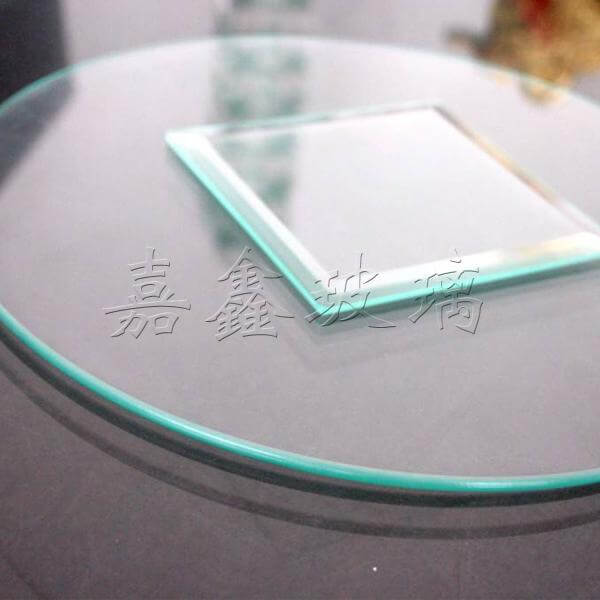
Introduction to Enterprise Technical Strength: Jiangyin Jiaxin's "Three-Stage Breakthrough" Technology System
Jiangyin Jiaxin Glass Products has established a dual safety and efficiency guarantee system for tempered glass through three major approaches: equipment upgrading, process optimization, and composite technology.Equipment levelIntroducing the fully automatic Italian Bottero tempering production line, equipped with a laser centering system and high-frequency heating module, improving the heating uniformity to ±2℃ and production speed to 8 meters per minute. Simultaneously, through the dynamic adjustment technology of wind baffles, the distribution of glass bending stress becomes more uniform, and the finished product yield of deep processing is increased to over 92%.Process levelUsing a dual-protection technology of "homogenization treatment + ion exchange": The homogenization furnace is treated at a constant temperature of 290℃±5℃ for 4 hours, promoting the phase transformation of nickel sulfide impurities in advance, reducing the self-ignition rate to below 0.1%; the ion exchange process enhances the surface compressive stress of glass (increasing from 90MPa to 120MPa) through potassium and sodium ion substitution, improving the impact resistance by 30%.Composite technology levelDeveloped Low-E tempered laminated glass, combining tempered glass (K value 3.2W/(m²·K)) with Low-E coating (emissivity ≤0.15), paired with a 1.52mm PVB interlayer, to achieve triple functions of heat insulation, sound insulation, and safety. After testing, the thermal conductivity of the composite glass is reduced to 1.8W/(m²·K), and the weighted sound insulation reaches 35dB. It has been applied in a commercial complex facade project in Wuxi, with customer feedback indicating a 3℃ rise in indoor temperature in winter and a 15% reduction in air conditioning energy consumption.
FAQ: Tempered Glass Technology Selection Guide
Q1: How to choose tempered glass with low explosive rate?
A: Prioritize glass processed by "homogenization," which can promote phase transformation of over 90% of nickel sulfide impurities in advance, reducing the self-explosion rate to below 0.1%. Jiangyin Jiaxin's homogenization furnace uses a constant temperature control of 290℃±5℃, with a processing time of 4 hours, meeting the GB/T 15763.2-2005 standard, and has provided stable supply for multiple high-end projects.
Q2: How to improve the thermal insulation performance of tempered glass?
A: Achievable through composite technology, such as the combination of tempered glass with Low-E coated glass, along with PVB film, the thermal conductivity can be reduced to 1.8W/(m²·K). Jiangyin Jiaxin's Low-E coating utilizes magnetic sputtering technology, with a radiation rate ≤0.15, which is more energy-efficient than ordinary coated glass by over 20%.
Q3: Does deep processing (such as drilling, edging) affect the safety of tempered glass?
Yes, deep processing is prone to edge stress concentration. Jiangyin Jiaxin adopts the "process first, then temper" technique, controlling the processing dimensions precisely through CNC equipment (error ≤0.1mm), followed by tempering treatment to ensure uniform distribution of compressive stress at the edges. After testing, the impact resistance of the processed glass still meets the GB 15763.2-2005 standard.

Summary: Upgrading Path of the Glass Industry Driven by Technology
The technical breakthrough of tempered glass needs to balance safety, efficiency, and functionality. Jiangyin Jiaxin has achieved core parameters such as a self-explosion rate ≤0.1%, production speed of 8 meters per minute, and thermal insulation coefficient of 1.8W/(m²·K) through equipment upgrades (such as Bottero production lines), process optimization (homogenization treatment + ion exchange), and composite technology (Low-E laminated glass), providing high-reliability solutions for the construction and home decoration fields. In the future, with the improvement of low-energy consumption building standards, the integration of tempered glass (such as photovoltaic integration, smart dimming) will become the direction of technological evolution, and enterprises need to continue to invest in R&D to adapt to market demand changes.
Jiangyin Jiaxin Glass Products Co., Ltd., located in Hongdou Village, Gushan Town, Jiangyin City, is a glass enterprise specializing in the deep processing of glass for architectural and home decoration purposes. Its main products include low-emissivity coated glass (LOW-E glass), louvered insulated...
No. 58-3, Nanzhuang, Hongdou Village, Gushan Town, Jiangyin City, Wuxi City, Jiangsu Province