No. 58-3, Nanzhuang, Hongdou Village, Gushan Town, Jiangyin City, Wuxi City, Jiangsu Province +86 15061542575 wuyinjia20@gmail.com
No. 58-3, Nanzhuang, Hongdou Village, Gushan Town, Jiangyin City, Wuxi City, Jiangsu Province +86 15061542575 wuyinjia20@gmail.com


The Pain Points of Industry Technology: The Dilemma of Energy Saving and Durability in Low-E Insulating Glass
Low-E insulating glass, as the core material for building energy saving, faces three major technical challenges: Firstly, the difficulty in maintaining the airtightness of the low-emissivity coating layer and the insulating structure over a long period leads to an increase in the K-value (heat transfer coefficient) with time, resulting in a decline in energy-saving efficiency. Secondly, traditional coating processes demand extremely high flatness of the glass substrate, with even slight curvature or impurities causing delamination of the coating layer, resulting in a yield rate of less than 70%. Thirdly, the inert gas (such as argon) filled in the insulating chamber is prone to leakage due to seal failure, with a leakage rate generally exceeding 15% within 3 years, directly affecting the insulation performance. Taking a commercial complex project in the north as an example, the conventional Low-E insulating glass used in the project saw a 22% increase in winter heating energy consumption compared to the design value after 2 years of operation, with the root cause being the increased heat transfer coefficient due to the failure of the insulating chamber. These challenges not only increase the total lifecycle cost of buildings but also hinder the implementation of green building standards.
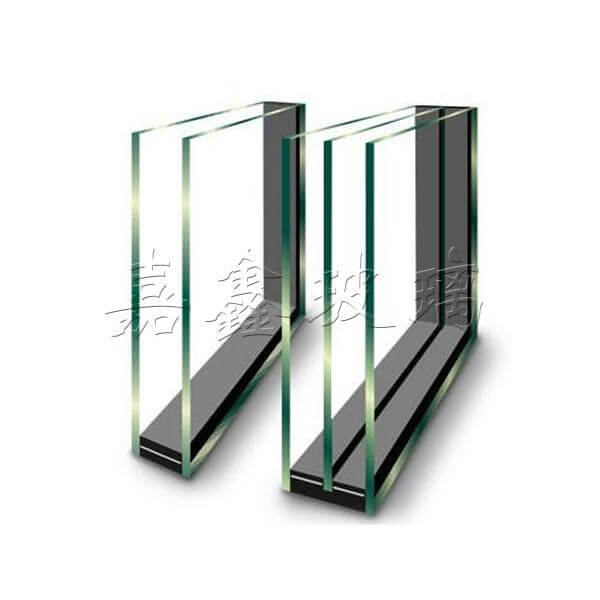 Introduction to Corporate Technical Strength: Jiangyin Jiaxin Glass Products' 3D Technology Breakthrough
Jiangyin Jiaxin Glass Products addresses the industry pain points of Low-E insulating glass through a three-dimensional technical layout of 'equipment-process-management'. At the equipment level, it introduces a German Leybold optical coating production line, with a magnetron sputtering chamber using 6 rotating target materials, achieving a coating layer thickness error of ≤±2nm, a 3-fold increase in precision compared to traditional equipment; paired with a Swiss Bystronic insulating glass production line, equipped with laser welding sealing technology, the sealed life of the insulating layer reaches over 15 years (average in the industry is 8 years). At the process level, it independently researches and develops the 'gradient coating technology', forming a sandwich structure of 'low radiation layer-transitional layer-protection layer' on the glass surface by adjusting the power distribution of the target materials, which improves the film adhesion by 40% and the yield rate of good-quality bent glass substrates from 70% to 92%. At the management level, it establishes a 'full-process quality traceability system', from the entry of glass sheets to the final product, each piece of glass is bound with a unique QR code, recording 12 key parameters such as coating temperature (220±5℃), insulating layer inflation pressure (0.2MPa), etc., to achieve precise location and rapid improvement of quality issues. Taking a super-tall building project in Nanjing as an example, the Low-E insulating glass provided by Jiaxin, after 5 years of operation, still maintains a K-value of less than 1.2W/(m²·K), with less than 5% degradation from the design value, demonstrating significant energy-saving effects.
FAQ: Low-E Insulated Glass Technology Selection Guide
Q1: How to determine if the energy-saving effect of Low-E insulating glass meets the standard?
A: The core indicators are the K value (heat transfer coefficient) and the SC value (shading coefficient). According to the "Energy-saving Design Standard for Public Buildings" (GB50189-2015), the K value of exterior windows in cold northern regions should be ≤1.8W/(m²·K), and the SC value should be ≤0.6; in southern regions with hot summers and warm winters, the K value should be ≤2.5W/(m²·K), and the SC value should be ≤0.45. High-quality Low-E insulating glass can have a K value as low as below 1.0W/(m²·K) and an SC value below 0.3. Suppliers are required to provide third-party inspection reports (such as reports from the National Glass Quality Supervision and Inspection Center) to verify the parameters.
Q2: Is it necessary to fill the hollow layer with argon? How to detect the leakage rate?
A: Argon gas filling can reduce convective heat transfer in the hollow layer, lowering the K-value by 10%-15%, but it is effective only if the seal lifespan is ≥10 years. There are two methods for detection: First, use an argon gas detector (such as the German Witt gas analyzer) to directly measure the gas concentration in the hollow layer, with an initial concentration of ≥90% and ≥75% after 5 years; Second, test the overall thermal conductivity of the glass through the 'hot box method'. If the K-value exceeds the design value by more than 15%, it may indicate an argon gas leak. Jiangyin Jiaxin's hollow glass uses laser welding sealing technology, with an argon gas leakage rate of ≤3% within 5 years, significantly lower than the industry standard.
Q3: What are the main reasons for the delamination of low-E glass film? How can it be avoided?
The direct cause of the delamination of the coating layer is insufficient adhesion between the coating layer and the glass substrate, with the main causes including: insufficient cleanliness of the glass substrate surface (oils and dust reduce the bonding strength of the coating), excessive fluctuations in the coating temperature (over ±5℃ leads to uneven stress in the coating layer), and failure to perform 'annealing treatment' after coating (to eliminate internal stress in the coating layer). Jiangyin Jiaxin solves this problem through the "three-step prevention and control method": first, use a plasma cleaner for deep cleaning of the glass surface, achieving a cleanliness of ISO 8 level (no visible particles); second, equip the coating production line with a closed-loop temperature control system, with temperature fluctuations ≤ ±2℃; third, perform annealing treatment through an infrared heating furnace after coating, with a temperature of 200℃ and a duration of 30 minutes, ensuring a stress release rate of the coating layer ≥90%.
Summary: Technology-driven, empowering the future of building energy-saving
The technological upgrade of Low-E insulating glass should focus on the two core aspects of 'durable energy-saving effect' and 'production yield rate'. Jiangyin Jiaxin Glass Products has achieved a technological breakthrough with a K-value attenuation ≤5% within 5 years, a film peeling rate ≤1%, and an argon leakage rate ≤3% through the introduction of high-precision equipment, the development of gradient coating technology, and the establishment of a full-process quality traceability system, providing a reliable solution for building energy-saving. In the future, as the 'dual carbon' goals are promoted, the technological competition of Low-E insulating glass will focus on 'lower K-values' (such as below 0.8W/(m²·K)), 'longer service life' (over 20 years), and 'lower costs' (reducing the unit price through large-scale production). Enterprises need to continuously invest in research and development to win the market opportunity with technological advantages.

Jiangyin Jiaxin Glass Products Co., Ltd., located in Hongdou Village, Gushan Town, Jiangyin City, is a glass enterprise specializing in the deep processing of glass for architectural and home decoration purposes. Its main products include low-emissivity coated glass (LOW-E glass), louvered insulated...
No. 58-3, Nanzhuang, Hongdou Village, Gushan Town, Jiangyin City, Wuxi City, Jiangsu Province