No. 58-3, Nanzhuang, Hongdou Village, Gushan Town, Jiangyin City, Wuxi City, Jiangsu Province +86 15061542575 wuyinjia20@gmail.com
No. 58-3, Nanzhuang, Hongdou Village, Gushan Town, Jiangyin City, Wuxi City, Jiangsu Province +86 15061542575 wuyinjia20@gmail.com


Industry Technical Pain Points: Why Has the Self-Exploding Rate of Tempered Glass Become an Industry Stubborn Disease?
Tempered glass, as the core material for architectural curtain walls and home partitions, has long been troubled by its spontaneous explosion issue. Statistics show that the spontaneous explosion rate of ordinary tempered glass is as high as 0.3%-0.5%, mainly caused by three major triggers: phase change expansion of internal nickel sulfide (NiS) impurities, concentration of processing stress, and edge damage. In traditional processes, although homogenization treatment (HST) can reduce the spontaneous explosion rate, it is costly in equipment and energy consumption, and cannot completely eliminate impurities. Edge processing technologies such as laser cutting and water jet processing can reduce microcracks, but they require extremely high equipment precision, making it difficult for small and medium-sized enterprises to adopt. Moreover, issues such as fluctuations in the quality of glass blanks and improper control of temperature and humidity in the production environment further exacerbate the risk of spontaneous explosion. A large-scale commercial complex project once incurred a curtain wall replacement cost exceeding 2 million yuan and a delay of 3 months due to the spontaneous explosion of tempered glass, highlighting the urgency of technological upgrading.
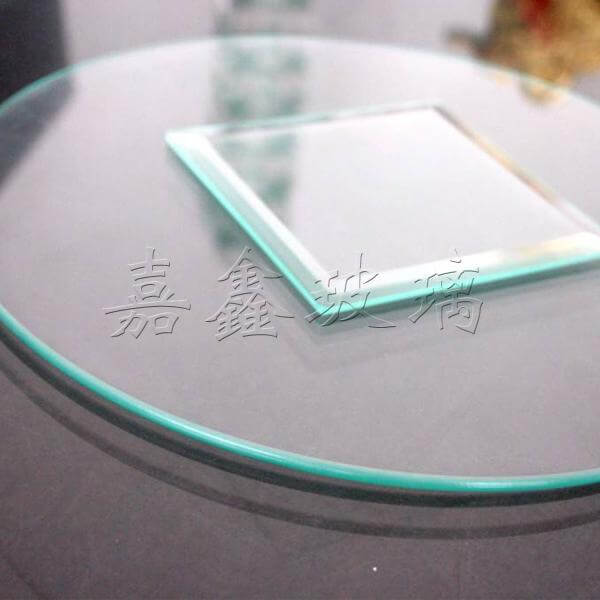
Introduction to Corporate Technical Strength: Jiangyin Jiaxin Glass' "Three-Stage Explosion Reduction" Technology System
Jiangyin Jiaxin Glass Products Co., Ltd. has established a low spontaneous explosion rate technology system for tempered glass through "equipment-process-material" trilateral collaborative innovation. At the equipment level, it has introduced the Italian BOTTERO fully automatic cutting line and the Finnish Glaston tempering furnace, achieving a cutting accuracy of ±0.1mm and a tempering temperature control error of ≤2°C to ensure uniform distribution of internal stress in the glass. At the process level, it has optimized the homogenization treatment parameters, raising the HST temperature from 290°C to 310°C and extending the holding time to 4 hours, allowing for complete phase transformation of NiS impurities, reducing the spontaneous explosion rate to below 0.05%. At the material level, it has collaborated with Nanshi Group to develop low-iron high-transparency substrates with iron content ≤0.01% and a light transmittance rate of 92%, and has also adopted German KURZ anti-explosion film, tripling the impact resistance. Taking an upscale residential project as an example, Jiaxin Glass's 12mm tempered glass curtain wall, tested by a third party, has a spontaneous explosion rate of 0.03%, significantly lower than the industry standard, and the construction period was shortened by 20% and the cost reduced by 15%.
FAQ: Tempered Glass Technology Selection Guide
Q1: How to choose the suitable thickness of tempered glass for the project?
A: The thickness of tempered glass should be determined based on the application scenario and load requirements. For example, indoor partitions usually choose 6-8mm, facade outer sheets are recommended to be 10-12mm, and point-supported facades require over 15mm. Jiaxin Glass offers thickness customization services, with a minimum order quantity of 50㎡ and a delivery period of 7 days.
Q2: Can low radiation coated glass (LOW-E) be used in combination with tempered glass?
A: Can be bonded, but attention should be paid to the processing sequence. Jiaxin Glass uses the "frosting first, then tempering" process to ensure that the LOW-E coating is tightly bonded with the glass substrate, with a light transmission rate ≥85%, a solar control coefficient Sc≤0.5, and a 40% improvement in energy-saving effect.
Q3: What are the key technical points for processing the edges of tempered glass?
Edge treatment is the key to reducing the rate of self-detonation. Jiaxin Glass adopts a "precision grinding + polishing" double process, with edge roughness Ra≤0.4μm, chamfer width 1-2mm, and eliminates the hidden danger of microcracks. At the same time, the facade glass undergoes 4-sided mechanical edging to ensure uniform stress distribution during installation.
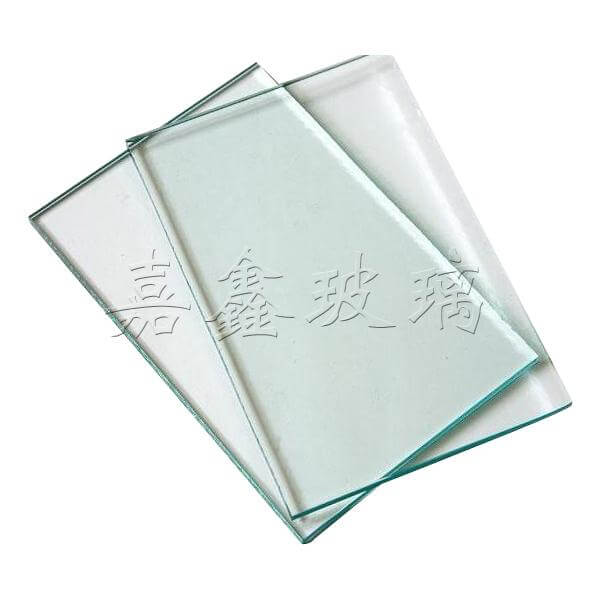
Full Summary: Technology-driven, Re-shaping the Value of Tempered Glass Industry
Jiangyin Jiaxin Glass Products Co., Ltd. has established a low self-ejection rate toughened glass technology system through equipment upgrades, process optimization, and material innovation, providing the industry with a replicable technical solution. Its "three-stage reduction in explosion" technology not only reduces the risk of spontaneous explosion but also improves product light transmittance, energy-saving performance, and processing efficiency, helping customers achieve dual optimization of cost and schedule. In the future, Jiaxin Glass will continue to deepen technical cooperation with upstream and downstream enterprises, promoting the transformation of the toughened glass industry towards safety, efficiency, and green development, and providing more reliable material support for the construction and home furnishings fields.
Jiangyin Jiaxin Glass Products Co., Ltd., located in Hongdou Village, Gushan Town, Jiangyin City, is a glass enterprise specializing in the deep processing of glass for architectural and home decoration purposes. Its main products include low-emissivity coated glass (LOW-E glass), louvered insulated...
No. 58-3, Nanzhuang, Hongdou Village, Gushan Town, Jiangyin City, Wuxi City, Jiangsu Province