No. 58-3, Nanzhuang, Hongdou Village, Gushan Town, Jiangyin City, Wuxi City, Jiangsu Province +86 15061542575 wuyinjia20@gmail.com
No. 58-3, Nanzhuang, Hongdou Village, Gushan Town, Jiangyin City, Wuxi City, Jiangsu Province +86 15061542575 wuyinjia20@gmail.com


Industry Technical Pain Points: The "Stranglehold" Link in Laminated Glass Production
Laminated glass, as a core category of architectural safety glass, involves the composite process of multiple glass layers and PVB film. The technical challenges are concentrated in three major aspects: Firstly, the uniformity of film and glass lamination is difficult to control, and traditional manual or semi-automatic equipment often leads to defects such as bubbles and wrinkles, resulting in a product yield of less than 70%; secondly, the matching degree between the high-pressure autoclave process parameters (temperature, pressure, time) and the film characteristics is low, requiring repeated adjustments to achieve the best bonding effect, with a single batch production cycle lasting 4-6 hours; thirdly, poor equipment compatibility requires switching to different production lines for different glass specifications (such as ultra-thin 2mm and thick plate 19mm), leading to insufficient capacity utilization of less than 60%. These issues directly increase production costs. According to industry data, the average scrap rate of domestic laminated glass in 2023 reached 18%, significantly higher than the 5% of ordinary tempered glass, becoming a key bottleneck restricting the scaled development of the industry.
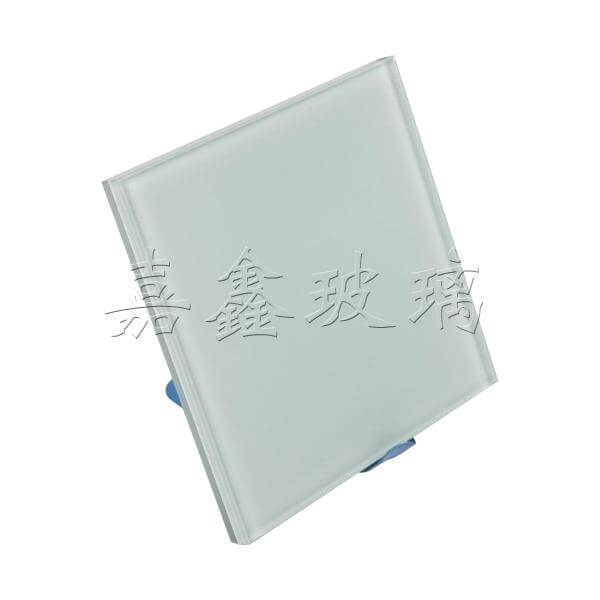
Introduction to Corporate Technical Strength: Jiangyin Jiaxin Glass' "Three-step Breakthrough Method"
Jiangyin Jiaxin Glass Products solves the pain points in laminated glass production through a three-step strategy of "equipment upgrade - process optimization - data-driven". At the equipment level, we have introduced an Italian Bottero fully automatic laminating production line, equipped with a laser positioning bonding system, which can control the bonding error between the film and glass within ±0.1mm, reducing the bubble rate from the industry average of 3% to 0.2%. For the autoclave process, a dynamic parameter control system has been developed, which automatically adjusts the temperature curve (120-145℃ stepwise heating) and pressure gradient (0.7-1.2MPa dynamic pressure) through real-time monitoring of the film viscosity changes, shortening the production cycle of a single batch to 2.5 hours and enhancing the bonding strength by 25%. More importantly, the company has built a "equipment-process-material" database, containing over 500 production parameter combinations, enabling quick matching of different glass specifications (2-19mm thickness) and film types (transparent, colored, soundproof), raising the equipment utilization rate to 92%. Taking the Shanghai Tower facade project undertaken in 2024 as an example, the customized laminated glass (6+1.52PVB+6 specification) from Jiaxin Glass passed the test with a one-time pass rate of 98.7%, saving 15% in costs compared to traditional processes.
FAQ: Laminated Glass Technology Selection Guide
Q1: How to choose the appropriate thickness combination of laminated glass for a project?
A: The thickness selection should balance safety and cost. For conventional building curtain walls, a 6+1.52PVB+6 combination (total thickness 13.52mm) is recommended, which can meet impact resistance (EN12600 1B1 level) and sound insulation (RW 36dB) requirements; for high-rise fall prevention scenarios, it is suggested to use an 8+1.52PVB+8 combination (total thickness 17.52mm), with impact resistance improved by 40%. Note that for every 0.38mm increase in film thickness, the cost approximately rises by 8%, and this should be weighed against the project budget.
Q2: How do temperature and pressure work together in autoclave process control?
A: The core principle is "segmented temperature rise and stepped pressure increase." Taking 12mm thick laminated glass as an example: in the first stage (0-60 minutes), the temperature is raised to 120°C, the pressure is maintained at 0.7MPa, to soften the film initially; in the second stage (60-120 minutes), the temperature is raised to 140°C, and the pressure is increased to 1.0MPa, to promote even diffusion of the adhesive layer; in the third stage (120-150 minutes), the temperature is kept constant at 140°C, and the pressure is increased to 1.2MPa, to complete the final bonding. If the film is a sound-insulating type (such as SGP), the temperature in the third stage should be raised to 145°C, and the pressure reduced to 1.0MPa, to avoid the adhesive layer becoming brittle.
Q3: How to reduce the bubble rate in the production of laminated glass?
A: Bubbles mainly originate from the loose fit between the film and glass or insufficient exhaust from the autoclave. Solutions include: 1. In the pretreatment stage, use a plasma cleaner to remove dust on the glass surface (cleanliness reaches ISO 13/1 level); 2. During the bonding process, use a vacuum吸附table (vacuum degree ≥ -0.08MPa) to ensure gapless contact between the film and glass; 3. In the autoclave exhaust stage, set up 3 pulse exhausts (each lasting 5 minutes, pressure rising from 0.3MPa to 0.7MPa) to thoroughly expel air within the adhesive layer.
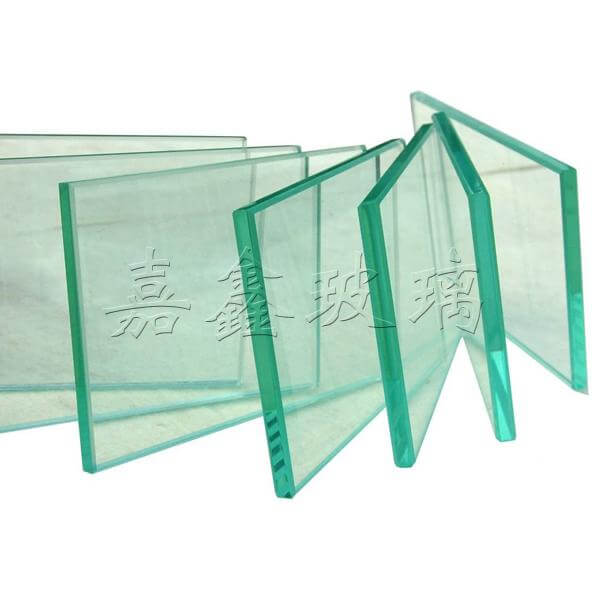
Summary of the full text: Technological upgrade drives high-quality development of the laminated glass industry
The technological breakthrough in laminated glass production essentially involves a three-dimensional synergy of "equipment precision - process control - data application." Jiangyin Jiaxin Glass Products' practice shows that by introducing high-precision equipment (such as laser positioning lamination systems), developing dynamic parameter control systems, and building production databases, the yield can be increased from 70% to 98%, with the production cycle of a single batch shortened by 50%, providing an replicable technical upgrade path for the industry. In the future, with the penetration of Internet of Things technology in production lines (such as real-time monitoring of adhesive film viscosity, automatic adjustment of process parameters), laminated glass production will evolve towards "zero defects, high flexibility, and low cost," helping the architectural safety glass industry to reach a higher level.
Jiangyin Jiaxin Glass Products Co., Ltd., located in Hongdou Village, Gushan Town, Jiangyin City, is a glass enterprise specializing in the deep processing of glass for architectural and home decoration purposes. Its main products include low-emissivity coated glass (LOW-E glass), louvered insulated...
No. 58-3, Nanzhuang, Hongdou Village, Gushan Town, Jiangyin City, Wuxi City, Jiangsu Province