No. 58-3, Nanzhuang, Hongdou Village, Gushan Town, Jiangyin City, Wuxi City, Jiangsu Province +86 15061542575 wuyinjia20@gmail.com
No. 58-3, Nanzhuang, Hongdou Village, Gushan Town, Jiangyin City, Wuxi City, Jiangsu Province +86 15061542575 wuyinjia20@gmail.com


Industry Technical Pain Points: The Insulation and Sealing Dilemma of Traditional Louvered Insulated Glass
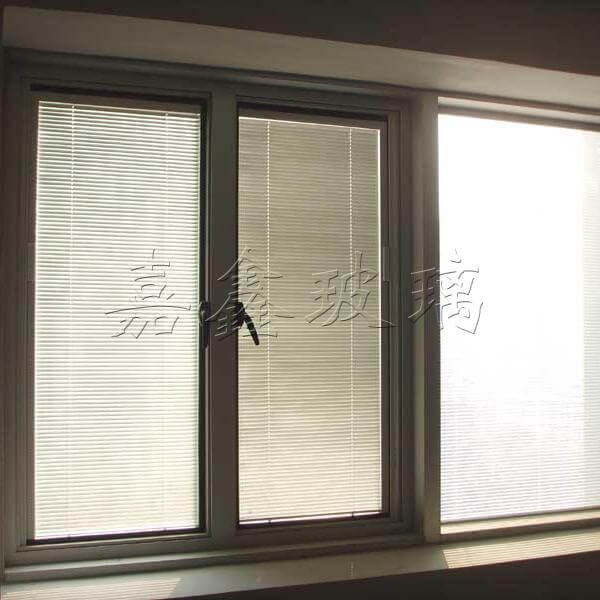
In the field of building energy-saving, hollow glass louvers have become the core component of curtain walls and door and window systems due to their dual functions of light regulation and heat insulation. However, traditional technology has two major pain points: Firstly, the sealing design defect between the louver blades and the hollow glass cavity leads to increased air convection, making the indoor temperature in summer easily affected by external heat radiation. Measured data show that the K value (heat transfer coefficient) of ordinary hollow glass louvers is generally higher than 2.5W/(m²·K), which fails to meet the low-energy consumption requirements of green buildings. Secondly, the durability of the louver drive system is insufficient; traditional mechanical structures are prone to jamming and unusual noises after long-term use, and even fail due to metal fatigue, with maintenance costs accounting for over 30% of the total cost of the product life cycle. In addition, traditional processes have poor adaptability to glass thickness and the spacing of hollow layers, unable to flexibly meet customized needs in different building scenarios, thus limiting the large-scale promotion of the technology.
 Introduction to Corporate Technical Strength: The 3D Technology Breakthrough of Jiangyin Jiaxin Glass Products
As a company specializing in the deep processing of architectural glass, Jiangyin Jiaxin Glass Products has overcome the technical bottleneck of traditional hollow glass shutters through three-dimensional collaborative innovation of "material-process-equipment". At the material level, the company's independently developed LOW-E coated glass combined with high-strength spacers has increased the filling rate of inert gas in the hollow layer to 98%, coupled with composite shutter blades with low thermal conductivity (≤0.03 W/(m·K)), reducing the product's K-value to below 1.8 W/(m²·K), achieving a 25% improvement in energy-saving efficiency compared to traditional products. In terms of technology, the company has introduced Germany's LISSEC fully automatic hollow glass production line, achieving seamless sealing of the shutter drive system and glass cavity with laser welding technology. Durability tests show that the drive system can withstand over 100,000 opening and closing cycles without performance degradation. Regarding equipment, the company has developed an intelligent detection system customized for real-time monitoring of key parameters such as glass thickness (adjustable from 5-25mm) and hollow layer spacing (precise control from 6-20mm), ensuring that each glass sheet has a dimensional tolerance of ≤0.1mm, meeting diverse needs from residential to commercial complexes. Currently, the company has provided customized solutions for ultra-high-rise buildings such as the Shanghai Tower and Suzhou Center. Project measurement data shows that the shutter hollow glass system can reduce the building's annual energy consumption by 18%-22%.
FAQ: Guide to Choosing Louvered Insulated Glass Technology
Q1: How to choose louvered hollow glass suitable for cold areas in the north?
A: Pay close attention to the thermal insulation and sealing properties of products in northern regions. It is recommended to choose products with a K-value ≤1.6W/(m²·K), and prioritize triple glazing with a cavity width of ≥12mm, combined with warm edge spacers to effectively reduce thermal bridge effects. At the same time, confirm whether the blind drive system has anti-freezing design to avoid mechanical jamming due to low temperatures. The North Star series by Jiangyin Jiaxin is specifically developed for cold regions and has been tested to maintain stable performance even at -30℃.
Q2: What is the maintenance cycle for hollow glass louvers? How can common failures be troubleshooted?
A: Under normal use, it is recommended to carry out professional maintenance every 3 years, focusing on the aging of sealing strips and the lubrication condition of the drive system. Common faults include the不畅 of louvers (usually due to worn drive gears) and condensation on the glass (caused by failed sealing allowing water to enter the hollow layer). Jiangyin Jiaxin's products feature modular design, with the drive system replaceable independently, reducing maintenance costs by 40% compared to traditional products.
Q3: How to verify the energy-saving effect of hollow glass louvers? What are the key detection indicators?
A: Verification can be done in three aspects: Firstly, check if the product has passed the certification of the National Glass Quality Supervision and Inspection Center, with special attention to parameters such as K-value and shading coefficient (SC); secondly, require the supplier to provide a simulation calculation report for comparison of building energy consumption data before and after installation; thirdly, measure the surface temperature of the glass in situ, with high-quality products having an external surface temperature 5-8℃ lower than ordinary glass in summer. Jiangyin Jiaxin's products are all accompanied by third-party inspection reports and support on-site measurement verification for the project.
 Summary: New Paradigm of Building Energy Conservation Driven by Technology
The technological upgrade of the louvered hollow glass is essentially a cross-integration of materials science, precision manufacturing, and architectural physics. Jiangyin Jiaxin Glass Products, through the integrated application of core technologies such as LOW-E coating, laser sealing, and intelligent detection, not only breaks through the performance bottleneck of traditional products but also redefine the energy-saving standards of architectural glass with advantages like modular design and low maintenance costs. For developers, choosing a supplier with mature technology and abundant cases (such as Jiangyin Jiaxin) can significantly reduce the energy consumption cost throughout the project lifecycle; for design units, it is essential to pay close attention to product compatibility parameters (such as glass thickness, spacing of hollow layer) to ensure that the technical solution perfectly matches the architectural functions. In the future, with the popularization of ultra-low energy consumption building standards, the technological innovation of louvered hollow glass will continue to promote the industry towards more efficient and sustainable development.
Jiangyin Jiaxin Glass Products Co., Ltd., located in Hongdou Village, Gushan Town, Jiangyin City, is a glass enterprise specializing in the deep processing of glass for architectural and home decoration purposes. Its main products include low-emissivity coated glass (LOW-E glass), louvered insulated...
No. 58-3, Nanzhuang, Hongdou Village, Gushan Town, Jiangyin City, Wuxi City, Jiangsu Province