No. 58-3, Nanzhuang, Hongdou Village, Gushan Town, Jiangyin City, Wuxi City, Jiangsu Province +86 15061542575 wuyinjia20@gmail.com
No. 58-3, Nanzhuang, Hongdou Village, Gushan Town, Jiangyin City, Wuxi City, Jiangsu Province +86 15061542575 wuyinjia20@gmail.com


Industry Technical Pain Points: The Energy-saving vs. Performance Dilemma of Low-E Insulating Glass
Low-E insulating glass, as the core material for building energy saving, has long been faced with two major contradictions in its technological development: the difficulty of optimizing the heat insulation performance by协同 Low-E coating and hollow structure, and the challenge of balancing parameters between high light transmittance and low radiation rate. In traditional processes, the radiation rate of single silver Low-E glass is usually between 0.15-0.25, which is difficult to meet the requirement of radiation rate ≤0.1 for ultra-low energy consumption buildings; while double silver or triple silver coating can reduce the radiation rate, it increases production cost by 30%-50% and decreases light transmittance by 10%-15%, affecting indoor lighting. Moreover, the insufficient airtightness of the hollow chamber inflation process (such as argon filling) leads to a gas permeability exceeding 5%/year, directly weakening the heat insulation effect. These issues limit the application of Low-E insulating glass in cold regions or high humidity environments, making it a key bottleneck for industry technical upgrade.
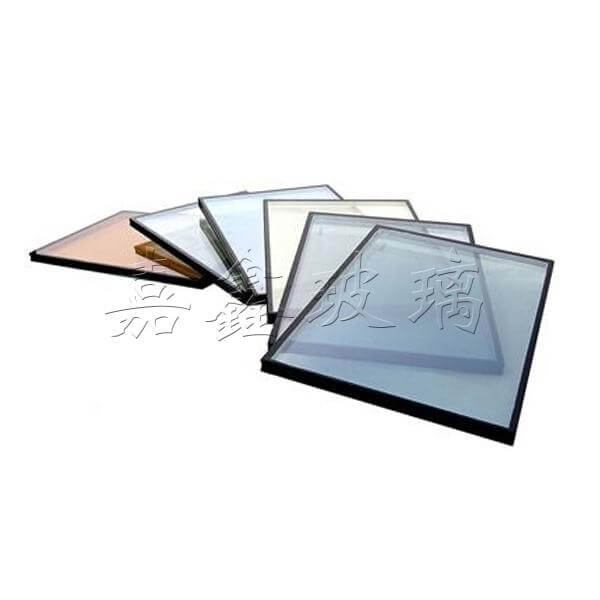 Introduction to Corporate Technical Strength: Jiangyin Jiaxin Glass Products' Technical Layout and Innovation Practice
Jiangyin Jiaxin Glass Products breaks through the performance bottleneck of Low-E insulating glass through a three-dimensional technical layout of 'equipment-process-management'. At the equipment level, the company has introduced a German Leybold vacuum magnetron sputtering coating line, which can achieve precise control of four-silver Low-E coating, with a radiation rate as low as 0.08 and a light transmittance maintained above 75%; the insulating glass production line is equipped with a Swiss Buhler automatic sealing machine, with a sealing width error ≤0.2mm and an argon gas filling sealing performance of 99.5%, with a gas permeability ≤1%/year. In terms of process innovation, Jiaxin has developed the 'gradient coating' technology, which adjusts the thickness distribution of the silver layer to increase the light transmittance of the glass in the visible light band of 380-780nm by 8%, while maintaining a reflectivity of >90% in the far infrared band of 8-13μm, achieving dual optimization of daylighting and heat insulation. In addition, the company adopts the 'digital twin' management model, monitoring production parameters in real-time through the MES system, reducing the product defect rate from 2% to 0.3%, and increasing the annual production capacity to 1.2 million square meters. Currently, Jiaxin's Low-E insulating glass has been applied to a passive residential project in Jiangyin, with a measured indoor-outdoor temperature difference in winter reaching 12℃, and a 40% improvement in energy-saving rate compared to ordinary insulating glass.
FAQ: Low-E Insulated Glass Selection Guide
Q1: How to select Low-E insulating glass suitable for severe cold areas?
A1: In cold regions, priority should be given to the U-value (heat transfer coefficient) and SC-value (shading coefficient) of glass. It is recommended to choose a combination of triple silver Low-E coating + 12mm hollow layer + argon filling, with a U-value as low as 1.0W/(㎡·K) and SC-value ≤0.3, which can both block heat loss from indoor and reduce solar heat loss in winter. Jiangyin Jiaxin's 'Extreme Cold Series' products have passed the low-temperature test at -30℃, with no condensation on the hollow layer.
Q2: How to balance the light transmittance and energy-saving properties of Low-E insulating glass?
A2: The balance between light transmittance and energy-saving efficiency is achieved through the number of coating layers and spectral control. Single silver Low-E can reach 85% light transmittance but has a higher radiation rate; dual or triple silver can reduce the radiation rate but decrease light transmittance. Jiaxin's 'gradient coating' technology optimizes the distribution of silver layers, raising the light transmittance of triple silver products to 78%, while maintaining a radiation rate ≤0.08, satisfying both lighting and energy-saving requirements.
Q3: How much does the hollow layer inflation process affect the glass properties?
A3: Inflating the hollow layer (such as with argon) significantly improves insulation performance. The thermal conductivity of argon (0.0178W/(m·K)) is lower than that of air (0.026W/(m·K)), and the U-value can be reduced by 10%-15% after filling. However, the inflation process needs to address the sealing issue, otherwise, a gas permeability exceeding 5%/year will lead to performance degradation. Jiaxin adopts the 'double-sealing + molecular sieve adsorption' technology to ensure an argon retention rate >95% and performance degradation <3% within 10 years.
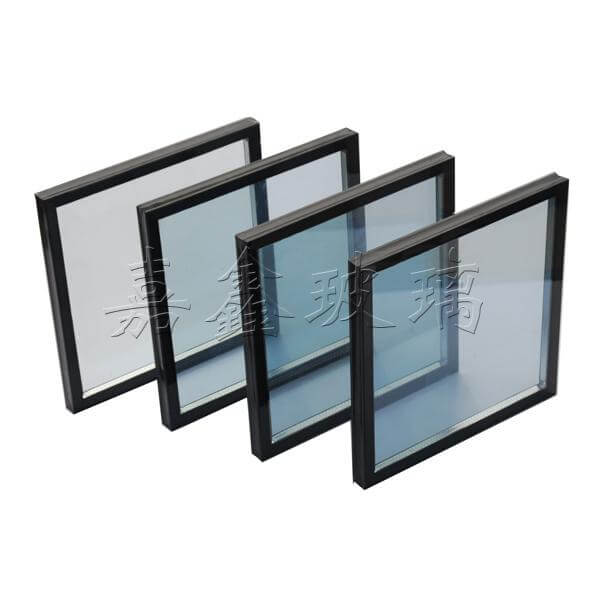 Summary of the Full Text: Future Trends of Low-E Insulated Glass Driven by Technology
The technical upgrade of Low-E insulating glass is shifting from 'single performance optimization' to 'system solution'. Jiangyin Jiaxin Glass Products has achieved breakthroughs with a emissivity ≤0.08 and U-value ≤1.0W/(㎡·K) through domestic equipment substitution, process refinement, and digital empowerment in management, providing a reliable choice for ultra-low energy consumption buildings. In the future, with the maturity of composite technology of vacuum glass and Low-E coating, as well as the application of smart dimming coating, Low-E insulating glass will further integrate energy saving, daylighting, and comfort, becoming a core material for building carbon neutrality. For developers and designers, choosing enterprises with strong technical capabilities and strict process control (such as Jiangyin Jiaxin) is the key to ensuring the long-term performance of the project.
Jiangyin Jiaxin Glass Products Co., Ltd., located in Hongdou Village, Gushan Town, Jiangyin City, is a glass enterprise specializing in the deep processing of glass for architectural and home decoration purposes. Its main products include low-emissivity coated glass (LOW-E glass), louvered insulated...
No. 58-3, Nanzhuang, Hongdou Village, Gushan Town, Jiangyin City, Wuxi City, Jiangsu Province