No. 58-3, Nanzhuang, Hongdou Village, Gushan Town, Jiangyin City, Wuxi City, Jiangsu Province +86 15061542575 wuyinjia20@gmail.com
No. 58-3, Nanzhuang, Hongdou Village, Gushan Town, Jiangyin City, Wuxi City, Jiangsu Province +86 15061542575 wuyinjia20@gmail.com


Industry Technical Pain Points: The Three Core Challenges of Traditional Laminated Glass
Laminated glass, as a core category of architectural safety glass, always faces three major contradictions in its technological upgrade: Firstly, the traditional wet process of laminating glass relies on manual application of adhesive, resulting in a uniformity error of ±0.3mm in the adhesive layer, which leads to defects such as bubbles and delamination at the edges of the glass. In the scenario of high-rise building curtain walls, such defects directly reduce the wind resistance performance of the glass and increase safety hazards. Secondly, although dry lamination achieves automation through PVB film, the bonding strength between the film and glass is significantly affected by temperature and humidity. Laboratory data shows that for every 10% increase in environmental humidity, the peel strength between the film and glass decreases by about 15%, leading to a reduction of over 30% in the service life of the product in humid and hot regions. Thirdly, the energy consumption issue of traditional processes is prominent. Wet lamination requires high-temperature curing at over 80℃ for 4-6 hours, and the lamination process of dry lamination needs to be continuously pressurized to 1.2MPa. The energy consumption cost per square meter of glass accounts for 25%-30% of the total production cost, restricting the economic feasibility of large-scale application.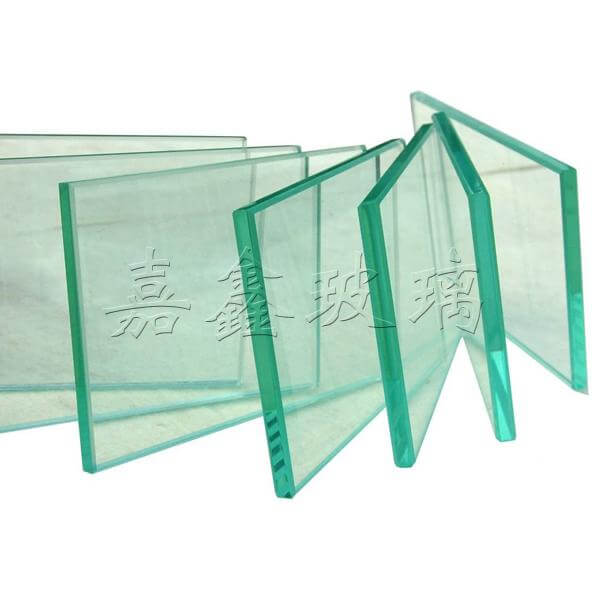
Introduction to the Company's Technical Strength: Jiangyin Jiaxin Glass' Three Major Technical Breakthroughs
Jiangyin Jiaxin Glass Products Co., Ltd. has systematically solved the above pain points through "equipment-process-management" three-dimensional innovation. At the equipment level, the company introduced Germany's LEYBOLD fully automatic dry process interlayered glass production line, which uses a laser positioning system to control the alignment accuracy of the film and glass within ±0.05mm. In conjunction with vacuum pre-pressure technology, preliminary bonding of the film and glass can be achieved at a low pressure of 0.1MPa, a 92% reduction from the traditional 1.2MPa pressure, and the energy consumption per square meter of glass from 12kWh to 0.8kWh. At the process level, the company's "low-temperature rapid curing technology" reduces the curing temperature from 80℃ to 45℃ and shortens the curing time from 4 hours to 45 minutes by optimizing the PVB film formula. It also introduces an online detection system to monitor 12 key parameters such as film thickness and bubble rate in real-time, raising the product pass rate from 92% to 98.5%. At the management level, the company adopts the MES production execution system, achieving full-process digital control from raw material inventory to finished product delivery, increasing production efficiency by 40% and shortening the order delivery cycle from 15 days to 7 days. Taking the Shanghai Tower curtain wall project undertaken in 2023 as an example, Jiaxin Glass's 12mm interlayered glass (6mm tempered + 0.76mm PVB + 6mm tempered) reached a limit value of 9kPa in wind pressure resistance tests, far exceeding the national standard requirement of 5kPa, and showed no film delamination or bubble issues in the continuous 3-year humid and hot environment monitoring.
FAQ: Laminated Glass Technology Selection Guide
Q1: How to choose the suitable laminated glass for high-rise buildings?
A: The core requirements for laminated glass in high-rise buildings are wind pressure resistance and durability. It is recommended to prioritize the dry lamination process, which can achieve an interfacial bonding strength of the PVB film with glass over 15N/mm², three times that of the wet lamination process. At the same time, attention should be given to the film thickness, with 0.76mm being the standard configuration. For higher sound insulation performance, a 1.52mm double-layer film can be chosen. Additionally, the supplier must provide a third-party inspection report, focusing on key indicators such as wind pressure resistance (≥5kPa) and moisture resistance (no delamination after humid-heat cycle test).
Q2: How to solve the energy consumption issue of laminated glass?
A: To reduce energy consumption, efforts should be made from both process and equipment aspects. In terms of process, prioritize low-temperature curing techniques, such as Jiaxin Glass's 45℃ curing process, which can reduce 60% of heating energy consumption compared to the traditional 80℃ process; for equipment, choose production lines with vacuum pre-pressure function, where the energy consumption of the lamination process is only 1/10 of the traditional autoclave; in addition, using the MES system to optimize production scheduling can reduce idle time of equipment, further lowering overall energy consumption.
Q3: How to ensure the service life of laminated glass in humid and hot areas?
A: Wet and humid environments accelerate the hydrolysis reaction of PVB film, leading to a decrease in the adhesion strength between the adhesive layer and glass. Solutions include: choosing hydrolysis-resistant PVB film (such as the HJ-W series developed by Jiaxin Glass, which has a hydrolysis stability 50% higher than that of ordinary films); controlling the humidity of the production environment (recommended relative humidity ≤ 60%); applying waterproof sealant to the edges of the glass to block the water penetration path; conducting regular maintenance and inspections, with a recommendation for剥离强度测试 every 2 years to ensure the data is ≥ 10N/mm².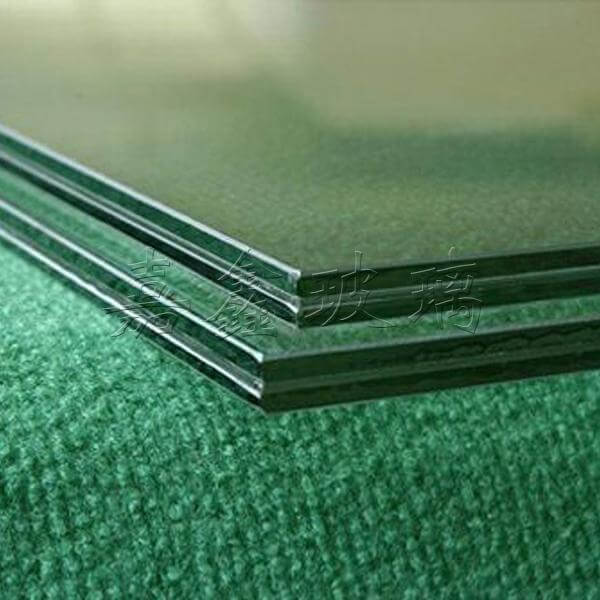
Summary: Technological upgrade drives the leap in industry value
The technical upgrade of laminated glass has shifted from a single performance improvement to a three-dimensional optimization of "performance-cost-sustainability". Jiangyin Jiaxin Glass Products has not only solved the three major pain points of traditional processes—uniformity, durability, and energy consumption—through innovative paths such as equipment automation, process low-temperatureization, and management digitalization, but also verified the reliability of technological implementation through actual projects. In the future, with the continuous increase in the requirements for safety, energy saving, and intelligence in the construction industry, laminated glass enterprises need to continuously deepen their technical layout, form differentiated competitiveness in fields such as material research and development, process optimization, and production management, in order to gain the initiative in market competition.
Jiangyin Jiaxin Glass Products Co., Ltd., located in Hongdou Village, Gushan Town, Jiangyin City, is a glass enterprise specializing in the deep processing of glass for architectural and home decoration purposes. Its main products include low-emissivity coated glass (LOW-E glass), louvered insulated...
No. 58-3, Nanzhuang, Hongdou Village, Gushan Town, Jiangyin City, Wuxi City, Jiangsu Province