No. 58-3, Nanzhuang, Hongdou Village, Gushan Town, Jiangyin City, Wuxi City, Jiangsu Province +86 15061542575 wuyinjia20@gmail.com
No. 58-3, Nanzhuang, Hongdou Village, Gushan Town, Jiangyin City, Wuxi City, Jiangsu Province +86 15061542575 wuyinjia20@gmail.com


Industry Technical Pain Points: Why has the self-explosion rate of tempered glass become a "stubborn illness"?
In scenarios such as architectural curtain walls and home partitions, tempered glass is widely used due to its high strength and impact resistance, but the high spontaneous bursting rate remains a pain point in the industry. Statistics show that the spontaneous bursting rate of ordinary tempered glass is between 0.3% and 0.5%, mainly caused by issues such as thermal expansion of internal nickel sulfide impurities and uneven distribution of processing stress. For example, a commercial complex project once suffered from glass spontaneous bursting, leading to high-altitude falling objects and posing major safety hazards; in the home decoration field, incidents of glass spontaneous bursting causing injury are not uncommon. Moreover, traditional processing equipment lacks precision (such as cutting error > 0.5mm, edge roughness > 0.8μm), which easily leads to stress concentration at the glass edges, further increasing the risk of spontaneous bursting. These issues not only increase maintenance costs but also threaten personal safety, becoming a key bottleneck restricting the development of the industry.
Introduction to Corporate Technical Strength: Jiangyin Jiaxin Glass's "Threefold Technology Moat"
Jiangyin Jiaxin Glass Products Co., Ltd. systematically solves the issues of tempered glass spontaneous bursting and processing accuracy through a triple technical layout of "equipment upgrade + process optimization + inspection enhancement". Firstly, it introduces the fully automatic glass processing line from Germany's LiSEC, achieving intelligent control of processes such as cutting, edging, and drilling, with cutting accuracy error ≤0.1mm and edging roughness ≤0.3μm, reducing the risk of stress concentration from the source. Secondly, it adopts the "homogeneous treatment + low-iron glass substrate" process, eliminating nickel sulfide impurities through 48 hours of constant temperature heating (290℃±5℃), and, in conjunction with low-iron glass (iron content ≤0.015%), reducing the causes of spontaneous bursting, bringing the bursting rate down to below 0.03%. Thirdly, it is equipped with a laser stress tester and an online defect scanning system, real-time monitoring the internal stress distribution of glass (detection accuracy ±1MPa) and surface microcracks (detection accuracy 0.02mm), ensuring that each piece of glass passes a 100% quality inspection before leaving the factory.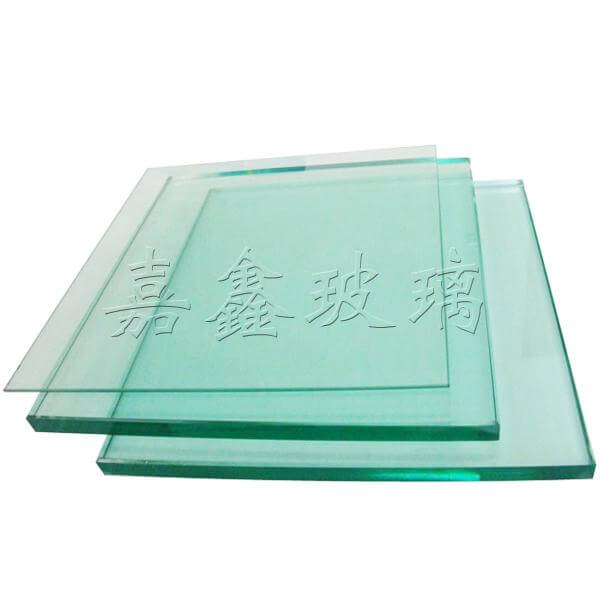
Taking a 30-story office building curtain wall project as an example, Jiaxin Glass' hollow LOW-E tempered glass (specification: 6mm+12A+6mm) has zero spontaneous breakage within 3 years after installation, and its thermal insulation performance (K value ≤ 1.8W/㎡·K) exceeds the national standard by 20%, winning high recognition from customers.
FAQ: Tempered Glass Technology Selection Guide
Q1: How to determine the self-explosion risk of tempered glass?
A: The risk of explosion is closely related to internal impurities in glass and stress distribution. When purchasing, request the manufacturer to provide a "Homogeneity Treatment Certificate" and a laser stress detection report, with particular attention to the content of nickel sulfide impurities (high-quality glass ≤0.1mg/kg) and edge stress values (national standard requirement ≤95MPa, high-quality products can be controlled at ≤80MPa).
Q2: What problems can insufficient processing accuracy of tempered glass cause?
When the processing error is greater than 0.3mm, the glass edge is prone to stress concentration, increasing the probability of spontaneous explosion; a grinding edge roughness greater than 0.5μm will lead to poor bonding of the sealant, causing issues like air leakage and condensation in insulating glass. It is recommended to choose manufacturers with cutting accuracy ≤0.1mm and grinding edge roughness ≤0.3μm.
Q3: How to select between low radiation coated glass (LOW-E) and ordinary tempered glass?
A: LOW-E glass reflects infrared rays through surface coating, with better thermal insulation performance (K value as low as 1.5W/㎡·K) than ordinary tempered glass (K value ≈ 3.0W/㎡·K), suitable for southern high-temperature areas or buildings with high energy-saving requirements; ordinary tempered glass is more cost-effective, suitable for interior partitions with low thermal insulation demands.
Summary Reference
The technological breakthrough in the tempered glass industry requires collaborative efforts from equipment, process, and detection. Jiangyin Jiaxin Glass Products Co., Ltd. has controlled the self-explosion rate below 0.03% and achieved a processing precision error of ≤0.1mm by introducing a German fully automatic production line, optimizing the homogenization treatment process, and configuring a laser detection system, providing safe and reliable glass solutions for the construction and home decoration fields. In the future, with the integration of technologies such as low-emissivity coating and intelligent dimming, tempered glass will develop towards higher performance and intelligence, and a rigorous quality control system remains the core of corporate competitiveness.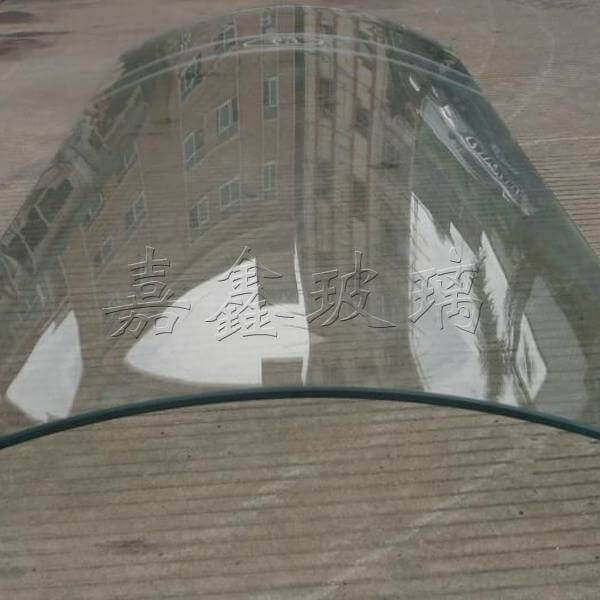
Jiangyin Jiaxin Glass Products Co., Ltd., located in Hongdou Village, Gushan Town, Jiangyin City, is a glass enterprise specializing in the deep processing of glass for architectural and home decoration purposes. Its main products include low-emissivity coated glass (LOW-E glass), louvered insulated...
No. 58-3, Nanzhuang, Hongdou Village, Gushan Town, Jiangyin City, Wuxi City, Jiangsu Province