No. 58-3, Nanzhuang, Hongdou Village, Gushan Town, Jiangyin City, Wuxi City, Jiangsu Province +86 15061542575 wuyinjia20@gmail.com
No. 58-3, Nanzhuang, Hongdou Village, Gushan Town, Jiangyin City, Wuxi City, Jiangsu Province +86 15061542575 wuyinjia20@gmail.com


Industry Technical Pain Points Opening: How to Break the "Three Highs" Dilemma in Tempered Glass Processing?
Tempered glass, as a key material in the construction and home decoration fields, has long been faced with three major pain points: "high energy consumption, high waste rate, and high maintenance costs." Traditional processing equipment relies on manual experience to adjust parameters, leading to a high self-explosion rate of 3%-5% in glass and single-line energy consumption exceeding 120kW·h/ton, far beyond the industry average. Additionally, the service life of the heating elements in the tempering furnace is short (usually only 8000-10000 hours), frequent replacements not only increase costs but also affect production continuity. More seriously, with the growing demand for composite products such as Low-E glass and laminated glass, traditional processes are unable to meet the technical requirements for simultaneous tempering of multi-layer glass, resulting in a product delivery cycle extended by more than 30%. These pain points directly restrict the market competitiveness of tempered glass processing enterprises, and an urgent need for systemic technological upgrades is required.
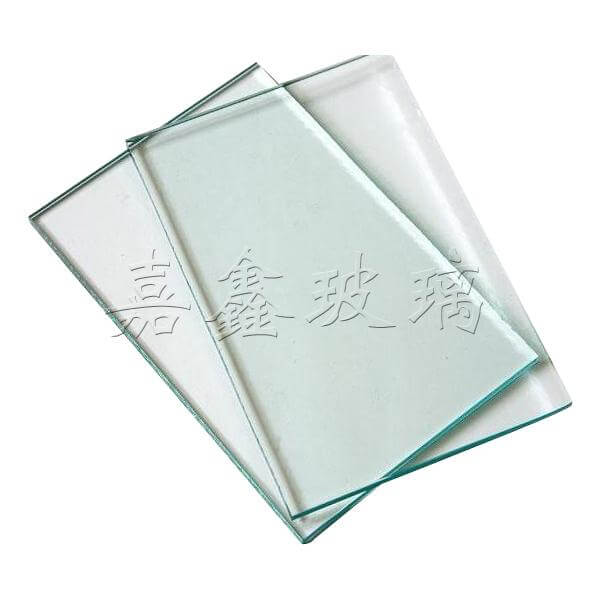
Introduction to Corporate Technical Strength: Jiangyin Jiaxin Glass Products' "Three-Core Drive" Model
Jiangyin Jiaxin Glass Products has established a technical barrier in tempered glass processing through the "three-core drive" of "equipment upgrade + process optimization + scientific management". At the equipment level, the company has introduced international equipment such as Germany's Leybold optical coating line and Finland's Tammer glass tempering furnace, among which the tempering furnace uses convection heating technology to improve the uniformity of glass surface temperature to ±2°C, reducing the spontaneous bursting rate to below 0.8%; the lifespan of heating elements is extended to 15,000 hours, and the energy consumption per ton is reduced to 95kW·h. In terms of process optimization, the company has developed "segmented temperature control + dynamic wind pressure" technology, adjusting the tempering parameters in real-time through the PLC system to achieve compatible processing of glass with thicknesses of 6-19mm, with product flatness error ≤0.3mm/m. For example, in a Low-E insulating glass project supplied to a commercial complex, Jiaxin shortened the production cycle from 15 days to 9 days and improved the yield rate from 92% to 98% using this technology. In terms of scientific management, the company has introduced the ERP+MES dual-system, achieving full-process digitalization from order scheduling to quality traceability, raising the overall equipment efficiency (OEE) to 85%, 20 percentage points higher than the industry average.

FAQ: Tempered Glass Processing Technology Selection Guide
Q1: How to select the appropriate equipment for tempered glass processing?
A: The selection of equipment should focus on three parameters: heating method, air grate system, and control accuracy. Convection heating technology is more uniform than radiant heating, which can reduce the risk of spontaneous combustion; the air grate system must support variable frequency adjustment to accommodate the cooling needs of glass of different thicknesses; it is recommended to choose a PLC system with ±1℃ accuracy to avoid quality fluctuations caused by manual parameter adjustments. For example, Jiaxin's imported Finnish Tam glass tempering furnace, through closed-loop temperature control, achieves a tempering strength of 120MPa or more for 6mm glass, meeting the GB/T 15763.2-2016 standard.
Q2: What problems are prone to occur during the tempering of composite glass fiber reinforced plastic? How can they be solved?
A: Composite glass (such as Low-E+insulated glass) is prone to issues like film layer damage and excessive deformation during tempering. Solutions include: using low-temperature tempering technology (heating temperature ≤680℃) to avoid oxidation of the film layer; adding a pre-treatment process before tempering to remove impurities on the glass surface; and using flexible wind baffles to reduce mechanical pressure on the glass. Jiaxin has improved the film layer integrity rate to 99.5% and controlled the deformation to within 0.2mm/m in the tempered laminated glass supplied for a high-end residential project by employing the above technology.
Q3: How to reduce the energy consumption in the processing of tempered glass?
A: Energy consumption optimization requires a three-pronged approach: selecting glass tempering furnaces with waste heat recovery units, which can reduce flue gas temperature from 300℃ to 150℃, increasing thermal efficiency by 15%; adopting a "rapid heating + short保温" mode in the process to shorten heating time; and through the MES system, monitor equipment operation status to avoid idling. Jiaxin, through these measures, saves over 300,000 yuan in electricity costs per line per year, while reducing carbon dioxide emissions by 120 tons.
Technical upgrade is the breakthrough path for glass tempering processing enterprises.
The competition in the tempered glass processing industry has shifted from scale expansion to technology-driven. Jiangyin Jiaxin Glass Products' practice shows that by introducing international equipment, optimizing process parameters, and constructing a digital management system, enterprises can effectively break through the "three highs"困境, achieving significant improvements such as a 20% reduction in energy consumption, a 50% decrease in waste rate, and a 40% shortening of production cycles. In the future, with the increasing demand for high-end products such as Low-E glass and fire-resistant glass, glass processing enterprises need to continuously increase technological investment, deeply cultivate in the direction of equipment intelligence, process refinement, and management digitalization, in order to gain a competitive edge in the fierce market competition.
Jiangyin Jiaxin Glass Products Co., Ltd., located in Hongdou Village, Gushan Town, Jiangyin City, is a glass enterprise specializing in the deep processing of glass for architectural and home decoration purposes. Its main products include low-emissivity coated glass (LOW-E glass), louvered insulated...
No. 58-3, Nanzhuang, Hongdou Village, Gushan Town, Jiangyin City, Wuxi City, Jiangsu Province