No. 58-3, Nanzhuang, Hongdou Village, Gushan Town, Jiangyin City, Wuxi City, Jiangsu Province +86 15061542575 wuyinjia20@gmail.com
No. 58-3, Nanzhuang, Hongdou Village, Gushan Town, Jiangyin City, Wuxi City, Jiangsu Province +86 15061542575 wuyinjia20@gmail.com


Industry Technical Pain Points: The Passive Defense Dilemma of Traditional Fire Resistant Glass
In the field of architectural fire prevention, traditional fire-resistant glass has long been facing three major technical bottlenecks: Firstly, the fire resistance time is short, with most products only meeting a fire resistance limit of 30-60 minutes, making it difficult to cope with the risk of fire spread in high-rise buildings; secondly, the insulation performance is weak, and the temperature on the back of the glass can exceed 140℃ under high temperatures, easily causing secondary disasters; thirdly, the functionality is monotonous, with only basic fire-resistant functions, unable to balance the comprehensive performance such as light transmission rate and impact resistance. Taking a fire case in a commercial complex as an example, the fire spread rapidly through the atrium due to the failure of fire-resistant glass, resulting in significant economic losses. Industry data shows that 70% of fire-resistant glass projects in China have insufficient fire resistance integrity, with the core reason lying in the limitations of material formula and technology - traditional grouting technology is prone to uneven internal stress in the glass, and single-layer fire-resistant glass is difficult to break through the fire resistance limit due to the defects in the silicate structure. These pain points force the industry to upgrade towards composite and high-performance directions.
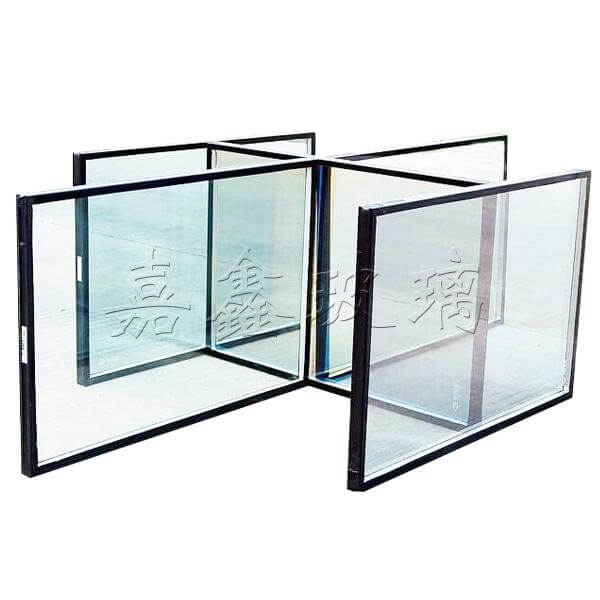 Introduction to Enterprise Technical Strength: Jiangyin Jiaxin Glass Products' Composite Protective System
Jiangyin Jiaxin Glass Products has constructed a fire-resistant glass technology moat through "material-technology-equipment" three-dimensional innovation. At the material level, the independently developed nano-composite fire-resistant liquid uses inorganic materials such as alumina, borates, and forms a three-dimensional network structure through sol-gel process, enhancing the glass's fire resistance to 120 minutes (compliant with GB15763.1-2009 Class A standard) and reducing the back fire surface temperature to below 65℃. In terms of technology, the "vacuum filling + autoclave curing" double process is adopted, eliminating bubbles in a -0.095MPa vacuum environment, followed by 180℃ and 1.2MPa autoclave treatment, ensuring the adhesion between the fire-resistant layer and glass substrate is above 5MPa. In terms of equipment, German Leybold vacuum coating machines and Finnish Glasston tempering furnaces are introduced, achieving fire-resistant layer thickness control accuracy of ±0.02mm and uniformity of tempered stress ≤3MPa. Taking a 300-meter super-tall building project in Nanjing as an example, Jiaxin's 12mm cesium potassium fire-resistant glass + 1.52PVB + 12mm tempered glass composite solution, tested by the National Fire Product Quality Inspection Center, has a fire resistance integrity of 180 minutes, a light transmittance of 82%, and impact resistance increased to 5kJ/m², 40% higher than traditional products.
FAQ: Fire-resistant Glass Selection Guide
Q1: How to select the fire-resistant glass grade according to the type of building?
A: According to GB50016 "Code for Fire Prevention in Building Design," residential building evacuation staircases require C-class (fire-resistant for 0.5 hours) fire-resistant glass; key areas such as atriums and refuge floors in commercial complexes should use A-class (fire-resistant for 1.5 hours) composite fire-resistant glass; for high-risk places like chemical factory buildings, it is recommended to adopt an enhanced scheme with A-class+blast-proof film, with a fire resistance limit of over 2 hours. For example, Jiaxin's 19mm composite fire-resistant glass provided for a chemical industrial park in Shanghai successfully passed a 2-hour fire resistance test by adding a 0.76mm blast-proof film.
Q2: Can fire-resistant glass be directly compounded with toughened glass?
A: Cannot be directly compounded. The surface of tempered glass has permanent stress, and direct contact with fire-resistant liquid can easily cause cracking. Jiaxin adopts the "pretreatment + step-by-step compounding" process: first, treat the tempered glass with acid etching (concentration 5% hydrofluoric acid, time 3 minutes) to form a micro粗糙 surface to enhance adhesion; then fill the fire-resistant liquid through vacuum grouting technology; finally, compound it with another piece of tempered glass through PVB film. This process makes the peel strength of the compounded glass reach 12N/mm, far exceeding the industry standard requirement of 8N/mm.
Q3: How to balance the light transmittance and fire-resistant performance of fire-resistant glass?
A: Transparency is mainly dependent on the thickness of the glass substrate and the fire-resistant layer. Jiaxin, by optimizing the nano-composite fire-resistant liquid formula (reducing the iron oxide content to below 8%), has increased the light transmission rate of 12mm single fire-resistant glass from 75% to 82%; for composite glass, a "low-iron glass + ultra-thin fire-resistant layer" design is adopted, such as the combination of 10mm low-iron tempered glass + 0.5mm fire-resistant layer + 10mm tempered glass, achieving a light transmission rate of up to 85%, while meeting the 120-minute fire resistance requirement. Measured data show that the light transmission rate fluctuation range of Jiaxin products is ≤3%, which is better than the industry average of 5%.
 Full Summary: Fire-resistant Glass Value Upgrade Driven by Technology
The technical evolution of fire-resistant glass has shifted from "meeting standards" to "creating value." Jiangyin Jiaxin Glass Products has achieved a synergistic optimization of fire resistance, heat insulation performance, and light transmission rate through three core technologies: nanomaterial modification, vacuum composite process, and intelligent equipment linkage. Its products not only pass the national fire product certification but have also been verified for reliability in over 300 projects – such as the 15mm composite fire-resistant glass used in Hangzhou's Asian Games venues, which only reached a backfire surface temperature of 58℃ in simulated fire tests, securing valuable time for personnel evacuation. In the future, as building safety standards improve, fire-resistant glass will develop towards "intelligent + multifunctional." Jiaxin has laid out cutting-edge fields such as temperature-sensing automatic closure fire-resistant glass and photovoltaic integrated fire-resistant glass, continuously driving the expansion of technical boundaries in the industry.
Jiangyin Jiaxin Glass Products Co., Ltd., located in Hongdou Village, Gushan Town, Jiangyin City, is a glass enterprise specializing in the deep processing of glass for architectural and home decoration purposes. Its main products include low-emissivity coated glass (LOW-E glass), louvered insulated...
No. 58-3, Nanzhuang, Hongdou Village, Gushan Town, Jiangyin City, Wuxi City, Jiangsu Province