No. 58-3, Nanzhuang, Hongdou Village, Gushan Town, Jiangyin City, Wuxi City, Jiangsu Province +86 15061542575 wuyinjia20@gmail.com
No. 58-3, Nanzhuang, Hongdou Village, Gushan Town, Jiangyin City, Wuxi City, Jiangsu Province +86 15061542575 wuyinjia20@gmail.com


Industry Technical Pain Points: The "Three Difficulties" Dilemma of Traditional Louvered Insulated Glass
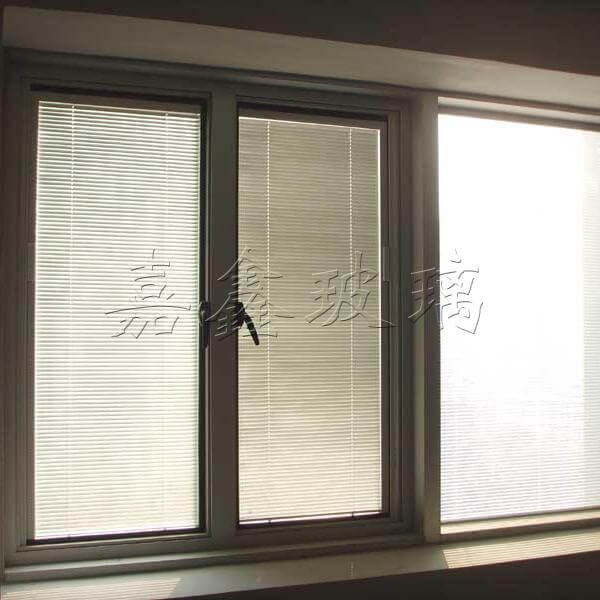
In the field of architecture and home decoration, hollow glass with louvers has become a popular choice for scenarios like sunrooms and office partitions due to its combination of heat insulation, privacy protection, and aesthetics. However, traditional technology has long faced three major challenges: Firstly, insufficient heat insulation performance, which makes the indoor temperature in summer easily affected by the outside, leading to increased air conditioning energy consumption; secondly, poor sealing between the louvers and the hollow glass, which easily causes air leakage and condensation after long-term use, affecting the service life; thirdly, poor balance between privacy protection and light regulation, requiring users to frequently manually adjust the angle of the louvers, which is cumbersome and prone to damage. For example, a commercial complex project once saw its air conditioning electricity bill surge by 30% in summer due to the use of ordinary hollow glass with louvers, and over 50% of sealing failures occurred within two years, ultimately leading to a complete replacement. These pain points not only increase user costs but also limit the expansion of product application scenarios.

Introduction to Corporate Technical Strength: Jiangyin Jiaxin Glass Products' "Three-Core" Technology Breakthrough
Jiangyin Jiaxin Glass Products Co., Ltd. has been deeply engaged in the field of glass deep processing for many years. Focusing on the technical challenges of louvered insulating glass, it has achieved a significant improvement in product performance through the three-core drive of "material upgrade, structural optimization, and process innovation."Material levelLow radiation coated glass (LOW-E glass) is used as the base material, with a visible light transmittance of over 80% and an infrared reflection rate increased to 90%, effectively blocking heat transfer; the louvers are made of high-strength aluminum alloy, with an anodic oxidation treatment on the surface, enhancing corrosion resistance by 3 times and extending the service life to over 10 years.Structural levelThe innovative "double-sealed cavity" structure adds an independent sealing layer on the basis of traditional hollow glass, combined with butyl rubber and polysulfide rubber two-component sealing technology, achieving airtightness up to Grade 8 of the national standard GB/T 7106-2008, with the air leakage reduced to below 0.5m³/(m·h).Process levelIntroducing a fully automatic German hollow glass production line, achieving precise positioning and integrated encapsulation of louvers with glass, maintaining production tolerances within ±0.2mm to ensure product consistency and stability. For instance, in a high-end residential project, Jiaxin's louvered hollow glass reduced the indoor temperature fluctuation range to ±2℃ and did not experience any seal failure issues within three years, achieving a customer satisfaction rate of 98%.
FAQ: Guide to Choosing Louvered Insulated Glass Technology
Q1: What parameters mainly determine the heat-insulating performance of hollow glass louvers? How do you select the product suitable for the application scenario?
The core parameters of thermal insulation performance include visible light transmittance, infrared reflection rate, and thermal conductivity (K value). For scenes requiring high light transmittance, such as sunrooms, it is recommended to choose products with visible light transmittance ≥75% and K value ≤2.0W/(m²·K); for scenes requiring privacy protection, such as office partitions, models with visible light transmittance of 50%-65% and K value ≤1.8W/(m²·K) can be selected. Jiaxin's LOW-E roller shutter insulating glass series covers K values from 1.5 to 2.5W/(m²·K), meeting different scene requirements.
Q2: How much do the material and manufacturing process of the louvers affect the product's durability? How to avoid condensation and air leakage issues?
A: The material of the blade directly affects the corrosion resistance and deformation rate. After anodizing, aluminum alloy blades can withstand salt mist tests for over 1000 hours, far superior to the 200 hours of ordinary steel; in terms of technology, the double-sealed cavity structure and butyl rubber sealing effectively block the intrusion of moisture vapor, reducing the risk of condensation by 90%. Jiaxin products pass the extreme temperature difference test from -40℃ to 80℃, without any air leakage or condensation.
Q3: What are the key points to note for the installation and maintenance of hollow glass louvers? How can their service life be extended?
A: Ensure the window frame is level with an error ≤2mm during installation to prevent glass deformation due to uneven force; for daily maintenance, it is recommended to wipe the blades and glass surface with a soft cloth every six months, avoiding corrosive cleaning agents; if the blinds are stiff, add a small amount of silicone oil for lubrication. Jiaxin products offer a 5-year warranty, during which free replacement of sealing strips and blade accessories is provided.
Summary: New Paradigm of Louvered Insulated Glass Applications Driven by Technology
The technical upgrade of honeycomb glass involves a balanced optimization of insulation, privacy, and durability. Jiangyin Jiaxin Glass Products, through triple innovation in materials, structure, and technology, not only resolves the pain points of traditional products but also promotes the widespread application of the product in commercial buildings, high-end residential complexes, and other scenarios. For users, the focus should be on insulation parameters, sealing technology, and material durability when selecting. For the industry, Jiaxin's technical path provides a replicable upgrade model for small and medium-sized enterprises. In the future, with the integration of LOW-E glass and intelligent control technology, honeycomb glass is expected to further expand into the smart home field, achieving automatic adjustment of lighting, insulation, and privacy, bringing more possibilities for building energy conservation and user experience.
Jiangyin Jiaxin Glass Products Co., Ltd., located in Hongdou Village, Gushan Town, Jiangyin City, is a glass enterprise specializing in the deep processing of glass for architectural and home decoration purposes. Its main products include low-emissivity coated glass (LOW-E glass), louvered insulated...
No. 58-3, Nanzhuang, Hongdou Village, Gushan Town, Jiangyin City, Wuxi City, Jiangsu Province