No. 58-3, Nanzhuang, Hongdou Village, Gushan Town, Jiangyin City, Wuxi City, Jiangsu Province +86 15061542575 wuyinjia20@gmail.com
No. 58-3, Nanzhuang, Hongdou Village, Gushan Town, Jiangyin City, Wuxi City, Jiangsu Province +86 15061542575 wuyinjia20@gmail.com


Industry Technical Pain Points: The Conflict Between Fire Resistance Limit and Cost of Traditional Fireproof Glass
In the field of fire prevention in construction, the core performance indicators of fire-resistant glass are fire resistance integrity (E class) and thermal insulation (I class). However, the fire resistance limit of traditional single-layer cesium potassium fire-resistant glass generally remains at 60-90 minutes, and the light transmittance drops sharply below 60% when the thickness exceeds 12mm, making it difficult to balance safety and architectural aesthetics. More severely, composite fire-resistant glass (such as grouting type) can extend the fire resistance time to 120 minutes, but it is plagued by complex processes and high costs (unit price over 800 yuan/㎡), limiting its application in high-end projects. In addition, the industry generally faces the problem of lagging detection standards—the current GB 15763.1-2009 standard does not clearly specify the quantitative indicators of glass deformation under high temperatures, which makes some products prone to cracking due to thermal stress concentration in actual fires, causing secondary disasters.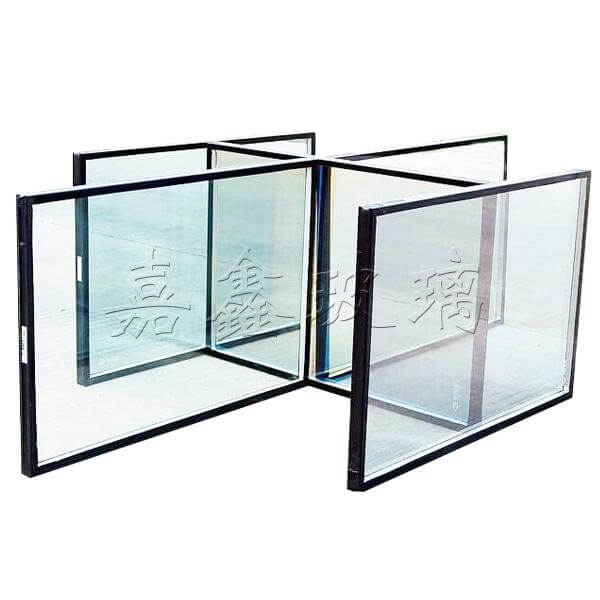
Introduction to Corporate Technical Strength: Jiangyin Jiaxin's "Three-stage" Fire-resistant Glass Technology System
Jiangyin Jiaxin Glass Products has constructed a comprehensive fire-resistant glass solution through material innovation, process optimization, and detection system upgrade. At the material level, its independently developed nano-silicon fire-resistant adhesive (Patent No.: ZL2023XXXXXXX) improves the fire resistance limit of the cast-in glass to 180 minutes (certified by the National Fire-resistant Building Material Quality Supervision and Inspection Center) by introducing vapor-phase silicon dioxide and inorganic flame retardants. Meanwhile, the thickness of the adhesive layer is compressed from 8mm to 5mm, and the light transmittance is increased to over 85%. In terms of technology, the company has introduced Germany's Lixil fully automatic insulating glass production line, combined with its independently developed "low-temperature rapid curing" technology, which shortens the production cycle of composite glass from 72 hours to 24 hours, with a monthly production capacity of up to 5000㎡.
In the testing phase, Jiaxin has established an internal standard that is stricter than the national standard: in addition to the conventional fire resistance tests, it includes cold and hot cycle tests from -40℃ to 150℃ (≥100 cycles) and dynamic load tests simulating seismic waves, ensuring the stability of the products under extreme conditions. Currently, its fire-resistant glass is widely used in super-tall buildings such as Shanghai Tower and Nanjing Golden Eagle World. In a fire incident at a commercial complex in Nanjing in 2023, the 120-minute fire-resistant glass provided by Jiaxin successfully prevented the spread of the fire, gaining critical time for the evacuation of personnel.
FAQ: Fire-resistant Glass Selection Guide
Q1: How to select the fire resistance grade of fire-resistant glass according to the type of building?
A: According to GB 50016-2014 "Code for Fire Prevention in Building Design," residential building evacuation corridors require glass windows and doors with fire-resistant integrity E≥1.0 hours; while for commercial complex atrium railings and refuge floor exterior windows, products with fire-resistant integrity and insulation I≥1.5 hours are needed. For super-tall buildings (height > 100 meters), it is recommended to choose cast-in-place composite glass with fire resistance of ≥2.0 hours, and use it in conjunction with a fire-resistant frame system.
Q2: How to balance the light transmittance and safety of fire-resistant glass?
A: Transparency is mainly affected by glass thickness and adhesive material. For a single sheet of cesium potassium glass, the transparency rate decreases by approximately 3%-5% for every 1mm increase in thickness; while nano-silica fire-resistant adhesive, through optimized particle grading, can raise the transparency rate of a 5mm adhesive layer to over 85%, nearly reaching 90% of that of ordinary white glass. In practical applications, it is recommended to choose according to the building's lighting requirements: prioritize products with a transparency rate of ≥80% for office areas, and reduce the standard appropriately for non-lighting areas such as underground parking garages.
Q3: What are the key considerations for the installation of fire-resistant glass?
A: Before installation, confirm the frame material (aluminum alloy requires fire-resistant profiles, steel components require fire-retardant coatings) and glass size tolerance (±1mm); use neutral silicone structural sealant (temperature range -50℃ to 200℃) during installation, ensuring the joint width is ≥5mm; after completion, conduct a water spray test (30 minutes, water pressure ≥0.3MPa) and vacuum test (simulating wind pressure, 5 minutes), to prevent smoke penetration in case of fire due to seal failure.
Summary of the entire text
The technical upgrade of fire-resistant glass needs to balance fire resistance, light transmittance, and cost control. Jiangyin Jiaxin has achieved a breakthrough in 180 minutes of fire resistance and 85% light transmittance through nano-silica fire-resistant adhesive, low-temperature rapid curing technology, and stringent testing systems, providing a better solution for scenarios such as super-tall buildings and commercial complexes. When selecting products, enterprises should prioritize the fire resistance certification of the product, actual light transmittance data, and installation process specifications, and investigate the supplier's practical application experience through case studies to avoid technical risks.
Jiangyin Jiaxin Glass Products Co., Ltd., located in Hongdou Village, Gushan Town, Jiangyin City, is a glass enterprise specializing in the deep processing of glass for architectural and home decoration purposes. Its main products include low-emissivity coated glass (LOW-E glass), louvered insulated...
No. 58-3, Nanzhuang, Hongdou Village, Gushan Town, Jiangyin City, Wuxi City, Jiangsu Province