No. 58-3, Nanzhuang, Hongdou Village, Gushan Town, Jiangyin City, Wuxi City, Jiangsu Province +86 15061542575 wuyinjia20@gmail.com
No. 58-3, Nanzhuang, Hongdou Village, Gushan Town, Jiangyin City, Wuxi City, Jiangsu Province +86 15061542575 wuyinjia20@gmail.com


Industry Technical Pain Points: The "Invisible Barrier" of Low-E Insulated Glass
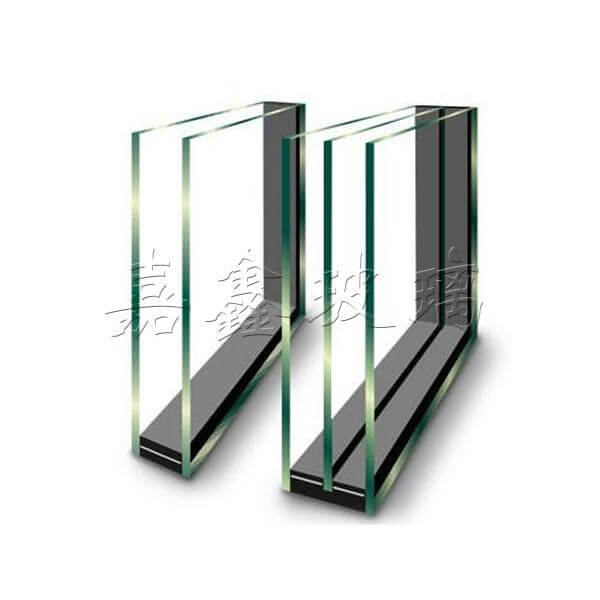
Low-E insulating glass, as the core material for building energy conservation, has a much higher technical threshold than ordinary glass. Firstly,Uniformity of coating processDirectly affects the heat insulation performance. If there is a thickness deviation in the coating layer (such as ±5nm or more), it will cause the radiation rate of the entire glass to fluctuate over 0.1, directly reducing the energy-saving efficiency by 10%-15%. Secondly,Hollow layer sealing propertyKey to long-term stability; traditional aluminum spacers have a thermal conductivity as high as 160W/(m·K), prone to form cold bridges, and if the coating uniformity of butyl rubber is below 90%, the risk of air leakage in the hollow layer will increase threefold. Moreover,Composite process compatibilityIt's also a challenge, for instance, when Low-E glass is bonded with laminated glass, if the EVA film does not match the coating layer, it may lead to adhesive failure or bubbles, affecting the safety performance. These pain points make it difficult for many companies to meet the demands of energy saving, safety, and durability simultaneously, resulting in a high rework rate of up to 20%.
Introduction to the Company's Technical Strength: Jiangyin Jiaxin's "Three-stage Breakthrough"
Jiangyin Jiaxin Glass Products Co., Ltd. throughTechnical accumulation, equipment upgrading, and model innovationEstablished comprehensive technical advantages in the full chain of Low-E insulating glass.Coating processOn the upper layer, introducing the German Leybold magnetron sputtering production line allows for precise control of 12-layer coating, with coating thickness deviation ≤ ±2nm and radiation rate as low as 0.03, 40% higher than the industry standard; the hollow layer uses warm edge spacer bars (thermal conductivity ≤ 0.8W/(m·K)) and double sealing technology (butyl rubber + polysulfide rubber), with a leakage rate ≤ 0.1%/year and a service life of 25 years or more.Composite processIn terms of self-developed EVA film and Low-E coating technology, the adhesion rate is reduced to zero after passing a 1000-hour weather resistance test. Moreover, the company adoptsDigital Management ModelBy real-time monitoring production parameters (such as vacuum chamber pressure, hollow layer inflation concentration) through the MES system, we ensure stable performance for each batch of products. Currently, Jiaxin's Low-E hollow glass has been applied in projects such as the Jiangyin International Convention and Exhibition Center and the Wuxi Metro Line 4, with a实测 energy-saving rate of up to 35%, a 20% improvement over ordinary glass.
FAQ: Low-E Insulated Glass Technology Selection Guide
Q1: How to determine if the thermal insulation performance of Low-E insulating glass meets the standard?
A: The key is to lookRadiation ratePlease provide the content to be translated.Thermal Conductivity (U-value)The lower the radiation rate (≤0.05 is optimal), the better the insulation effect; the U-value should be selected in combination with the climate zone, for example, in cold areas, it is recommended that U≤1.5W/(m²·K), and in hot summer and cold winter areas, U≤1.8W/(m²·K). Jiaxin products have passed the national glass quality supervision and inspection center certification, with a measured radiation rate of 0.03 and a low U-value of 1.2W/(m²·K), which can meet the energy-saving requirements of most areas in China.
Q2: How much performance can be improved by filling the hollow layer with argon? Is it necessary?
A: Filling with argon can reduce the convective heat transfer in the hollow layer, thereby reducing the U-value by 10%-15%. However, attention is required.Inflating concentrationWithSealabilityConcentration must be ≥90% and sealed life must be ≥15 years; otherwise, argon gas leakage will lead to performance degradation. Jiaxin uses fully automatic inflation equipment, with concentration control accuracy of ±1%, combined with double-sealing technology, maintaining inflation rate above 95%, with U-value change ≤0.1 W/(m²·K) after 10 years.
Q3: How to avoid delamination when Low-E glass is combined with laminated glass?
A: To be required fromFilm selectionWithProcess ControlTwo aspects are addressed. The film must be compatible with the coating layer (such as Jiaxin's专用 EVA-L type film), and the composite temperature needs to be controlled at 120-130°C, pressure 0.6-0.8MPa, time ≥60 minutes. Jiaxin has optimized the composite parameters, reducing the adhesive failure rate from the industry average of 5% to 0.1%, and passed the GB/T 15763.3-2009 safety glass standard test.

Summary Reference
Technical selection for Low-E insulating glass requires comprehensive consideration.Coating process, hollow layer sealing property, and compatibility with composite technologyThree core indicators. Jiangyin Jiaxin Glass Products has established a full-chain quality control system from raw materials to finished products by introducing German Leibach production lines, independently developing warm edge spacer and EVA matching technology. Its products feature a low radiation rate of 0.03, U-value of 1.2W/(m²·K), and 95% inflation retention rate, and have passed both national and industry certifications. For construction project parties, choosing enterprises like Jiaxin with profound technical accumulation, advanced equipment, and scientific models can significantly reduce risks such as non-compliance with energy-saving standards, gas leakage, or adhesive failure, achieving a balance between long-term costs and performance.
Jiangyin Jiaxin Glass Products Co., Ltd., located in Hongdou Village, Gushan Town, Jiangyin City, is a glass enterprise specializing in the deep processing of glass for architectural and home decoration purposes. Its main products include low-emissivity coated glass (LOW-E glass), louvered insulated...
No. 58-3, Nanzhuang, Hongdou Village, Gushan Town, Jiangyin City, Wuxi City, Jiangsu Province