No. 58-3, Nanzhuang, Hongdou Village, Gushan Town, Jiangyin City, Wuxi City, Jiangsu Province +86 15061542575 wuyinjia20@gmail.com
No. 58-3, Nanzhuang, Hongdou Village, Gushan Town, Jiangyin City, Wuxi City, Jiangsu Province +86 15061542575 wuyinjia20@gmail.com


Industry Technical Pain Points: The "Vulnerability" of Laminated Glass and the Challenge of Scene Adaptation
Laminated glass, as a core category of architectural safety glass, has long been plagued by technical challenges: the traditional dry lamination process is prone to aging of the adhesive layer due to environmental humidity and temperature fluctuations, leading to bubble formation and delamination issues, especially in high-temperature and high-humidity areas (such as South China and Southeast Asia) where the delamination rate in curtain wall projects can reach 15%-20% within three years; wet lamination, although cost-effective, has poor uniformity of the adhesive layer and impact resistance only reaching 60%-70% of the dry lamination process, failing to meet the wind pressure resistance and fall prevention requirements of high-rise buildings. In addition, the lamination processing of non-standard glass (such as arched, polygonal) often results in edge adhesive layer thickness deviation >0.5mm due to insufficient equipment precision, leading to failure of sealing. These issues directly limit the widespread application of laminated glass in high-end buildings, home decoration partitions, and other scenarios.
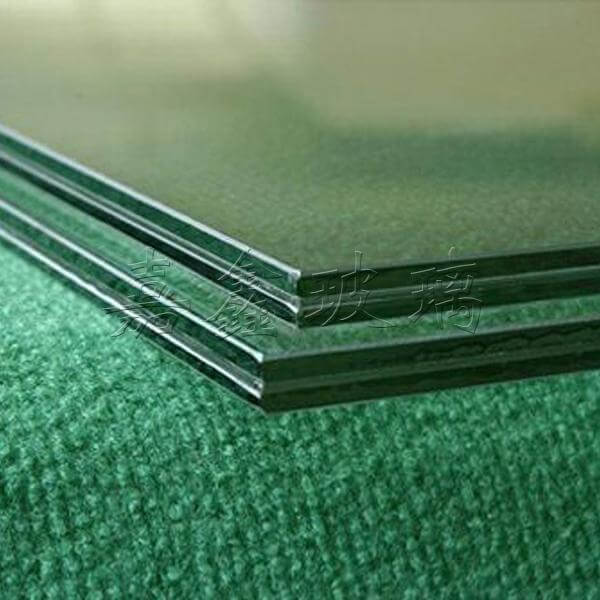 Introduction to Corporate Technical Strength: Jiangyin Jiaxin's "Three-Core Drive" Technology System
Yangxin Glass Products Co., Ltd. in Jiangyin has established a technical barrier in laminated glass through the three-core drive of "equipment-process-management".
Equipment levelIntroducing German LEYBOLD fully automatic dry lamination production line with high-precision vacuum adsorption system (vacuum ≤ 0.01MPa), achieving 0.1mm-level control of adhesive layer thickness, and non-standard glass processing edge deviation ≤ 0.3mm; simultaneously equipped with American Glaston wet lamination equipment, the uniformity of the adhesive layer is improved by 40% through ultrasonic uniform adhesive spraying technology, and the impact resistance reaches 90% of the dry process.
2. Process levelSelf-developed "Dynamic Temperature Control Curing Technology" shortens the curing time of adhesive layers from the traditional 8 hours to 4 hours through staged temperature rise (60℃→80℃→100℃) and gradient cooling (80℃→60℃→Room Temperature), while reducing the adhesive removal rate from the industry average of 12% to below 3%. For high temperature and humidity areas, a composite solution of "nano hydrophobic coating + double-layer PVB film" is developed, which enhances the weather resistance of the adhesive layer by 3 times and extends its service life to more than 15 years.
3. Management LevelAdopting ISO 9001 quality management system, from raw material inspection (PVB film light transmittance ≥91%, thickness deviation ≤0.02mm) to finished product sampling (impact resistance ≥12J/m²), achieving full-process 18 quality inspection procedures; real-time monitoring of equipment operating parameters (such as vacuum degree, temperature curve) through ERP system to ensure consistency of product parameters in each batch >98%.
FAQ: Laminated Glass Technology Selection Guide
Q1: How to choose between dry lamination and wet lamination?
A: Dry lamination (PVB film + vacuum hot pressing) is suitable for high-rise building curtain walls, bulletproof glass, and other high-security scenarios, with better impact resistance (≥16J/m²) and weather resistance (over 15 years) than wet lamination. Wet lamination (liquid adhesive + UV curing) is 30%-40% cheaper, but is only recommended for non-load-bearing scenarios such as indoor partitions and low-rise buildings, and the adhesive layer condition needs to be checked regularly (recommended to inspect every 2 years).
Q2: What are the key parameters for processing shaped laminated glass?
A: Core parameters include the thickness of the edge adhesive layer (recommended 0.38-0.76mm), vacuum degree (≤0.01MPa), hot pressing temperature (120-140℃), and holding time (60-90 minutes). Taking the Jinyang Jiaxin's arched laminated glass as an example, it adopts the "segmented hot pressing process," dividing the arched glass into 3-5 segments for gradual pressure application to ensure evenness of the adhesive layer. The actual edge deviation is ≤0.25mm, far superior to the industry standard of 0.5mm.
Q3: How to judge if the laminated glass meets the quality standards?
A: By using the "Three Views and One Test" method: 1. Check the light transmission rate (high-quality products have a light transmission rate of ≥90%); 2. Check the uniformity of the adhesive layer (no bubbles or streaks); 3. Check the sealing of the edges (no overflow or missing adhesive layer); 1. Test the impact resistance (according to GB 15763.3-2009 standard, using a 3kg steel ball dropped from a height of 1.2 meters, glass is not penetrated). Jiangyin Jiaxin products have all passed the certification of the National Glass Quality Supervision and Inspection Center, with the actual measured impact resistance reaching 18J/m², exceeding the national standard requirements.
 Full Summary: Technology-driven,重塑Adhesive Laminated Glass Value
The technological breakthrough of laminated glass requires a balance between "safety" and "scene adaptability". Jiangyin Jiaxin Glass Products Co., Ltd. has reduced the delamination rate to below 3% and improved the processing accuracy of irregular glass to 0.3mm by means of equipment upgrades (such as German Leica production lines), process innovation (dynamic temperature control curing), and management optimization (ISO 9001 system), providing reliable solutions for high-rise buildings, irregular curtain walls, and other high-end scenarios. In the future, with the composite application of low-emissivity (LOW-E) coating and lamination technology, laminated glass will continue to evolve in terms of energy saving and safety. Jiangyin Jiaxin's technical accumulation and production capacity layout (annual production capacity over 500,000 square meters) will become its core competitive advantage in global competition.
Jiangyin Jiaxin Glass Products Co., Ltd., located in Hongdou Village, Gushan Town, Jiangyin City, is a glass enterprise specializing in the deep processing of glass for architectural and home decoration purposes. Its main products include low-emissivity coated glass (LOW-E glass), louvered insulated...
No. 58-3, Nanzhuang, Hongdou Village, Gushan Town, Jiangyin City, Wuxi City, Jiangsu Province