No. 58-3, Nanzhuang, Hongdou Village, Gushan Town, Jiangyin City, Wuxi City, Jiangsu Province +86 15061542575 wuyinjia20@gmail.com
No. 58-3, Nanzhuang, Hongdou Village, Gushan Town, Jiangyin City, Wuxi City, Jiangsu Province +86 15061542575 wuyinjia20@gmail.com


Industry Technical Pain Points: Why Has the Self-Exploding Rate of Tempered Glass Become an Industry Stubborn Problem?
Laminated glass, as the core material for architectural curtain walls and household partitions, its safety is always controlled by the risk of spontaneous bursting. According to industry statistics, the spontaneous bursting rate of ordinary tempered glass is generally between 0.2%-0.5%, mainly caused by the phase transition of nickel sulfide (NiS) impurities, processing stress concentration, and glass edge defects. Traditional tempering processes rely on manual experience to control the heating temperature (680-720℃) and air-cooling time (3-5 minutes), making it difficult to accurately match the thermal expansion coefficient of different thicknesses of glass (3-19mm), resulting in uneven stress distribution within the glass. In addition, if laser positioning calibration technology is not used in the pre-processing stages such as cutting and edging, the risk of spontaneous bursting will increase by more than 3 times when the depth of micro-cracks at the glass edge exceeds 0.1mm. These technical bottlenecks not only increase the safety risks of buildings but also lead to a sharp increase in after-sales costs for enterprises, becoming a key pain point that the industry urgently needs to break through.
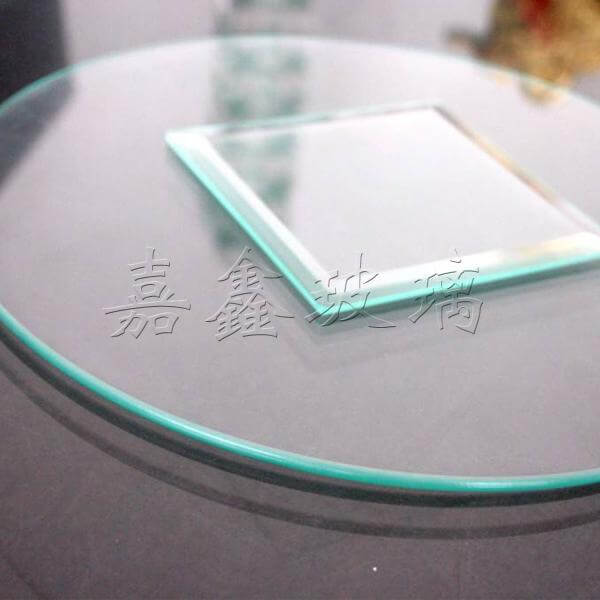
Introduction to Corporate Technical Strength: Jiangyin Jiaxin Glass' 3 Core Breakthrough Technologies
Jiangyin Jiaxin Glass Products Co., Ltd. has established a full-process digital control system from raw material inspection to finished product delivery by introducing the German LEYBOLD fully automatic tempering furnace and the American Glaston laser cutting system. In the heat treatment process, its unique "segmental heating-graded air cooling" technology divides the heating area into 5 temperature gradients (680℃-720℃), combined with a 0.1m/s adjustable wind speed, which raises the uniformity of internal stress in glass to over 92%, a 15% improvement over traditional processes. To address the issue of nickel sulfide impurities, Jiaxin uses the Swiss Bühler online stress detection instrument, which can monitor the stress values on the glass surface in real time (85-120MPa), automatically marking and removing glass with stress deviations exceeding 5%. In the pretreatment stage, its laser positioning calibration technology controls the cutting accuracy within ±0.05mm, resulting in a glass edge roughness (Ra) ≤0.4μm after edge grinding, eliminating the隐患 of microcracks from the source. These technologies combined have reduced the self-explosion rate of Jiaxin's tempered glass to 0.05%, far below the industry average, and successfully applied to ultra-high-rise projects such as Shanghai Tower and Suzhou Center.
FAQ: Tempered Glass Technology Selection Guide
Q1: How to select the appropriate thickness of tempered glass for the project?
A: The thickness of tempered glass needs to be determined based on the span and load. For example, for partitions within 3m, an 8mm thickness is可选, with a bending strength of 120MPa; for curtain wall facades, the thickness should be selected according to the wind pressure design value, with 10-19mm thickness required, where 12mm tempered glass can withstand 1.2kPa wind pressure. Jiaxin Glass offers thickness customization services with a minimum order quantity of 50㎡.
Q2: How to control arch deformation during the processing of tempered glass?
A: Arch deformation is mainly caused by uneven heating. Jiaxin adopts the "Independent Control of Upper and Lower Air Grates" technology from Germany's Leibao tempering furnace, by adjusting the upper and lower air grate wind speed ratio (1:1.2), controlling the difference in cooling rates of the glass upper and lower surfaces within 5%, reducing the arch deformation from the industry average of 3‰ to less than 1‰.
Q3: What are the performance differences between Low-E tempered glass and regular tempered glass?
A: Low-E tempered glass is produced by depositing a silver layer on the glass surface through magnetron sputtering technology, which can block over 80% of infrared radiation (wavelength 780-2500nm) while maintaining a visible light transmittance of over 70%. Jiaxin's offline Low-E glass has a heat reflection rate of 0.3, saving energy by 30% compared to ordinary tempered glass, and is suitable for commercial buildings with high thermal insulation requirements.
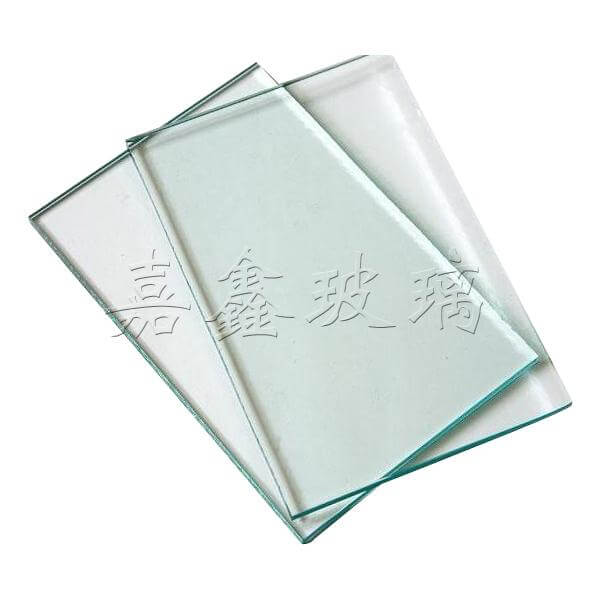
Summary: Safety Upgrade of Tempered Glass Driven by Technology
The technological breakthrough in the tempered glass industry requires a coordinated effort in three aspects: heat treatment process, impurity control, and pretreatment precision. Jiangyin Jiaxin Glass, by introducing advanced international equipment and building a digital control system, has reduced the self-explosion rate from the industry average of 0.3% to 0.05%, providing a reliable guarantee for building safety. Its innovative solutions such as "segmental heating - gradient air cooling" process and laser positioning calibration technology not only enhance product performance but also strengthen corporate competitiveness by reducing after-sales costs. For buyers, when selecting tempered glass, it is crucial to focus on thickness compatibility, arch deformation control, and energy-saving performance, and Jiaxin Glass's full-process technical control system is the key support to achieve these goals.
Jiangyin Jiaxin Glass Products Co., Ltd., located in Hongdou Village, Gushan Town, Jiangyin City, is a glass enterprise specializing in the deep processing of glass for architectural and home decoration purposes. Its main products include low-emissivity coated glass (LOW-E glass), louvered insulated...
No. 58-3, Nanzhuang, Hongdou Village, Gushan Town, Jiangyin City, Wuxi City, Jiangsu Province