No. 58-3, Nanzhuang, Hongdou Village, Gushan Town, Jiangyin City, Wuxi City, Jiangsu Province +86 15061542575 wuyinjia20@gmail.com
No. 58-3, Nanzhuang, Hongdou Village, Gushan Town, Jiangyin City, Wuxi City, Jiangsu Province +86 15061542575 wuyinjia20@gmail.com


Industry Technical Pain Points: How to Break the Ice on the "Invisible Killer" in Laminated Glass Production?
In scenarios such as architectural facades, soundproof windows and doors, laminated glass is the preferred material due to its impact resistance and explosion-proof properties. However, issues like air bubbles in the adhesive layer, delamination, and uneven light transmission have long plagued the industry. For instance, a large commercial complex project had to be redone due to excessive air bubbles in the laminated glass, resulting in direct losses exceeding 500,000 yuan; in northern regions during winter's low temperatures, some laminated glass experienced delamination due to the adhesive layer's contraction, posing a serious threat to building safety. The root of these problems lies in insufficient equipment precision, rough control of process parameters, and poor material compatibility of the adhesive layer. Statistics show that in the domestic market, up to 65% of the non-compliant rate of laminated glass is due to process defects, becoming a core pain point restricting the high-quality development of the industry.
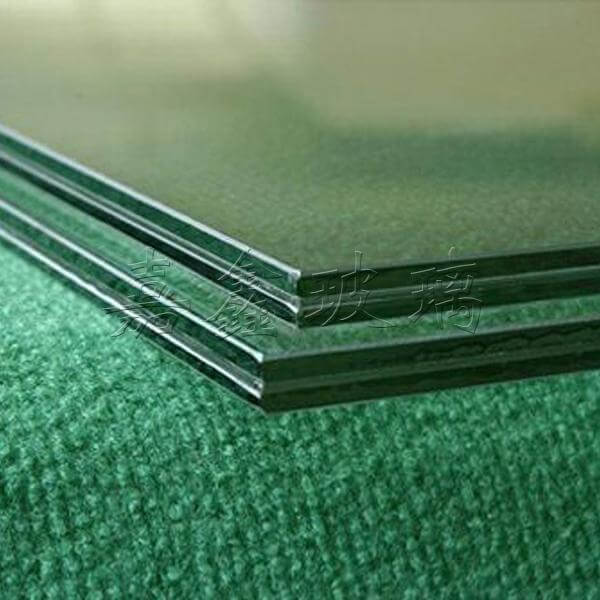
Introduction to the Company's Technical Strength: Jiangyin Jiaxin's "Three-Blade Axe" Solves Industry Challenges
Jiangyin Jiaxin Glass Products has established a technological moat in laminated glass production through equipment upgrades, process optimization, and material innovation. On the equipment front, the company has introduced an automatic laminated glass production line from Germany's LiSEC, paired with a high-precision laser detection system, achieving adhesive layer thickness error ≤0.05mm and bubble rate controlled below 0.1%, far exceeding industry standards (≤0.5%). In terms of technology, the "segmented升温+constant pressure curing" technique is employed, with 120℃-140℃ gradient heating and 0.8MPa constant pressure control to ensure thorough bonding of the adhesive layer with the glass, reducing delamination risk by 90%. Regarding materials, a specialized PVB film is developed in collaboration with Dow Chemicals of the United States, boasting a light transmission rate of 92% and an anti-ultraviolet performance improvement of 40%, suitable for wide temperature environments ranging from -40℃ to 80℃. Taking a landmark building project in Nanjing as an example, the laminated glass provided by Jiaxin passed extreme weather tests without any delamination or bubble issues, achieving a 100% customer satisfaction rate.
FAQ: Laminated Glass Technology Selection Guide
Q1: How to judge if the adhesive layer quality of laminated glass meets the standard?
A: The "Three-View-One-Test" method can be used: First, check the light transmission rate, the light transmission rate of high-quality adhesive layer should be ≥90%, without blurring or color difference; second, check the edge sealing, gently press the glass edge with hand, no adhesive layer separation or bubble overflow; third, check the thickness uniformity, measure the adhesive layer thickness with a caliper, the error should be ≤0.1mm; and test the impact resistance, conduct the drop ball impact test according to GB/T 15763.3 standard, with a 50mm diameter steel ball dropped from a height of 1.5m, the glass should not crack or delaminate.
Q2: How to solve the problem of adhesive delamination in laminated glass under low-temperature conditions?
The core reason for the low-temperature debonding is the difference in thermal expansion coefficients between the adhesive layer and glass. Solutions include: selecting low-temperature PVB film (such as the -40℃ compatible film jointly developed by Jiaxin and Dow); optimizing the curing process by adopting "low-temperature pretreatment + segmented temperature rise" technology to avoid internal stress in the adhesive layer due to rapid temperature rise; and increasing the surface roughness of the glass (Ra≤0.8μm) to enhance the adhesion of the adhesive layer.
Q3: What is the production cycle for laminated glass typically? How can delivery time be shortened?
A: Traditional production cycle is about 7-10 days, mainly time-consuming in the curing stage of the adhesive layer. Jiaxin has shortened the curing time from 48 hours to 8 hours by introducing infrared rapid curing technology, and with the cooperation of an automated production line, the daily production capacity reaches 2000㎡, and the delivery cycle is compressed to 3-5 days. In addition, the company has established an "order pre-arrangement + dynamic scheduling" system, which can flexibly adjust production plans according to customer needs, further shortening the waiting time.
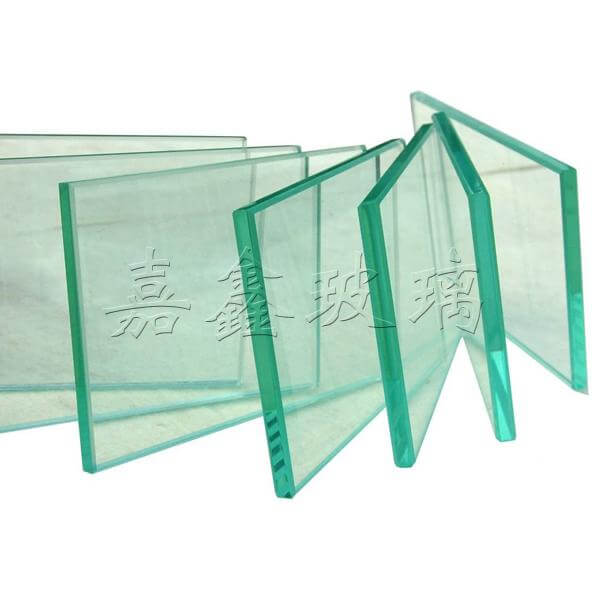
Summary: Technology-driven quality, Jiaxin ensures the safety of construction.
The technical challenges of laminated glass are essentially a comprehensive challenge of equipment precision, process control, and material compatibility. Jiangyin Jiaxin Glass Products has established a comprehensive technical system covering the entire production process by introducing advanced international equipment, optimizing core processes, and jointly developing specialized materials. Not only have industry difficulties such as bubbles and delamination been resolved, but the product performance has also been elevated to an internationally leading level. In the future, Jiaxin will continue to use technological innovation as the engine, deepen cooperation with upstream and downstream enterprises, promote the development of laminated glass towards higher safety standards, shorter delivery cycles, and wider application scenarios, contributing to the high-quality development of the construction industry.
Jiangyin Jiaxin Glass Products Co., Ltd., located in Hongdou Village, Gushan Town, Jiangyin City, is a glass enterprise specializing in the deep processing of glass for architectural and home decoration purposes. Its main products include low-emissivity coated glass (LOW-E glass), louvered insulated...
No. 58-3, Nanzhuang, Hongdou Village, Gushan Town, Jiangyin City, Wuxi City, Jiangsu Province