No. 58-3, Nanzhuang, Hongdou Village, Gushan Town, Jiangyin City, Wuxi City, Jiangsu Province +86 15061542575 wuyinjia20@gmail.com
No. 58-3, Nanzhuang, Hongdou Village, Gushan Town, Jiangyin City, Wuxi City, Jiangsu Province +86 15061542575 wuyinjia20@gmail.com


Industry Technical Pain Points: Challenges in Selecting Low-E Insulated Glass
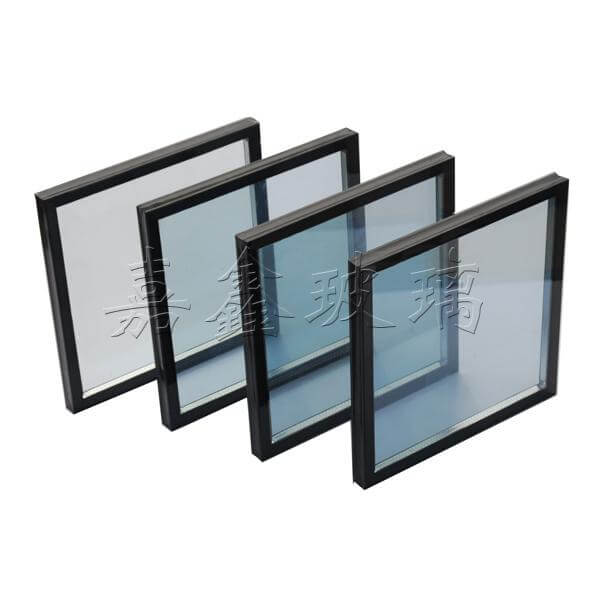
Low-E insulating glass, as the core material for building energy saving, its selection directly affects building energy consumption, lighting effect, and service life. The industry currently faces three major technical pain points: first, the controversy over the position of the coating layer (single silver/dual silver/triple silver coating on the 2nd or 3rd surface), which has a significant impact on heat insulation and light transmission performance at different positions, and incorrect selection may lead to overheating in summer or insufficient heat preservation in winter; second, the contradiction between the thickness of the air gap and the gas filling, the conventional 12mm air gap filled with argon can reduce the U-value by 15%-20%, but after the thickness exceeds 16mm, the gas convection is enhanced, which反而weakens the heat insulation effect; third, poor compatibility of the composite structure, when Low-E glass is combined with laminated glass and fire-resistant glass, the coating layer is prone to be affected by the processing temperature, resulting in increased emissivity and decreased energy-saving performance. These pain points make it difficult for users to face the dilemma of complex technical parameters and vague application scenarios when selecting.

Introduction to Corporate Technical Strength: Jiangyin Jiaxin Glass' Technical Layout and Cases
Jiangyin Jiaxin Glass Products Co., Ltd. specializes in the Low-E insulating glass field, establishing a complete technical system: In the coating technology, we adopt German Leybold magnetron sputtering equipment, enabling precise control of single silver (emissivity ≤0.15), double silver (emissivity ≤0.08), and triple silver (emissivity ≤0.05) coatings, with a coating layer thickness deviation ≤0.5nm; in the hollow layer process, we use Swiss Butler fully automatic hollow line, supporting customized hollow layers of 6-25mm, argon filling concentration ≥90%, and the lowest U-value can reach 1.0W/(m²·K); for the challenge of composite structures, we have developed a low-temperature composite process, controlling the processing temperature below 60°C to ensure the stability of the coating layer performance. Taking a commercial complex project in Wuxi as an example, Jiaxin Glass provided double silver Low-E insulating glass (6mm Low-E + 12Ar + 6mm white glass) for the project. The actual measurements showed that the indoor temperature in summer was reduced by 3-5°C compared to ordinary glass, air conditioning energy consumption decreased by 22%, and the emissivity of the coating layer increased by only 0.02 after 5 years of use, far exceeding industry standards.
FAQ: Low-E Insulated Glass Selection Guide
Q1: How to select the coating position of Low-E glass according to climate?
A1: In cold regions (such as Northeast), it is recommended to place the coated layer on the 3rd surface (counting from outside to inside) to maximize reflection of indoor heat, reducing heat loss in winter; in hot regions (such as South China), it is suggested to place the coated layer on the 2nd surface to prioritize reflection of outdoor solar heat, lowering the air conditioning load in summer. For example, a project in Harbin used double silver Low-E on the 3rd surface, reducing winter heating energy consumption by 18%; a project in Guangzhou used single silver Low-E on the 2nd surface, reducing the air conditioning load by 15% in summer.
Q2: What is the most energy-efficient hollow layer thickness?
A2: For regular climate zones, a 12-16mm hollow layer is recommended, which, combined with argon gas filling, can achieve a U-value of 1.2-1.5 W/(m²·K). In high-altitude or areas with large temperature differences (such as Qinghai), a 16-20mm hollow layer is suggested, but the impact of gas convection needs to be verified. Measured data shows that the U-value of 12mm argon-filled hollow glass is 30% lower than that of 6mm air-filled glass, but the U-value of a 24mm hollow layer is only 5% lower than that of a 16mm one.
Q3: What should be noted when combining Low-E glass with laminated glass?
A3: Select low-temperature composite process, processing temperature ≤60℃, to avoid high temperature from damaging the coating layer; at the same time, prioritize the "Low-E+PVB+White Glass" structure, as the PVB film can block ultraviolet rays and protect the coating layer. Jiaxin Glass used this structure for composite glass in a landmark project in Nanjing, and after 3 years of outdoor exposure testing, the radiation rate of the coating layer remained stable at 0.07, with a decrease in light transmittance ≤2%.
Summary of the full text reference
Selection of Low-E insulating glass requires a comprehensive consideration of climate, building functions, and composite requirements. Core parameters include the position of the coating layer, the thickness of the insulating layer and gas filling, and the composite process temperature. Jiangyin Jiaxin Glass, through its core technologies such as magnetron sputtering coating and low-temperature lamination, provides a full range of solutions from single silver to triple silver, from 6mm to 25mm insulating layers, and has verified its energy-saving effects and durability in multiple projects. In the future, with the enhancement of building energy-saving standards, the technical selection of Low-E insulating glass will pay more attention to the full life cycle performance. Enterprises need to continuously optimize the stability of the coating layer, the sealing of the insulating layer, and the adaptability of the composite structure to meet the market demand for high-efficiency energy-saving glass.
Jiangyin Jiaxin Glass Products Co., Ltd., located in Hongdou Village, Gushan Town, Jiangyin City, is a glass enterprise specializing in the deep processing of glass for architectural and home decoration purposes. Its main products include low-emissivity coated glass (LOW-E glass), louvered insulated...
No. 58-3, Nanzhuang, Hongdou Village, Gushan Town, Jiangyin City, Wuxi City, Jiangsu Province