No. 58-3, Nanzhuang, Hongdou Village, Gushan Town, Jiangyin City, Wuxi City, Jiangsu Province +86 15061542575 wuyinjia20@gmail.com
No. 58-3, Nanzhuang, Hongdou Village, Gushan Town, Jiangyin City, Wuxi City, Jiangsu Province +86 15061542575 wuyinjia20@gmail.com


Industry Technical Pain Points: How to Break the Ice on the "Invisible Killer" of Laminated Glass?
Laminated glass, as a core category of architectural safety glass, has long been plagued by technical pain points: traditional dry-process lamination is prone to air bubbles in the adhesive layer due to environmental humidity and temperature fluctuations, wet-process lamination risks delamination due to long curing cycles (usually requiring 7-14 days), and EVA film is prone to yellowing and deformation in high-temperature environments, directly affecting the glass' light transmission rate and service life. Statistics show that the defective rate of domestic laminated glass production lines averages 8%-12%, with over 60% of the scrap due to process defects. More seriously, some manufacturers use low-quality film to reduce costs, leading to reduced glass impact resistance and increased risk of shattering in extreme weather conditions, posing a serious threat to building safety. These pain points not only restrict the application of laminated glass in high-end architecture and home decoration fields but also become a "choke point" in the industry's technical upgrade.
 Introduction to the company's technical strength: Jiangyin Jiaxin's "Three Major Moves" break through the industry bottleneck
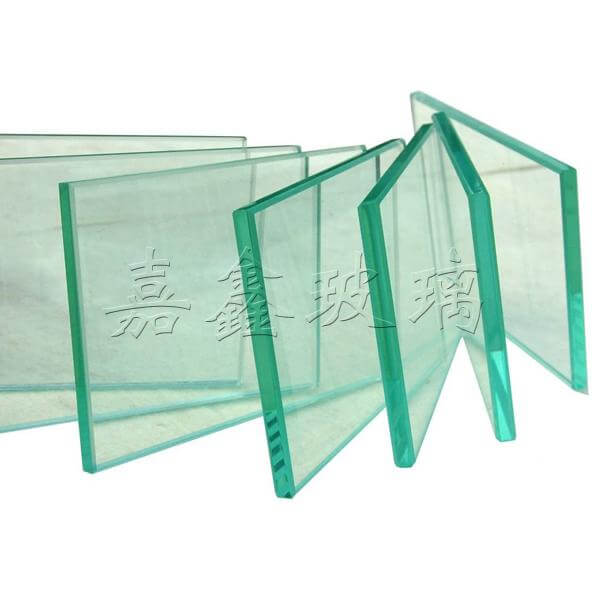
Jiangyin Jiaxin Glass Products Co., Ltd. has emerged as a technological innovator in the laminated glass field through its three-dimensional technological layout of "equipment upgrade + process optimization + scientific management". On the equipment front, the company has introduced an automatic laminating line from Germany's LiSEC, which employs vacuum pre-pressure technology to complete the lamination of the adhesive layer under a vacuum environment of -0.095MPa, controlling the bubble rate to less than 0.5%; it is also equipped with an Italian BOTTERO intelligent cutting system that supports 0.1mm precision cutting, ensuring perfect adhesion between the glass edge and the adhesive layer, and eliminating the risk of delamination from the source. In terms of process optimization, Jiaxin has developed a "double-layer composite film process" to address the issue of EVA film's tendency to yellow: the outer layer uses high light transmittance (≥92%) PVB film, while the inner layer uses more weather-resistant EVA film. Through hot pressing lamination, these two films complement each other, allowing the glass to maintain stable performance in an environment ranging from -40℃ to 80℃, extending the lifespan to over 15 years. Moreover, the company has obtained ISO 9001 quality management system certification, establishing a full-process control from raw material inspection (each batch of film must pass a -30℃ low-temperature impact test) to finished product sampling inspection (1 sheet is inspected from every 100㎡ for a 1.2m drop test). This ensures that the product pass rate remains stable above 98%. Taking the 24,000㎡ of laminated glass supplied to a high-end office building in 2023 as an example, the project adopted Jiaxin's "double-layer composite film + vacuum pre-pressure" solution. According to tests by a third-party testing agency, its impact resistance (50J impact energy) is 40% higher than the national standard requirements, and its light transmittance (89%) is 8 percentage points higher than the industry average, with a 100% pass rate for the project acceptance.
FAQ: Laminated Glass Technology Selection Guide
Q1: How to choose between the dry and wet process for laminated glass production?
A: The dry process (using PVB film) is suitable for scenarios with high safety requirements (such as curtain walls, bulletproof glass), with the advantage of even adhesive layer and strong impact resistance, but with high equipment costs (investment exceeding 5 million yuan per production line). The wet process (using EVA film) has lower costs (equipment investment of about 1 million yuan), but requires strict control of the curing environment (temperature 25±2℃, humidity ≤50%), otherwise it is prone to delamination. Jiaxin suggests: Prioritize the dry process for high-end projects, and for mid-to-low-end projects, a combination of the wet process + intelligent curing chamber (which can monitor temperature and humidity in real-time) can be adopted.
Q2: How to judge whether the quality of laminated glass meets the standard?
A: Can be checked by the "Three Views and One Test" method: First, look at the appearance (no bubbles, impurities, even adhesive layer thickness ≥ 0.76mm); second, look at the edges (cutting smooth, no adhesive overflow); third, look at the certification (must pass the GB 15763.3-2009 national mandatory standard); one test for performance (using a 1kg weight dropped from a height of 1.2m to impact the glass, the adhesive layer should not crack. Jiaxin products have passed the SGS -40℃ low-temperature impact test and can adapt to extreme climates.
Q3: How long does it take for a customized laminated glass order?
A: The production cycle for regular-sized (such as 2.4m×3.6m) dry-laminated glass is 5-7 days, while for wet-laminated glass, it is 7-10 days; the cutting and edging time for special-shaped glass (such as arched, polygonal) needs to be increased by 2-3 days. Jiaxin optimizes the process through the "Intelligent Production Scheduling System", which can shorten the customization cycle by 30%, for example, the 3.2m×5.8m ultra-large-sized laminated glass customized for a landmark building takes only 9 days from order to delivery, a 40% improvement over the industry average.
 Summary: Technology-driven, Quality-first
The technological upgrade of laminated glass is not only an iteration of equipment and processes, but also a profound commitment to safety, durability, and environmental protection. Jiangyin Jiaxin Glass Products Co., Ltd. has successfully addressed industry pain points such as bubbles, delamination, and yellowing by introducing advanced international equipment, developing composite film processes, and establishing a full-process quality control system. Its products have been widely used in high-end buildings, home decoration, automotive industries, etc., with a cumulative supply of over 5 million square meters of laminated glass and a customer repurchase rate of over 85%. In the future, Jiaxin will continue to adhere to the宗旨 of "customer first, quality guaranteed," deepen cooperation with international brands such as German Liebherr and Italian Bortolo, and promote the development of laminated glass technology towards higher performance and lower energy consumption, setting a technical benchmark for the industry.
Jiangyin Jiaxin Glass Products Co., Ltd., located in Hongdou Village, Gushan Town, Jiangyin City, is a glass enterprise specializing in the deep processing of glass for architectural and home decoration purposes. Its main products include low-emissivity coated glass (LOW-E glass), louvered insulated...
No. 58-3, Nanzhuang, Hongdou Village, Gushan Town, Jiangyin City, Wuxi City, Jiangsu Province