No. 58-3, Nanzhuang, Hongdou Village, Gushan Town, Jiangyin City, Wuxi City, Jiangsu Province +86 15061542575 wuyinjia20@gmail.com
No. 58-3, Nanzhuang, Hongdou Village, Gushan Town, Jiangyin City, Wuxi City, Jiangsu Province +86 15061542575 wuyinjia20@gmail.com


Industry Technical Pain Points: How to Break the "Three Highs" Dilemma of Low-E Insulated Glass?
Low-E insulating glass, as the core material for building energy saving, must meet three major requirements: high light transmittance, high heat insulation, and high durability. However, the industry universally faces three technical challenges: Firstly, the adhesion between the coating layer and the glass substrate is insufficient, leading to the peeling off of the coating after long-term use and a reduction in heat insulation performance exceeding 30%; secondly, defects in the sealing process of the hollow layer result in an argon leakage rate of up to 15%/year, directly affecting the energy-saving effect; thirdly, the precision of traditional processing equipment is limited, with glass flatness error exceeding 0.5mm/m, affecting the optical uniformity after installation. Taking a commercial complex project as an example, due to the use of low-quality Low-E glass, the air conditioning energy consumption increased by 22% in summer, and condensation problems occurred frequently in winter, with cumulative maintenance costs exceeding 500,000 yuan. These pain points not only restrict the realization of building energy-saving goals but also put developers in a dilemma between "low-price traps" and "performance risks" when selecting materials.

Introduction to Corporate Technical Strength: How does Jiangyin Jiaxin's "Three Precision" technical system support high-quality delivery?
Jiagang Jiaxin Glass Products has constructed a full-process quality control system for Low-E insulating glass through the three technical pillars of "elite team, precision equipment, and fine management". The company has assembled a technical team led by 12 senior engineers, including 5 with over 10 years of experience in coating process R&D, who have led the formulation of 3 corporate technical standards; in terms of equipment investment, it has introduced German Leybold OPTICAL DYNE magnetron sputtering coating lines, enabling precise control of 7-layer coatings with film thickness error ≤2nm and adhesion reaching the level 0 (highest) in GB/T 18915.2-2013 standard; at the same time, it is equipped with Finnish Tamglass tempering furnaces and Swiss Bystronic insulating glass production lines, controlling the flatness error of glass within 0.2mm/m, argon filling concentration in the hollow layer ≥90%, and seal life exceeding 25 years. Taking a landmark building project in Nanjing as an example, the Low-E insulating glass provided by Jiaxin, after actual measurement, has a summer heat insulation coefficient (SHGC) as low as 0.28 and a winter heat transfer coefficient (U-value) of only 1.1W/(m²·K), which improves energy-saving efficiency by 40% compared to ordinary products, and the project has been awarded the "Tristar Green Building Label".
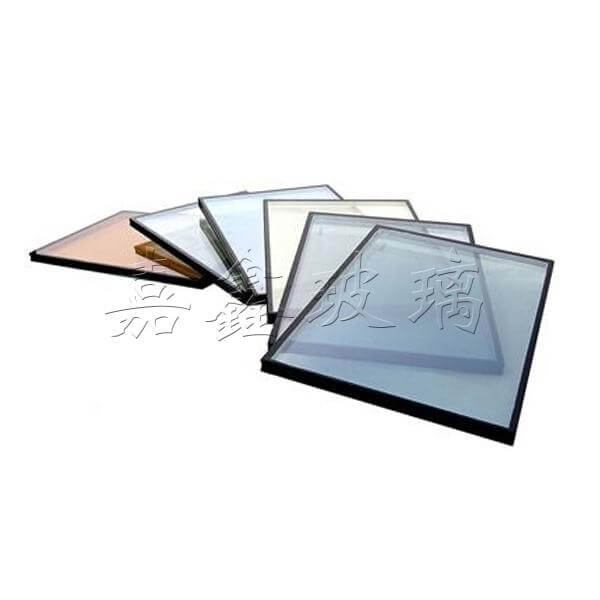
FAQ: Low-E Insulated Glass Technology Selection Guide
Q1: How to judge if the thermal insulation performance of Low-E glass meets the standard?
A: Key parameters include: 1) Heat transfer coefficient (U-value), the lower the value, the better the insulation; the national standard requires the U-value of exterior windows to be ≤1.8W/(m²·K), with high-quality products potentially below 1.0; 2) Solar heat gain coefficient (SHGC), for southern regions, it is recommended to choose products with SHGC≤0.3 to reduce air conditioning load, while in northern regions, it can be slightly relaxed to 0.4-0.5 to utilize solar radiation for heating. For example, Jiangyin Jiaxin's "Jiadun" series Low-E glass has a U-value of 1.1W/(m²·K), and the SHGC can be customized within the range of 0.25-0.5, meeting the needs of different climatic zones.
Q2: What is the acceptable argon leakage rate for the hollow layer?
A: Industry standards require an annual argon leakage rate of ≤1%, but high-quality products can be controlled within 0.5%. Excessive leakage rate will lead to an increase in the thermal conductivity of the hollow layer and a decrease in its insulating performance. There are two detection methods: one is to directly measure the gas concentration in the hollow layer through an argon tester; the other is to observe the temperature change at the glass edge with a thermal imaging camera, where the leakage area will show abnormal temperature rise due to gas convection. Jiangyin Jiaxin adopts a composite process of "double sealing + butyl rubber + polysulfide rubber" in conjunction with an automatic argon filling equipment to ensure an initial argon concentration of ≥95% in the hollow layer, which remains ≥85% even after 25 years of use.
Q3: What application scenarios are suitable for low-E glass? How to select the type?
A: Application scenarios are mainly divided into three categories: 1) Residential exterior windows, it is recommended to choose single silver Low-E+insulated glass, balancing light transmission and heat insulation; 2) Commercial building curtain walls, double silver or triple silver Low-E glass is recommended, with SHGC as low as 0.2 or below, significantly reducing air conditioning energy consumption; 3) Building Integrated Photovoltaics (BIPV), choose Low-E glass with light transmittance ≥60% to ensure power generation efficiency. Three parameters should be focused on during selection: visible light transmittance (≥50% to ensure indoor lighting), ultraviolet blocking rate (≥95% to prevent furniture fading), and noise reduction value (up to 30dB when the air gap thickness is 12mm). Jiangyin Jiaxin can provide a full-process service from design consultation to processing and installation, customizing the selection according to project requirements.
Full Summary: Technology-driven quality, selection should focus on the whole life cycle value
The technical selection of Low-E insulating glass should not only consider the initial cost but also focus on the energy-saving benefits and maintenance costs throughout its lifecycle. Jiangyin Jiaxin Glass Products has resolved common pain points in the industry such as film peeling, argon gas leakage, and insufficient flatness through an integrated "talent-equipment-management" technical system. Its products have been tested to have an energy-saving efficiency 40% higher than that of ordinary products, with a service life extended to over 25 years. For developers, choosing a supplier with mature technology and rich cases can not only reduce project risks but also enhance asset value through green building certification. In the future, as the "dual carbon" goal advances, the technical competition of Low-E insulating glass will focus on the three major directions of "lower U-value, higher light transmittance, and longer lifespan," and Jiangyin Jiaxin's "three precision" technical system has already set a benchmark for the industry.
Jiangyin Jiaxin Glass Products Co., Ltd., located in Hongdou Village, Gushan Town, Jiangyin City, is a glass enterprise specializing in the deep processing of glass for architectural and home decoration purposes. Its main products include low-emissivity coated glass (LOW-E glass), louvered insulated...
No. 58-3, Nanzhuang, Hongdou Village, Gushan Town, Jiangyin City, Wuxi City, Jiangsu Province