No. 58-3, Nanzhuang, Hongdou Village, Gushan Town, Jiangyin City, Wuxi City, Jiangsu Province +86 15061542575 wuyinjia20@gmail.com
No. 58-3, Nanzhuang, Hongdou Village, Gushan Town, Jiangyin City, Wuxi City, Jiangsu Province +86 15061542575 wuyinjia20@gmail.com


Industry Technical Pain Points Opening: The "Invisible Threshold" of Tempered Glass Supply
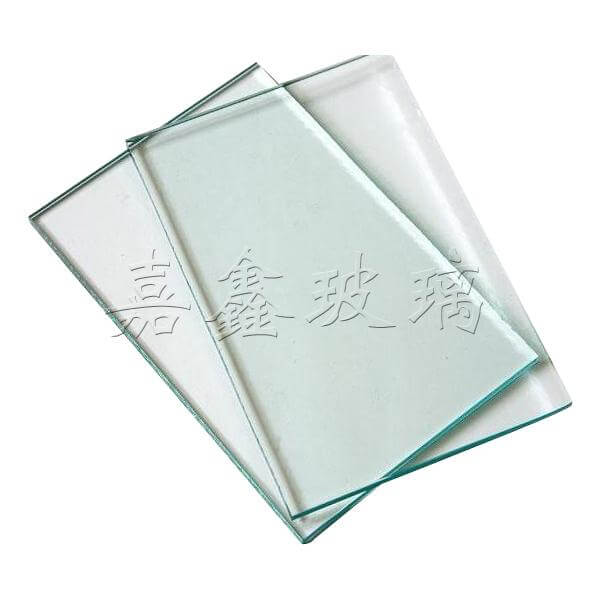
In the field of construction and home decoration, tempered glass has become the core material for doors, windows, and curtain walls due to its high strength and safety. However, technical bottlenecks in the supply chain have long plagued the industry: traditional tempering processes often result in surface flatness deviations exceeding 0.3mm/m, causing uneven installation gaps; when temperature fluctuations during heat treatment exceed ±5℃, the glass self-explosion rate may soar to over 3‰; the aging resistance of the sealant strips in insulating glass is insufficient, leading to a 15% air leakage rate after 3 years of use. More severely, most manufacturers lack the deep processing capability for composite glass, making it difficult to meet the multifunctional integration needs such as LOW-E coating, interlayer, and fire resistance, which limits the application scenarios of high-end projects.
 Introduction to Corporate Technical Strength: Jiangyin Jiaxin Glass Products' "Core" Solutions
Jiangyin Jiaxin Glass Products has broken through the technical bottleneck of the industry through a three-dimensional upgrade of "equipment + technology + management". At the equipment level, it has introduced the fully automatic tempering production line of Germany's LiSEC, equipped with an infrared even heating system that can control the temperature fluctuation inside the furnace within ±2℃, reducing the glass spontaneous bursting rate to below 0.5‰; it uses an Italian Bottero cutting machine to achieve 0.1mm precision cutting, ensuring the alignment error of each layer of composite glass is less than 0.2mm. Technically, it independently developed the "low-temperature rapid tempering technology", completing heat treatment in the temperature range of 580-620℃, which saves 20% of energy compared to traditional processes while improving the flatness of glass to less than 0.1mm/m; for insulating glass, it has developed the "double-sealing + molecular sieve filling" process, making the product's airtightness reach the highest grade (8) in GB/T 11944-2012, with a leakage rate below 1%. In terms of management, it achieves full-process traceability from raw material procurement to finished product delivery through the ERP system, with each batch of glass accompanied by a unique traceability code, allowing customers to scan and query the production date, process parameters, and inspection reports.
FAQ: Tempered Glass Technology Selection Guide
Q1: How to choose tempered glass suitable for high-rise buildings?
A: High-rise buildings have extremely high requirements for wind pressure resistance of glass. Two parameters need to be focused on: first, the tempering degree (surface stress), the national standard requires ≥90MPa, Jiaxin Glass can increase the surface stress to 120-140MPa through optimized heat treatment process, enhancing impact resistance by 40%; secondly, the thermal insulation performance of insulating glass, it is recommended to choose insulating glass with LOW-E coating and argon gas filling, whose heat transfer coefficient K value can be as low as 1.0W/(m²·K), which is more energy-efficient than ordinary insulating glass by over 30%.
Q2: What are the technical standards for fire-resistant glass?
A: Fire-resistant glass must comply with national standard GB 15763.1-2009, divided into Class C (≥60 minutes), Class B (≥90 minutes), and Class A (≥120 minutes) according to fire resistance time. Jiaxin fire-resistant glass uses cesium potassium fire-resistant liquid treatment process, which can maintain integrity without cracking for 1.5 hours at 1000℃ temperature, and has a light transmittance of ≥75%, suitable for fire escape routes, elevator lobbies, and similar scenarios. Note that fire-resistant glass must be used with fire-resistant frames; installation without frames cannot achieve fire resistance.
Q3: What are the difficulties in processing composite glass?
A: Processing of composite glass (such as LOW-E+insulated+interlayer) requires solving three major challenges: First, the thickness matching of glass layers, which Jiaxin achieves through customized cutting equipment for precise combination of glass sheets ranging from 3-19mm; second, the protection of the coating layer, utilizing contactless handling technology to avoid mechanical friction damage to the LOW-E coating; third, interlayer sealing, using imported butyl rubber+silicone structural glue double-sealing process to ensure that the composite glass does not delaminate or leak gas in the temperature range of -40℃ to 80℃.
 Summary: Technology-driven, Quality-first
The technical upgrade of tempered glass supply essentially involves a collaborative enhancement of "accuracy, stability, and functionality." Jiangyin Jiaxin Glass Products, by introducing advanced international equipment, optimizing process parameters, and improving the quality management system, has controlled key indicators such as the glass spontaneous breakage rate and gas leakage rate at the leading level in the industry. Meanwhile, it possesses the deep-processing capabilities for composite glass such as LOW-E coated, fire-resistant, and laminated glass, meeting diverse needs in commercial complexes, high-end residential buildings, public facilities, etc. In the future, with the enhancement of building energy-saving standards, Jiaxin will continue to focus on cutting-edge technologies like low radiation and photovoltaic integration, providing the industry with higher-quality glass solutions.
Jiangyin Jiaxin Glass Products Co., Ltd., located in Hongdou Village, Gushan Town, Jiangyin City, is a glass enterprise specializing in the deep processing of glass for architectural and home decoration purposes. Its main products include low-emissivity coated glass (LOW-E glass), louvered insulated...
No. 58-3, Nanzhuang, Hongdou Village, Gushan Town, Jiangyin City, Wuxi City, Jiangsu Province