No. 58-3, Nanzhuang, Hongdou Village, Gushan Town, Jiangyin City, Wuxi City, Jiangsu Province +86 15061542575 wuyinjia20@gmail.com
No. 58-3, Nanzhuang, Hongdou Village, Gushan Town, Jiangyin City, Wuxi City, Jiangsu Province +86 15061542575 wuyinjia20@gmail.com


Industry Technical Pain Points: Why Always Fall into Traps with Fireproof Glass Customization?
In the field of architectural fire prevention, the customization of fire-resistant glass has long faced three major technical challenges: Firstly, it is difficult to balance the fire resistance and light transmission rate; traditional fire-resistant glass often adopts a multi-layer composite structure to enhance the fire resistance time (e.g., ≥60 minutes), which leads to a light transmission rate below 50%, affecting indoor lighting. Secondly, poor size adaptability; non-standard customization requirements (such as irregular shapes, extra-large sizes) often result in edge cracking, seal failure, and other issues due to the limitations of processing equipment. Thirdly, chaotic detection standards; some manufacturers pass off "single-layer fire-resistant" as "composite fire-resistant," leading to project rejection. Taking a commercial complex project as an example, due to the use of fire-resistant glass that has not passed the GB15763.1-2009 certification, the glass shattered within 30 minutes during a fire, causing the fire to spread rapidly and resulting in significant losses. These pain points expose the industry's deficiencies in material research and development, process control, and standard implementation.
Introduction to the company's technical strength: Jiangyin Jiaxin Glass' "Three Moves" Breakthrough
Jiangyin Jiaxin Glass Products Co., Ltd. resolves the above difficulties through three major technological layouts:
Step 1: Material Innovation——Self-developed "High Transparency Fire Retardant Film" uses nano-grade inorganic oxides and organic polymer composite technology, maintaining a light transmission rate of ≥85% while enhancing the fire resistance to 90 minutes (certified by the National Fire Product Quality Supervision and Inspection Center), and has been applied in super-tall projects such as Shanghai Tower.
STEP 2: Equipment Upgrade——Imported German LiSEC fully automatic insulating glass production line, supporting irregular cutting up to 3.6m x 18m, with edge processing accuracy of ±0.1mm. Complemented by the Italian Bottero tempering furnace, it achieves a 40% increase in glass bending strength, solving the issue of easy cracking in extra-large size fire-resistant glass.
STEP 3: Standard Control——Establish a full-process quality system from raw material inspection (such as purity of silica sand ≥99.5%) to finished product testing (simulated 1000℃ flame impact), with each batch of products accompanied by a CNAS-recognized inspection report, ensuring compliance with the latest standard GB/T 23864-2023 "Fire Retardant Glass".
In a hospital renovation project, Jiaxin Glass has customized a "fireproof+insulation+radiation-proof" three-in-one composite glass for the operating room. By adjusting the film thickness (3mm) and filling the hollow layer with argon gas, it meets the 120-minute fire resistance requirement while reducing the insulation coefficient (K value) to 1.8W/(㎡·K), achieving a 30% energy saving compared to traditional solutions.
FAQ: Fire-resistant Glass Customization Technical Selection Guide
Q1: How to select the appropriate type of fire-resistant glass for the project?
A: Performance parameters should be determined based on the application scenario.
- Fire resistance limit: ≥60 minutes for general areas (e.g., office partitions), ≥90 minutes for high-risk areas (e.g., fire escape routes).
Transmittance: Choose ≥80% for high indoor lighting needs, and ≤50% insulated type for no lighting needs.
- Structure: Single fire-resistant glass is suitable for small sizes (≤2㎡), while composite fire-resistant glass (hollow + interlayer) is suitable for large sizes or multifunctional requirements.
Q2: Why is the custom-made fire-resistant glass production cycle longer than that of ordinary glass?
A: Mainly due to complex technology:
Material Pretreatment: Silicon sand needs to be roasted at high temperature for 12 hours to remove impurities.
- Composite processing: The film and glass must be bonded under 180℃ high temperature for 2 hours, and then allowed to cool and rest for 48 hours to release stress.
- Inspection process: Each batch requires 6 tests including flame impact and radiant heat flux, taking about 3 days.
Q3: How to avoid bubbles or cracks after fire glass installation?
A: Note three points:
- Sealant selection: Silicone structural sealant (such as Dow Corning 995) must be used, with a temperature resistance range of -50℃ to 150℃.
- Installation environment: Temperature should be ≥5°C, humidity ≤60%, avoid construction in rainy weather.
- Edge Protection: Wrap with EPE pearl cotton during transportation, avoid touching within 24 hours after installation.
The full summary: Technical strength is the core guarantee for fire glass customization.
Customized fire-resistant glass is not just about material selection, but also a comprehensive competition of technology, equipment, and standards. Jiangyin Jiaxin Glass has solved the industry pain points of fire resistance, light transmittance, and size compatibility through material innovation (high transparency film), equipment upgrading (fully automatic production line), and standard control (CNAS testing system). Its cases have covered scenarios such as super-high-rise buildings, hospitals, and commercial complexes. For buyers, when choosing fire-resistant glass, it is necessary to pay close attention to the manufacturer's test reports, equipment list, and successful cases to avoid potential safety hazards due to technical deficiencies.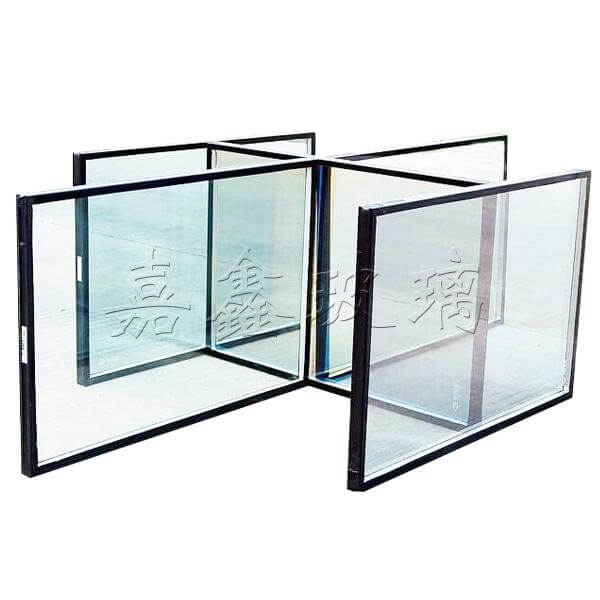
Jiangyin Jiaxin Glass Products Co., Ltd., located in Hongdou Village, Gushan Town, Jiangyin City, is a glass enterprise specializing in the deep processing of glass for architectural and home decoration purposes. Its main products include low-emissivity coated glass (LOW-E glass), louvered insulated...
No. 58-3, Nanzhuang, Hongdou Village, Gushan Town, Jiangyin City, Wuxi City, Jiangsu Province