No. 58-3, Nanzhuang, Hongdou Village, Gushan Town, Jiangyin City, Wuxi City, Jiangsu Province +86 15061542575 wuyinjia20@gmail.com
No. 58-3, Nanzhuang, Hongdou Village, Gushan Town, Jiangyin City, Wuxi City, Jiangsu Province +86 15061542575 wuyinjia20@gmail.com


Opening of Industry Technical Pain Points: The "Three Hardships" Dilemma of Low-E Insulating Glass
In the field of building energy saving, Low-E hollow glass has become the mainstream choice due to its excellent heat insulation and light transmission properties, but it still faces three major technical pain points: Firstly,Parameter matching is difficult——Significant differences in shading coefficient (SC) and heat transfer coefficient (K-value) requirements for glass in different climatic zones (such as cold regions and warm in winter, hot in summer regions) make traditional products difficult to accommodate; secondly,Life expectancy guarantee difficult——The failure of the hollow layer seal can lead to condensation and mildew, with an average service life in the industry of only 10-15 years, significantly lower than the design life of the building. Thirdly,Cost optimization is challenging.—— The cost of high transparency Low-E coating accounts for over 30% of the total glass price. How to reduce material costs while ensuring performance has become a key breakthrough for the enterprise.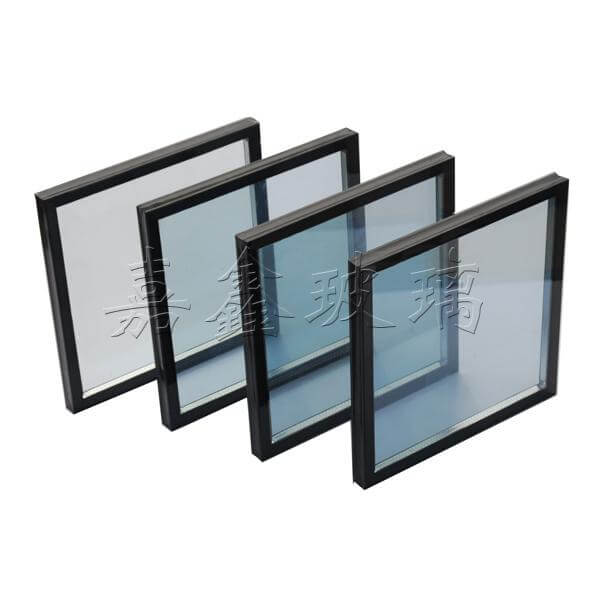
Taking a commercial complex project in the northern cold region as an example, the original design used ordinary hollow glass, with winter heating energy consumption as high as 85kWh/㎡·year, far exceeding the energy-saving standards. After switching to Low-E hollow glass, although the heat insulation performance improved, due to improper selection of film layer parameters, the indoor temperature in summer was too high, requiring additional air conditioning load, resulting in a 15% increase in the total lifecycle cost. This case exposes a common problem in the industry in the selection of technology:Emphasize performance metrics, lightweight scenario adaptation。
Introduction to Enterprise Technical Strength: Jiangyin Jiaxin Glass Products' "Three-Stage" Technology Breakthrough
Jiangyin Jiaxin Glass Products Co., Ltd. has been dedicated to the Low-E insulating glass field for 12 years, forming differentiated competitive advantages through the three-stage technological upgrade of "equipment - process - management".
STEP 1: Equipment upgrade lays the foundation for precision— Introducing German Leybold online coating production line, equipped with American Glasstech tempering furnace and Swiss Bystronic insulating glass production line, achieving film thickness error ≤ 0.5nm, hollow layer thickness deviation ≤ 0.2mm, and product consistency reaching the leading level in the industry.
STEP 2: Process Innovation Breakthrough Lifespan Bottleneck—— Independently developed "double-sealing + molecular sieve dynamic adsorption" technology, argon filling amount in the hollow layer ≥ 90%, and seal life extended to over 25 years (tested by the National Glass Quality Supervision and Inspection Center); simultaneously developed a variable shading coefficient (SC) film system, which can continuously adjust the SC value between 0.2-0.6 by adjusting the thickness of the silver layer and the ratio of the oxide layer, meeting the needs of different climatic zones.
STEP 3: Manage Optimization and Control Comprehensive Costs——Utilizing ERP+MES digital management system, achieve full-process traceability from raw material procurement to finished product delivery, improving material utilization by 8%; by establishing strategic cooperation with upstream silver paste suppliers, reduce film cost by 12%, making high transparency Low-E glass prices 15% lower than the industry average.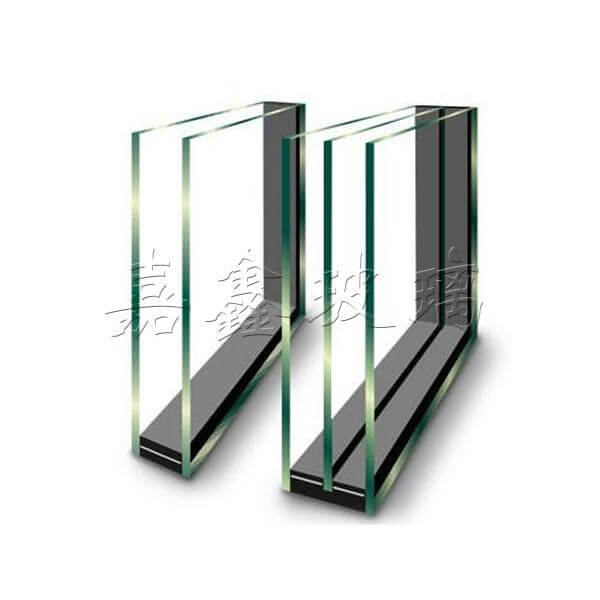
In a super high-rise office building project, Jiaxin Glass customized SC=0.4, K=1.8W/(㎡·K) Low-E insulating glass based on the local summer hot and winter cold climate characteristics. Combined with argon gas filling in the insulating layer and warm edge spacer bars, the project's comprehensive energy consumption is reduced by 32% compared to traditional glass, and it does not require replacement within a 20-year service life, earning high praise from the owner for its high technical adaptability and optimized lifecycle cost.
FAQ Q&A Technical Selection Guide
Q1: How to choose the SC value of Low-E insulating glass based on climate zones?
A: The SC value reflects the glass's ability to block solar radiation, with lower values indicating better heat insulation. In cold regions (such as Northeast), it is recommended to choose high-transmitting types with SC≥0.5 to fully utilize solar heat energy; in hot summer and warm winter regions (such as Guangdong), low-transmitting types with SC≤0.3 are needed to reduce air conditioning load; in hot summer and cold winter regions (such as Jiangsu and Zhejiang), medium-transmitting types (SC=0.3-0.5) can be selected to balance winter heating and summer cooling needs.
Q2: How much performance can be improved by filling the hollow layer with argon? Is it necessary?
Argon gas thermal conductivity (0.0178W/(m·K)) is lower than air (0.026W/(m·K)), filling with argon can reduce the K-value of insulating glass by 0.3-0.5W/(㎡·K). For passive buildings or ultra-low energy consumption buildings with K-value requirements ≤2.0W/(㎡·K), filling with argon is a necessary measure; for ordinary energy-saving buildings, it can be chosen based on cost budget, and products with an annual leakage rate of ≤1% can ensure stable performance within a 20-year service life.
Q3: Can Low-E glass be used for renovation of existing buildings? What should be noted?
A: Sure, but a key evaluation of the original window frame's bearing capacity and sealing performance is required. It is recommended to choose single silver Low-E glass (15% lighter than double silver) during the renovation and adopt the standardized process of "remove original glass - clean window frame - install new glass - seal with glue" to ensure the airtightness of the hollow layer. If the original window frame is made of aluminum alloy, check whether the wall thickness of the profile is ≥1.4mm to avoid deformation due to insufficient bearing capacity.
Summary of the full text reference
The technical selection of Low-E insulating glass should focus on "scene adaptation," balancing performance, lifespan, and cost through precise matching of parameters such as SC value, K value, and gas in the cavity. Jiangyin Jiaxin Glass Products has upgraded from "general products" to "scene-based solutions" through equipment precision, process innovation, and management optimization, providing an industry replicable model for technical selection with its customized service model and full lifecycle cost control capabilities. In the future, with the advancement of the "dual carbon" goal, Low-E insulating glass will develop towards higher performance (e.g., K value ≤1.0W/(㎡·K)) and longer lifespan (over 30 years), and enterprises need to continuously increase R&D investment in cutting-edge fields such as vacuum glass and smart dimming glass to consolidate market competitiveness through technological leadership.
Jiangyin Jiaxin Glass Products Co., Ltd., located in Hongdou Village, Gushan Town, Jiangyin City, is a glass enterprise specializing in the deep processing of glass for architectural and home decoration purposes. Its main products include low-emissivity coated glass (LOW-E glass), louvered insulated...
No. 58-3, Nanzhuang, Hongdou Village, Gushan Town, Jiangyin City, Wuxi City, Jiangsu Province