No. 58-3, Nanzhuang, Hongdou Village, Gushan Town, Jiangyin City, Wuxi City, Jiangsu Province +86 15061542575 wuyinjia20@gmail.com
No. 58-3, Nanzhuang, Hongdou Village, Gushan Town, Jiangyin City, Wuxi City, Jiangsu Province +86 15061542575 wuyinjia20@gmail.com


Industry Technical Pain Points: "Triple Challenges" in Low-E Insulated Glass Subcontracting
Low-E insulating glass has become a core material in the field of building energy conservation due to its excellent heat and sound insulation properties. However, the processing stage still faces three major technical bottlenecks: first, the control of film uniformity is difficult; traditional processes are prone to film thickness deviation exceeding ±5% due to insufficient equipment precision, directly affecting the glass' light transmittance and radiative rate; second, the airtightness of the hollow layer is unstable; ordinary sealing adhesives are prone to aging and cracking under temperature differences of -20℃ to 80℃, leading to a gas leakage rate exceeding 3%, reducing the insulation effect; third, the low production efficiency, with manual operations accounting for over 60%, and daily output per line less than 300㎡, failing to meet the needs of large-scale projects. A large-scale commercial complex project once had a rework rate of up to 20% due to uneven film coating, resulting in a 3-month delay in the construction schedule and direct economic losses exceeding a million yuan, highlighting the urgency of technological upgrading.
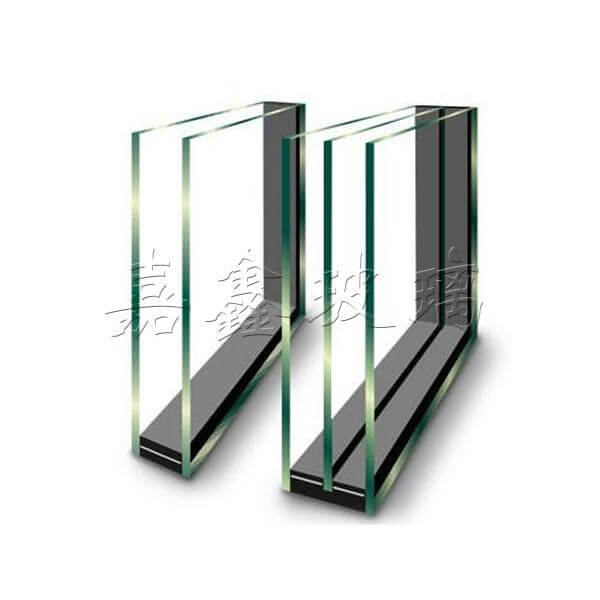
Introduction to Corporate Technical Strength: Jiangyin Jiaxin Glass Products' "Three Major Technical Moats"
Jiangyin Jiaxin Glass Products specializes in Low-E hollow glass processing, building a technical barrier through a three-dimensional innovation of "equipment + technology + management": At the equipment level, it introduces German Leybold magnetron sputtering coating machines with 12 independent target materials, achieving ±1μm precision control of film thickness and uniformity over 98%; At the technology level, it adopts "double-sealing + inert gas filling" technology, using imported butyl rubber and silicone structural glue for composite sealing, with a gas leakage rate of the hollow layer below 0.5% and a lifespan over 25 years; At the management level, it implements full-process digital control of production through MES systems, setting 18 quality checkpoints from raw material inspection to finished product warehousing, with a defect rate controlled under 0.3%. Taking a super-tall curtain wall project as an example, Jiaxin Glass optimizes the coating process, reducing the glass U-value (heat conduction coefficient) from 1.8W/(㎡·K) to 1.2W/(㎡·K), reducing the annual energy-saving cost of the project by 40% and being awarded the "Green Building Demonstration Project".
FAQ: Low-E Insulated Glass Processing Technology Selection Guide
Q1: How to choose the suitable Low-E glass coating type for the project?
A: Low-E glass coatings are categorized into single silver, double silver, and triple silver types, which need to be matched according to project requirements: single silver coating with light transmission of 70%-80%, suitable for residential buildings; double silver coating with light transmission of 60%-70%, heat insulation performance improved by 30%, suitable for commercial buildings; triple silver coating with light transmission of 50%-60%, U-value can be as low as 0.8W/(㎡·K), suitable for ultra-low energy consumption buildings. Jiaxin Glass can provide a full range of coating solutions and supports customized coating design.
Q2: How to choose the filling gas for the hollow layer?
A: The gas in the hollow layer directly affects the insulation effect, with common choices being air, argon, and krypton: air is cost-effective but has average insulation properties; argon has a thermal conductivity coefficient 30% lower than air, offering high cost-performance and is the mainstream choice; krypton has the best insulation performance but costs five times that of argon, used only in high-end projects. Jiaxin Glass' insulating glass production line supports filling with a gas purity of ≥99.9%, ensuring stable performance.
Q3: How do processing enterprises ensure delivery dates?
A: Delivery period is affected by three factors: equipment production capacity, process complexity, and order scheduling. Jiaxin Glass improves efficiency through "two-shift production + intelligent production scheduling system": the magnetic sputtering coating line has a daily production capacity of 800 square meters, and the insulating glass production line has a daily production capacity of 1200 square meters. With the real-time monitoring of order progress by the MES system, we can promise 15-day delivery for regular orders and 10-day completion for urgent orders.

Summary: Technologically driven, empowering the upgrade of Low-E insulating glass processing.
The technological breakthrough in Low-E insulating glass processing needs to focus on "equipment accuracy, process stability, and management efficiency." Jiangyin Jiaxin Glass Products has constructed a full-process technical advantage from coating to hollow encapsulation by introducing German Leybold coating machines, optimizing the double-sealing process, and deploying the MES system, which can meet the diverse needs of residential, commercial, and ultra-low energy consumption buildings. In the future, as the "double carbon" goal is advanced, the Low-E insulating glass market will continue to expand. Processing enterprises need to differentiate their competitiveness in product quality, delivery efficiency, and cost control with technological support, in order to occupy a leading position in the industry.
Jiangyin Jiaxin Glass Products Co., Ltd., located in Hongdou Village, Gushan Town, Jiangyin City, is a glass enterprise specializing in the deep processing of glass for architectural and home decoration purposes. Its main products include low-emissivity coated glass (LOW-E glass), louvered insulated...
No. 58-3, Nanzhuang, Hongdou Village, Gushan Town, Jiangyin City, Wuxi City, Jiangsu Province