No. 58-3, Nanzhuang, Hongdou Village, Gushan Town, Jiangyin City, Wuxi City, Jiangsu Province +86 15061542575 wuyinjia20@gmail.com
No. 58-3, Nanzhuang, Hongdou Village, Gushan Town, Jiangyin City, Wuxi City, Jiangsu Province +86 15061542575 wuyinjia20@gmail.com


Industry Technical Pain Points: The "Invisible Barrier" of Laminated Glass Customization
In scenarios such as architectural curtain walls and interior partitions, laminated glass is the preferred choice due to its safety and sound insulation properties, but the customization process is fraught with technical challenges. In traditional processes, the adhesion between EVA film and glass relies on manual experience, leading to issues like air bubbles and delamination, which reduce the light transmission rate of the finished product (measured data: light transmission rate of bubble area ≤60%, normal area ≥85%); uneven interlayer thickness (standard requirement ±0.2mm, actual deviation up to ±0.5mm) can cause stress concentration, increasing the risk of glass spontaneous bursting. Moreover, during small batch customization, the time required for equipment changeover (usually 2-4 hours) results in low production efficiency, and a project in Jiangyin suffered a direct loss exceeding 200,000 yuan due to a control error in the film preheating temperature (set at 120℃ but reached 140℃), causing the entire batch of glass adhesive layers to carbonize and be scrapped. These pain points are becoming key bottlenecks restricting the high-quality development of the industry.
Introduction to Corporate Technical Strength: Jiangyin Jiaxin's "Three-Stage Technical Breakthrough Method"
Jiangyin Jiaxin Glass Products has established a technical moat for tempered glass customization through a three-tier upgrade of "equipment - process - management".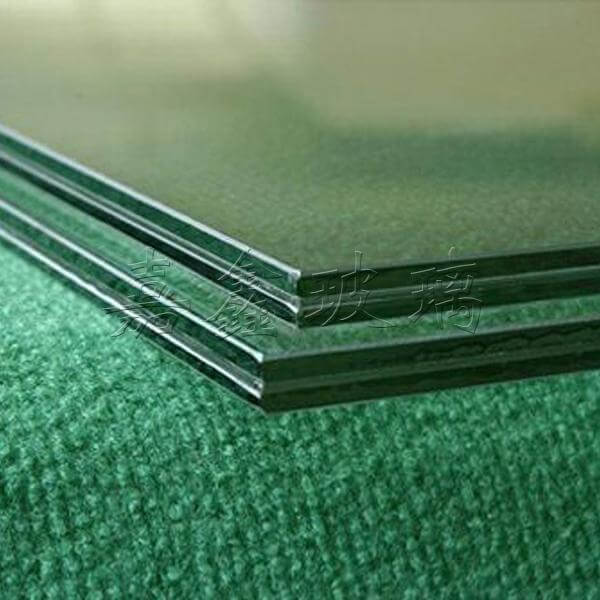
At the equipment level, we have introduced the fully automatic interlayered glass production line from Germany's LiSEC, with a vacuum cavity pressure control accuracy of ±0.01bar (industry average ±0.05bar), coupled with an infrared heating system (temperature fluctuation ≤±2℃), which can achieve uniform bonding of EVA film and glass, reducing the bubble rate from the industry average of 3% to below 0.1%. Technically, we have developed the "segmental preheating-hold pressure lamination" technology, dividing the film preheating into 3 temperature segments (80℃→100℃→120℃), with each segment maintaining heat for 10 minutes to prevent carbonization of the adhesive layer; during the lamination stage, a constant pressure of 0.8MPa is applied (for 30 minutes) to ensure uniformity of the interlayer thickness ≤±0.15mm. In terms of management, the MES production execution system has been introduced to achieve digital mapping of orders-process-equipment, reducing the changeover time from 2 hours to 30 minutes, supporting small-batch flexible production starting from 10 pieces. Taking a commercial complex project in Wuxi as an example, Jiaxin provided customized services for a 2000㎡ arched interlayered glass curtain wall, obtaining glass curvature data through 3D scanning, adjusting the lamination mold angle, and ultimately achieving a finished product with an arc deviation ≤0.5mm, winning the "Jiangsu Province Excellent Project Award".
FAQ: Laminated Glass Customization Technology Selection Guide
Q1: How to choose the appropriate film type?
A: EVA film has low cost (about 20 yuan/㎡), but poor weather resistance (suitable for indoor scenes); PVB film has strong weather resistance (suitable for outdoor), but higher cost (about 80 yuan/㎡); SGP film has the best impact resistance (suitable for high-rise curtain walls) but requires specialized equipment for processing. It is recommended to match according to the application scenario: choose EVA for indoor partitions, PVB for outdoor curtain walls, and SGP for ultra-high-rise buildings.
Q2: How to control costs for small batch customization?
A: Choosing a company that supports flexible production is crucial. Jiaxin's MES system enables rapid equipment changeover (completed within 30 minutes), supports orders starting from 10 pieces, and the unit cost increases by only 5%-8% compared to traditional batch production, significantly lower than the industry average premium of 15%-20%.
Q3: How to verify the quality of custom glass?
A: Focus on three key indicators: light transmission rate (measured by spectrophotometer, normal area should be ≥85%), interlayer thickness (measured by micrometer, deviation ≤±0.2mm), and impact resistance (as per GB/T 15763.3 standard, using a 30kg hammer to strike from a height of 1.2m, glass should not break). Jiaxin products are accompanied by third-party inspection reports for each batch, supporting customer random sampling and re-inspection.
The full summary: Technical strength is the core competitiveness of custom glass.
The competition in customized laminated glass is essentially a competition of technical accuracy. From equipment precision (±0.01bar pressure control) to process parameters (segmented preheating temperature), from management efficiency (30-minute changeover) to quality verification (third-party inspection report), every aspect of technical accumulation determines the reliability and cost advantage of the finished product.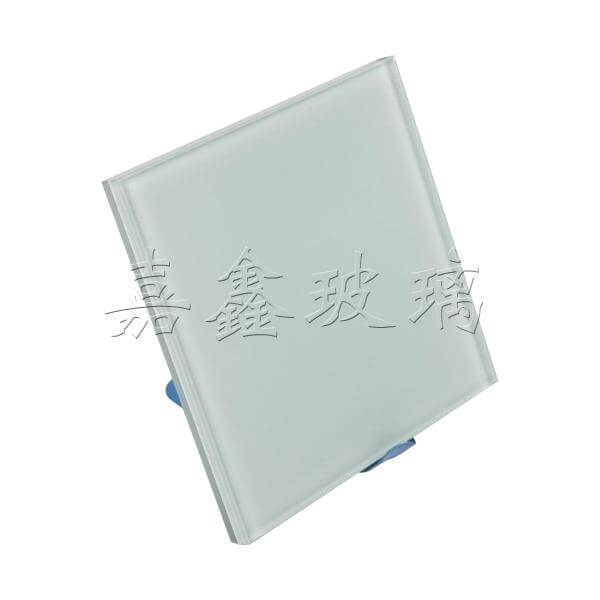
Jiangyin Jiaxin Glass Products has achieved a three-level upgrade through "equipment - technology - management", not only solving the pain points of the industry, but also reducing the customization threshold from "large-scale" to "small-scale" and from "high cost" to "acceptable". For customers with tempered glass customization needs, choosing a company with solid technical strength and rich case experience is the key to risk avoidance and cost control. In the future, as the construction industry continues to raise requirements for safety and personalization, technology-driven customized production will become the mainstream trend in the deep processing of glass.
Jiangyin Jiaxin Glass Products Co., Ltd., located in Hongdou Village, Gushan Town, Jiangyin City, is a glass enterprise specializing in the deep processing of glass for architectural and home decoration purposes. Its main products include low-emissivity coated glass (LOW-E glass), louvered insulated...
No. 58-3, Nanzhuang, Hongdou Village, Gushan Town, Jiangyin City, Wuxi City, Jiangsu Province