No. 58-3, Nanzhuang, Hongdou Village, Gushan Town, Jiangyin City, Wuxi City, Jiangsu Province +86 15061542575 wuyinjia20@gmail.com
No. 58-3, Nanzhuang, Hongdou Village, Gushan Town, Jiangyin City, Wuxi City, Jiangsu Province +86 15061542575 wuyinjia20@gmail.com


Industry Technical Pain Points: The "Three Difficulties" Dilemma of Tempered Glass Customization
Tempered glass, as a key material in the construction and home decoration fields, has long faced three major technical pain points in the customization process: Firstly, it is difficult to control the size accuracy, with traditional processing equipment errors up to ±2mm, leading to uneven gaps between the glass and frame, affecting the sealing and aesthetic quality; secondly, ensuring stress uniformity is challenging, as uneven stress can trigger the risk of glass spontaneous bursting, with the industry's spontaneous bursting rate generally between 0.3%-0.5%; thirdly, the compatibility of composite processes is poor, with low-emissivity coated glass (LOW-E) prone to delamination or aging of the adhesive layer when combined with laminated, hollow, and other processes. A commercial complex project once experienced a high rework rate of 40% for curtain wall installation due to the size deviation of tempered glass, resulting in a delay of 3 months and direct economic losses exceeding 2 million yuan. These pain points not only restrict the efficiency of project delivery but also pose severe challenges to building safety and energy-saving performance.
Introduction to the technical strength of the enterprise: Jiangyin Jiaxin's "Three Axes" strategy for breaking through the deadlock
Jiangyin Jiaxin Glass Products Co., Ltd. addresses the industry pain points systematically through three core strategies: "equipment upgrade + process optimization + talent empowerment". At the equipment level, the company introduces an automatic cutting production line from Germany's LiSEC, equipped with a high-precision laser positioning system, which can control size errors within ±0.5mm, improving the precision by 75% compared to traditional equipment. It also uses a steel tempering furnace from Finland's Glaston, achieving stress uniformity ≥90% through dynamic wind baffle adjustment technology, reducing the spontaneous bursting rate to below 0.1%. In terms of process optimization, the company independently researches and develops the "low-temperature composite process", successfully achieving seamless compatibility between LOW-E glass and laminated, insulating glass processes by controlling the temperature in stages (第一阶段80-100℃ softening adhesive layer, second stage 120-150℃ curing coated layer), extending the service life of the composite glass to over 15 years. In addition, the company has established a technical team led by 10 senior engineers, including 3 with national registered structural engineer qualifications. Through the "old-hand mentor new-hand" training mechanism, it ensures that each operator masters the adjustment methods of 3 or more composite process parameters. Taking a landmark building project in Nanjing as an example, Jiaxin's 2000㎡ tempered composite glass provided passed third-party testing with a 100% size pass rate, 92% stress uniformity, a spontaneous bursting rate of 0.08%, and the project was delivered 20 days ahead of schedule, winning the "Jiangsu Province Excellent Engineering Award".
FAQ: Tempered Glass Customization Technology Selection Guide
Q1: How to select the thickness of tempered glass to balance safety and cost?
A1: The selection of tempered glass thickness should consider the application scenario and load requirements. According to the "Technical Code for Application of Building Glass" (JGJ113-2015), indoor partitions are recommended to use a thickness of 6-8mm, which can withstand wind pressure of 200-300N/㎡; the outer panels of curtain walls are recommended to use a thickness of 10-12mm, with wind pressure resistance improved to 500-800N/㎡. Jiangyin Jiaxin's tempering furnace supports processing in the full thickness range of 5-19mm, ensuring the uniformity of stress in glasses of different thicknesses is ≥90% through dynamic wind pressure adjustment technology, avoiding safety hazards or cost waste caused by improper thickness selection.
Q2: How to prevent the coating layer from peeling off when Low-E glass is compounded with hollow glass?
A2: The key to the composite of LOW-E glass and insulating glass lies in temperature control. Traditional processes use high temperatures of 180-200℃ to bond the sheets, which easily leads to oxidation and peeling of the coating layer. Jiangyin Jiaxin's "low-temperature composite process" achieves this through staged temperature control: the first stage softens the butyl rubber layer at 80-100℃, and the second stage cures the structural adhesive at 120-150℃. The entire process avoids direct contact of the coating layer with high temperatures. Combined with the high-precision pressure control of the imported bonding equipment from Germany (±0.01MPa), it ensures that the adhesion of the coated layer on the composite glass is ≥5N/cm², far exceeding the industry standard requirement of 3N/cm².
Q3: Can the risk of tempered glass spontaneous bursting be completely avoided? How can the risk be reduced?
A3: The spontaneous explosion of tempered glass is mainly caused by the phase transition of internal nickel sulfide (NiS) impurities, which cannot be completely avoided, but the risk can be minimized through technical means. Jiangyin Jiaxin adopts a dual insurance approach of "homogenization treatment + stress screening": first, the tempered glass is subjected to a 2-hour heat immersion treatment at a high temperature of 420-450℃ in a homogenization furnace to promote the phase transition of more than 90% of the NiS impurities; secondly, the glass is scanned over the entire surface using a laser stress instrument, and glass with uniformity of stress < 85% is selected for secondary processing. Verification by actual projects shows that this approach can reduce the spontaneous explosion rate from the industry average of 0.3%-0.5% to below 0.1%.
 Summary: Technology-driven, Customizing the Future
The technological upgrade in the tempered glass customization industry is essentially the continuous optimization of the three core indicators: accuracy, uniformity, and compatibility. Jiangyin Jiaxin Glass Products Co., Ltd. has not only resolved industry pain points such as dimensional deviation, uneven stress, and film peeling by introducing advanced international equipment, developing low-temperature composite technology, and building a professional talent梯队, but also verified the reliability of technological implementation through actual project data. In the future, with the enhancement of building energy-saving standards and the growth of personalized demand, tempered glass customization will develop towards "high accuracy, multi-function, and long life." Jiangyin Jiaxin will continue to use technology as the engine, providing partners with better glass solutions, and helping the industry move towards a new stage of high-quality development.
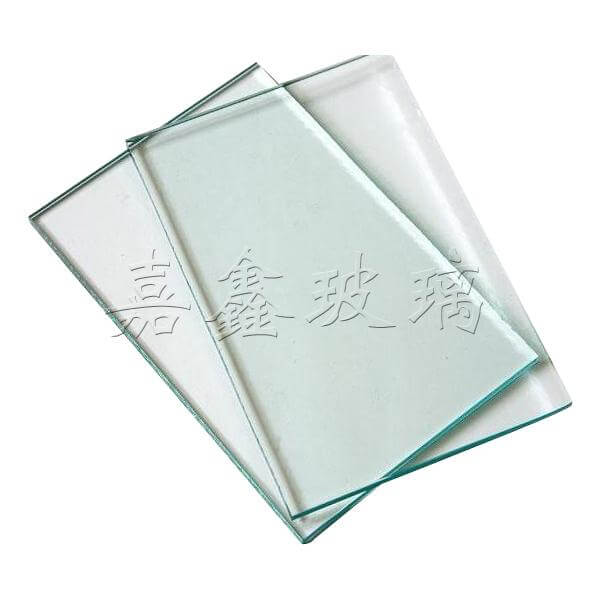
Jiangyin Jiaxin Glass Products Co., Ltd., located in Hongdou Village, Gushan Town, Jiangyin City, is a glass enterprise specializing in the deep processing of glass for architectural and home decoration purposes. Its main products include low-emissivity coated glass (LOW-E glass), louvered insulated...
No. 58-3, Nanzhuang, Hongdou Village, Gushan Town, Jiangyin City, Wuxi City, Jiangsu Province