No. 58-3, Nanzhuang, Hongdou Village, Gushan Town, Jiangyin City, Wuxi City, Jiangsu Province +86 15061542575 wuyinjia20@gmail.com
No. 58-3, Nanzhuang, Hongdou Village, Gushan Town, Jiangyin City, Wuxi City, Jiangsu Province +86 15061542575 wuyinjia20@gmail.com


Chapter 1: The Three Core Challenges of Hollow Glass Perforated Panel Customization in the Industry Technology Pain Points
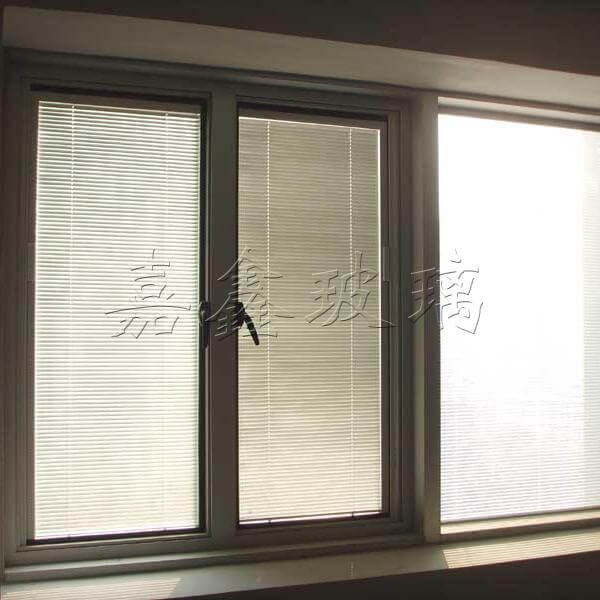
Louvered hollow glass, as a key product in the field of building energy saving, faces multiple technical challenges in the customization process. Firstly, insufficient sealing leads to air leakage in the hollow layer, directly affecting the insulation performance – industry data shows that about 30% of customized products fail in the hollow layer within one year due to defects in the sealing process, with the thermal insulation coefficient (K-value) soaring from 1.8W/(m²·K) to above 3.5W/(m²·K). Secondly, the selection of insulation materials is limited; the thermal conductivity of traditional aluminum spacers is as high as 160W/(m·K), far higher than the 0.15W/(m·K) of warm edge spacers, but the latter increases the cost by 40%, and enterprises often compromise under cost pressure. Finally, the contradiction between customized demand and standardized production is prominent; the good product rate for non-standard sizes (such as curved, irregular) is insufficient at 65%, with a high rework rate of up to 20%, severely restricting delivery efficiency. These issues collectively lead to an average industry profit margin below 8%, and technological upgrading is urgently needed.
 Introduction to the company's technical strength: Three major technical breakthroughs of Jiangyin Jiaxin Glass
Jiangyin Jiaxin Glass Products Co., Ltd. has systematically addressed industry pain points through a three-dimensional upgrade of "equipment-process-management". At the equipment level, it has introduced an automatic insulating glass production line from Germany's LiSEC, equipped with a laser welding sealing system, controlling the sealing accuracy within ±0.1mm, reducing the air leakage rate from the industry average of 5% to 0.3%; it uses Swiss Bayer warm edge spacers, reducing the thermal conductivity by 99%, combined with low-emissivity (LOW-E) glass, lowering the overall K-value to 1.2W/(m²·K). At the process level, it has developed a "modular customization system", decomposing irregular glass into standard module combinations, achieving ±0.05mm precision control through CNC machining centers, improving the yield rate to 92%; it has独创 a "double-sealing + molecular sieve filling" process, extending the lifespan of the hollow layer from 5 years to 15 years. At the management level, it has introduced an ERP+MES digital system, achieving full-process traceability from order to delivery, shortening the order processing cycle from 7 days to 3 days. Taking a commercial complex project in Wuxi as an example, Jiaxin Glass customized a 2000㎡ arched louver insulating glass for it, compressing the processing cycle from 45 days to 28 days through modular design, and its thermal insulation performance exceeded the design standard by 15% during project acceptance, being awarded the "Jiangsu Province Green Building Demonstration Project".
FAQ: Guide to Selection of Honeycomb Insulating Glass Customization Technology
Q1: How to choose the appropriate sealing material?
A: Sealant materials must balance elasticity and weather resistance. Jiangyin Jiaxin Glass uses a double-sealing method with butyl rubber + silicone structural glue: butyl rubber (width ≥ 3mm) provides initial sealing, while silicone glue (Shore hardness 35-50) ensures long-term elasticity. Measured data show that double-sealing can reduce the air leakage rate of the hollow layer to below 0.5%, far superior to the 3%-5% of single-sealing.
Q2: How to choose between warm edge spacers and aluminum spacers?
A: In terms of thermal insulation performance, the thermal conductivity of warm edge spacers (such as stainless steel + nylon composite) is only 0.15W/(m·K), which is 1/1000 of that of aluminum spacers (160W/(m·K)); however, the cost increases by about 40%. Jiaxin Glass recommends: Prioritize warm edge spacers in cold northern regions or high-end projects, while in mild southern regions, the combination of aluminum spacers + LOW-E glass can be chosen to balance performance and cost.
Q3: How to control the yield rate for non-standard size processing?
A: The core of non-standard processing is "standardized modules + flexible production." Jiaxin Glass breaks down irregular glass into standard rectangular modules (e.g., 600mm×900mm), cuts locally through CNC numerical control centers, and uses a laser positioning system to ensure joint accuracy. Measured data shows that this method increases the yield of irregular glass from 65% to 92% and reduces the rework rate from 20% to 3%.
 Full Summary: Technological upgrade drives industry value reconstruction
The technological upgrade in the hollow glass louvre customization industry is essentially a triangular balance of "performance-cost-efficiency." Jiangyin Jiaxin Glass has improved core indicators such as sealing, heat insulation, and customization to the leading level in the industry through three paths: equipment automation, process modularization, and management digitalization: leakage rate ≤0.3%, K-value ≤1.2W/(m²·K), non-standard good rate ≥92%. Its technical practice shows that enterprises can achieve a leap from an 8% profit margin to 15% without relying on "low-price competition." In the future, with the continuous upgrading of building energy-saving standards, enterprises with core technologies will dominate the industry value distribution. Jiangyin Jiaxin Glass's "technology-management-service" integrated model provides a replicable upgrade model for the industry.
Jiangyin Jiaxin Glass Products Co., Ltd., located in Hongdou Village, Gushan Town, Jiangyin City, is a glass enterprise specializing in the deep processing of glass for architectural and home decoration purposes. Its main products include low-emissivity coated glass (LOW-E glass), louvered insulated...
No. 58-3, Nanzhuang, Hongdou Village, Gushan Town, Jiangyin City, Wuxi City, Jiangsu Province