No. 58-3, Nanzhuang, Hongdou Village, Gushan Town, Jiangyin City, Wuxi City, Jiangsu Province +86 15061542575 wuyinjia20@gmail.com
No. 58-3, Nanzhuang, Hongdou Village, Gushan Town, Jiangyin City, Wuxi City, Jiangsu Province +86 15061542575 wuyinjia20@gmail.com


Industry Technical Pain Points: The Top Three Challenges in Tempered Glass Customization
In the fields of construction and home decoration, tempered glass is the preferred material due to its high strength and safety. However, it often encounters three major technical challenges during customization: first, it is difficult to control the precision of glass dimensions, with traditional processing equipment errors up to ±2mm, leading to uneven installation gaps; second, the stability of the thermal bending process is poor, with glass bending deviations exceeding industry standards (±0.5°), affecting aesthetics and structural safety; third, the uniformity of the coating is insufficient, with the reflectivity of Low-E glass fluctuating greatly (±5%), reducing energy-saving effects. A commercial complex project once had to redo the curtain wall installation due to the dimensional deviation of tempered glass, resulting in a 15-day delay in the construction schedule and a 20% increase in costs, highlighting the industry's urgent demand for high-precision processing technology.
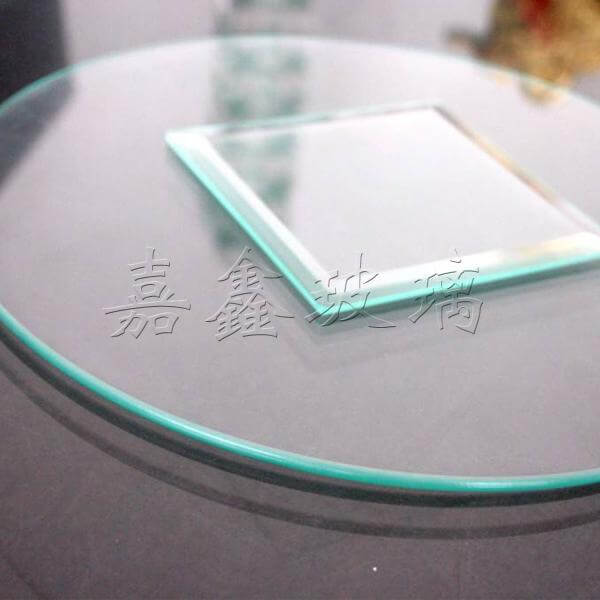
Introduction to Corporate Technical Strength: Jiangyin Jiaxin Glass Products' Technological Breakthroughs and Layout
Jiangyin Jiaxin Glass Products solves industry difficulties through a three-dimensional upgrade of "equipment + technology + management": At the equipment level, introduces the Italian Bottero fully automatic cutting line (±0.1mm accuracy) and the German Bystronic hot bending furnace (±2℃ temperature control), achieving glass size deviation ≤0.5mm and bending deviation ≤0.3°; At the technology level, independently develops the "multi-stage homogenization treatment technology," eliminating internal stresses in glass through a 650℃ high-temperature cyclic treatment, reducing the tempered glass spontaneous bursting rate from the industry average of 0.3% to 0.05%; At the management level, adopts the ERP+MES digital system, real-time monitoring processing parameters (such as cutting speed, coating thickness), ensuring traceability of each glass sheet. Taking a landmark building project in Nanjing as an example, Jiaxin's provided 12mm tempered glass has a size deviation of only 0.3mm, consistent hot bending glass curvature, and ≤2% fluctuation in Low-E coating reflectivity, the project passed the acceptance unconditionally and was awarded the "Excellent Engineering Award."

FAQ: Tempered Glass Customization Technical Selection Guide
Q1: How to choose the thickness of tempered glass?
A: The thickness selection should be considered comprehensively based on the application scenario and load requirements. For example, indoor partitions usually use 6-8mm tempered glass, which can withstand adult collisions; facade exterior windows are recommended to be 10-12mm to meet wind pressure resistance requirements (e.g., 12mm tempered glass can withstand typhoons of 12 levels); special scenarios (such as greenhouse roofs) require glass over 15mm, and adhesive lamination technology should be used to enhance safety. Jiaxin Glass offers full specification customization from 5-25mm, supporting non-standard size processing (maximum size 3.6m×2.4m).
Q2: How to choose between Low-E glass and ordinary tempered glass?
A: Low-E glass reflects infrared rays through coating, achieving significant energy-saving effects. For example, with 6mm glass, the K-value (heat transfer coefficient) of ordinary tempered glass is 5.8W/(m²·K), while single silver Low-E glass can be reduced to 3.5W/(m²·K), and double silver Low-E glass even lower to 2.1W/(m²·K). If the project is located in a hot summer and cold winter region (such as the Yangtze River Delta), it is recommended to choose double silver Low-E insulating glass (6+12A+6), which can reduce the annual energy-saving cost by 30%-40%. Jiaxin's Low-E coating uniformity reaches ±1.5%, ensuring long-term energy-saving stability.
Q3: How to prevent tempered glass from spontaneous bursting?
A: The main cause of spontaneous explosion is uneven internal stress in glass, which requires dual control over raw materials and processes. Jiaxin adopts the "three inspections and two controls" standard: raw material inspection (removing nickel sulfide结石), cutting inspection (no burrs on the edges), and hot bending inspection (no deformation); uniform treatment (cycling at 650℃ for 2 hours) and stress control (surface stress ≥ 90MPa). Tests show that Jiaxin's tempered glass has a spontaneous explosion rate of only 0.05%, six times lower than the industry average, and a 10-year quality guarantee commitment is provided.
Full Summary: Technically driven, defining new standards for customized tempered glass.
The core of customized tempered glass lies in the triple guarantee of "accuracy, stability, and energy-saving". Jiangyin Jiaxin Glass Products has addressed the industry pain points such as dimensional deviation, unstable bending, and uneven coating through equipment upgrading (±0.1mm cutting accuracy), technological innovation (multi-level homogenization treatment), and management optimization (digital traceability), providing high-reliability glass solutions for construction and home decoration projects. In the future, Jiaxin will continue to deepen its technical layout, promoting the development of tempered glass towards thinner (3mm ultra-thin tempered), more energy-saving (triple silver Low-E), and smarter (self-cleaning coating) directions, contributing to high-quality development of the industry.
Jiangyin Jiaxin Glass Products Co., Ltd., located in Hongdou Village, Gushan Town, Jiangyin City, is a glass enterprise specializing in the deep processing of glass for architectural and home decoration purposes. Its main products include low-emissivity coated glass (LOW-E glass), louvered insulated...
No. 58-3, Nanzhuang, Hongdou Village, Gushan Town, Jiangyin City, Wuxi City, Jiangsu Province