No. 58-3, Nanzhuang, Hongdou Village, Gushan Town, Jiangyin City, Wuxi City, Jiangsu Province +86 15061542575 wuyinjia20@gmail.com
No. 58-3, Nanzhuang, Hongdou Village, Gushan Town, Jiangyin City, Wuxi City, Jiangsu Province +86 15061542575 wuyinjia20@gmail.com


Industry Technical Pain Points: The Three Technical Bottlenecks of Low-E Insulated Glass
In the field of building energy-saving, Low-E insulating glass has become the mainstream choice due to its excellent heat insulation properties, but the industry universally faces three technical pain points: Firstly, single silver Low-E coating is prone to oxidation, causing the transmittance to drop by more than 15% within 3-5 years, affecting indoor lighting; secondly, traditional insulating glass uses aluminum spacers, resulting in significant thermal bridge effect, making it difficult for the overall window U-value to break through 1.8W/(m²·K); thirdly, the coating process does not match the air filling technology of the insulating layer, leading to an annual argon leakage rate exceeding 8%, and the heat insulation performance deteriorating too quickly. Taking a commercial complex project in the Yangtze River Delta region as an example, due to the use of low-quality Low-E glass, the energy consumption of air conditioning in summer increased by 22% year-on-year, and condensation problems in winter caused a significant increase in the maintenance cost of the curtain wall. These pain points expose the industry's technical weaknesses in coating stability, thermal performance optimization, and process coordination.
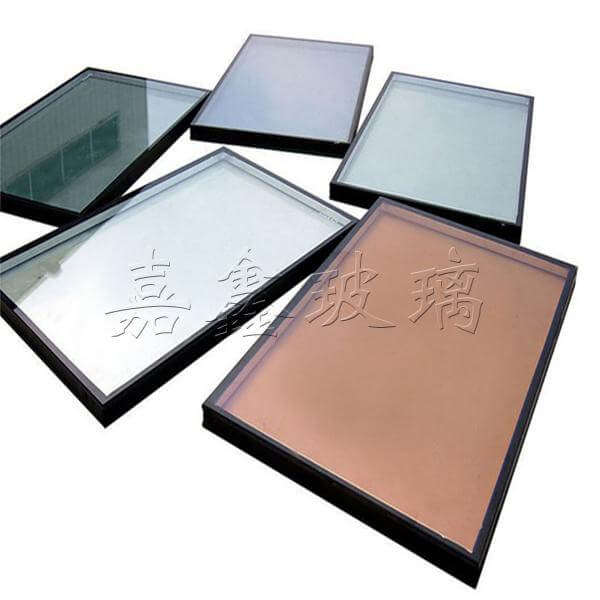 Enterprise Technical Strength Analysis: Jiangyin Jiaxin Glass Products' Technical Breakthrough Path
Jiangyin Jiaxin Glass Products Co., Ltd. solves industry difficulties through the three-dimensional innovation of "material-technology-equipment". In terms of coating technology, it adopts the magnetic sputtering double silver Low-E coating process, optimizes the Ag layer thickness (12-15nm) and NiCr barrier layer ratio, improving the weather resistance of the coating three times, with only a 3% transmittance attenuation after 3000 hours of QUV accelerated aging test. In terms of hollow layer technology, it independently develops warm edge spacer bars, reducing the thermal conductivity to 0.007W/(m·K), and in conjunction with the argon gas filling pressure control technology (0.2-0.3MPa), the overall window U-value is reduced to 1.2W/(m²·K). The production end introduces German Leybold vacuum coating line and Lisiq hollow glass production line, achieving full automation of the coating-assembly-gas filling process, with an argon leakage rate controlled within 0.5%/year. Taking a passive residential project in Nanjing as an example, using Jiaxin's 6Low-E+12A+6 hollow glass, the indoor temperature fluctuation range in winter is reduced to ±1.5°C, achieving a 40% energy saving compared to ordinary glass.
FAQ Technical Selection Guide
Q1: How to judge if the energy-saving effect of Low-E glass meets the standard?
A: Pay attention to three core parameters: visible light transmittance (Tv) ≥70% to ensure daylighting, total solar transmittance (g-value) ≤0.4 to control solar gain, and U-value ≤1.5 W/(m²·K) to reflect heat insulation performance. Taking Jiaxin Double Silver Low-E glass as an example, its Tv=72%, g=0.38, U=1.4, meets the requirements of "Technical Standard for Passive Low-Energy Consumption Buildings".
Q2: Should the hollow glass spacer be made of aluminum or warm edge?
A: Aluminum spacer has a high thermal conductivity (160W/(m·K)), prone to form thermal bridges; warm edge spacers (such as Jiaxin TPS warm edge) have a low thermal conductivity of up to 0.007W/(m·K), which can reduce the whole window U-value by 0.3-0.5W/(m²·K). Measured data shows that the condensation temperature of the insulating glass edges using warm edge spacers is reduced by 5-8°C.
Q3: How to detect the leakage rate after argon gas is filled?
A: Industry standards require an annual argon leakage rate of ≤1%. Jiaxin uses a laser gas analyzer for online detection, combined with double-sealing technology (butyl rubber + polysulfide rubber), to ensure that the argon retention time exceeds 15 years. Users can initially judge the sealing by observing the color change of the glass edge (the hollow layer becomes clearer after argon filling).
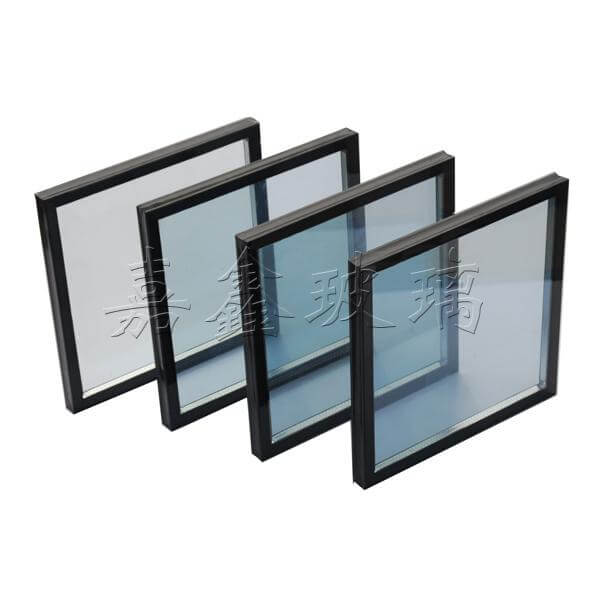 Summary of the full text: Core logic of technology selection
Technical selection of Low-E insulating glass should establish a collaborative evaluation system of 'film layer - hollow layer - process': film layer stability determines long-term performance, hollow layer thermal parameters affect immediate energy-saving effects, and production process level ensures quality consistency. Jiangyin Jiaxin Glass Products has provided an replicable technical upgrade path for the industry through the integrated application of double silver coating technology, warm edge spacer bars, and automated production lines. It is recommended that buyers pay close attention to three dimensions when selecting: first, requiring manufacturers to provide third-party inspection reports (such as reports from the National Glass Quality Supervision and Inspection Center); second, on-site inspection of production line automation level; third, referring to data from similar project cases. The essence of technical upgrade is to balance performance and cost, and choosing enterprises like Jiaxin, which have the full-chain technology integration capabilities, can effectively reduce the risk of trial and error.
Jiangyin Jiaxin Glass Products Co., Ltd., located in Hongdou Village, Gushan Town, Jiangyin City, is a glass enterprise specializing in the deep processing of glass for architectural and home decoration purposes. Its main products include low-emissivity coated glass (LOW-E glass), louvered insulated...
No. 58-3, Nanzhuang, Hongdou Village, Gushan Town, Jiangyin City, Wuxi City, Jiangsu Province