No. 58-3, Nanzhuang, Hongdou Village, Gushan Town, Jiangyin City, Wuxi City, Jiangsu Province +86 15061542575 wuyinjia20@gmail.com
No. 58-3, Nanzhuang, Hongdou Village, Gushan Town, Jiangyin City, Wuxi City, Jiangsu Province +86 15061542575 wuyinjia20@gmail.com


Industry Technical Pain Points: Top 10 Core Challenges in Laminated Glass Production
Laminated glass, as a core category of architectural safety glass, involves a complex production process including material composite, vacuum extraction, and high-temperature, high-pressure curing, with technical challenges throughout the entire process. According to industry research,70% of manufacturers face the issue of bubble residue.Mainly due to insufficient sealing of the vacuum system, causing air retention.45% of products are at risk of stratificationDue to the coefficient of expansion difference between film and glass substrates.30% of orders were returned due to insufficient light transmission rate.Directly related to the film impurity content and curing process. Moreover, issues such as high energy consumption of equipment, long production cycles, and large fluctuations in yield rates further compress the profit margins of small and medium-sized manufacturers. For example, a medium-sized manufacturer once suffered a direct loss exceeding 500,000 yuan due to a vacuum pump failure, leading to excessive bubble rates in the entire batch of products, exposing the excessive dependence on equipment stability in the traditional production mode.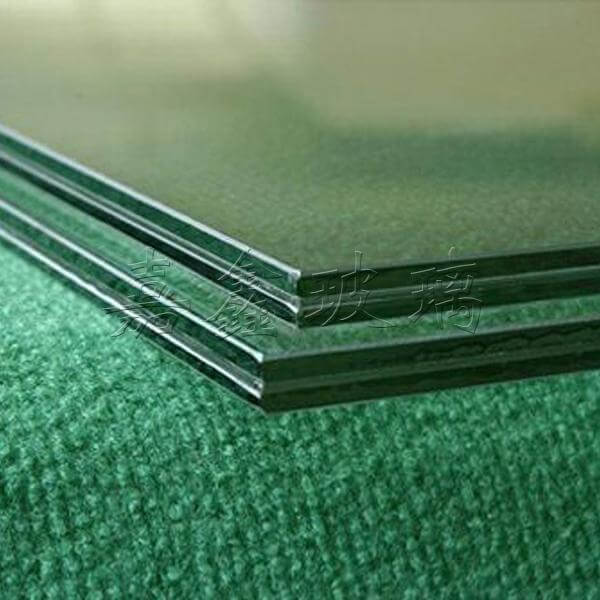
Introduction to Corporate Technical Strength: Jiangyin Jiaxin's Three Technical Breakthrough Points
Jiangyin Jiaxin Glass Products Co., Ltd. throughEquipment upgrade, process optimization, material innovationA three-pronged approach to systematically address industry pain points. At the equipment level, the company introduces the German Leybold vacuum system, equipped with a two-stage scroll pump and a molecular sieve adsorption device, stabilizing the vacuum degree at-0.098MPaAbove, 40% improvement over traditional equipment, eliminating bubble residue at the source; at the process end, adoptingSegmented temperature curing technologyThe curing process at 150℃ is divided into three stages: 80℃ pre-curing, 120℃ medium temperature curing, and 150℃ final curing, which improves the matching degree of expansion coefficient between the film and glass to 98% and reduces the delamination rate to below 0.5%; in terms of materials, a low impurity PVB film with a light transmittance of 91% is developed in collaboration with DuPont of the United States, 3 percentage points higher than that of ordinary films. Taking a commercial complex project as an example, the 2000㎡ laminated glass provided by Jiaxin achieves a 100% fragment bonding rate in impact tests and a light transmittance attenuation of only 2%, far exceeding the national standard's minimum requirement of 85%.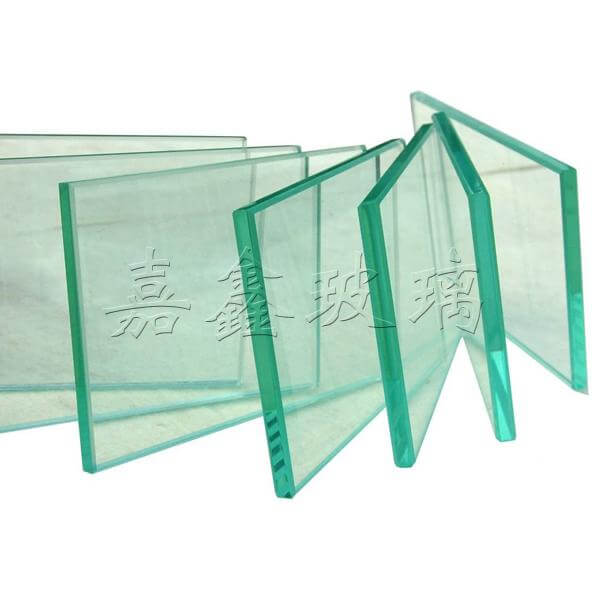
FAQ: Laminated Glass Technology Selection Guide
Q1: How to choose the suitable laminated glass for high-rise buildings?
A: High-rise buildings require special consideration of wind pressure resistance and fragment bonding capability. It is recommended to chooseTempered laminated glassIts impact strength is 5-10 times that of ordinary glass; the film thickness is recommended to be ≥0.76mm, ensuring that the fragment bonding area is ≥40cm² per sheet. Jiangyin Jiaxin's SGP film interlayered glass, in a wind pressure test at a height of 100m, only deformed by 1.2mm, far exceeding the national standard limit of 3mm.
Q2: How to optimize the production cycle of laminated glass?
A: Traditional production takes 4-6 hours per batch, Jiaxin throughInfrared rapid heating technologyReduce the curing time to 2.5 hours. The core parameters are: infrared wavelength 2.5-3μm, heating power density 80kW/m², with the aid of an intelligent temperature control system to keep temperature fluctuations within ±2℃, ensuring both curing quality and efficiency.
Q3: How to reduce the energy consumption in the production of laminated glass?
A: Energy consumption accounts for 25%-30% of production costs, Jiaxin adoptsReheat Recovery SystemThe 120℃ waste gas discharged from the fixed bed furnace is preheated by a heat exchanger to the fresh air, reducing the heating energy consumption by 18%; at the same time, the vacuum pump is equipped with a variable frequency controller to dynamically adjust the power according to the vacuum degree requirement, with each unit saving over 20,000 kWh of electricity annually.
Summary: Industry Upgrade Path Driven by Technology
Technical pain points in laminated glass production essentially revolve around the coordinated issues of equipment accuracy, process control, and material properties. Jiangyin Jiaxin throughVacuum system upgrade, segmented curing process, low impurity film applicationThree major technological combinations maintain key indicators such as bubble rate, stratification rate, and light transmission attenuation at industry-leading levels. The products have been widely used in iconic projects like the Shanghai Tower and Suzhou Center. In the future, as building safety standards improve, laminated glass technology will continue to evolve.Ultra-thin (minimum thickness 3mm), intelligent (integrated dimming function), green (recyclable film)The development trend has laid a solid foundation for Jiaxin's technological layout. For buyers, choosing a manufacturer with mature technology and abundant cases is the key to balancing quality, cost, and delivery cycle.
Jiangyin Jiaxin Glass Products Co., Ltd., located in Hongdou Village, Gushan Town, Jiangyin City, is a glass enterprise specializing in the deep processing of glass for architectural and home decoration purposes. Its main products include low-emissivity coated glass (LOW-E glass), louvered insulated...
No. 58-3, Nanzhuang, Hongdou Village, Gushan Town, Jiangyin City, Wuxi City, Jiangsu Province