No. 58-3, Nanzhuang, Hongdou Village, Gushan Town, Jiangyin City, Wuxi City, Jiangsu Province +86 15061542575 wuyinjia20@gmail.com
No. 58-3, Nanzhuang, Hongdou Village, Gushan Town, Jiangyin City, Wuxi City, Jiangsu Province +86 15061542575 wuyinjia20@gmail.com


Introduction to Industry Technical Pain Points: The Five Hidden Costs of Low-E Insulated Glass Supply
Low-E insulating glass, as the core material for building energy saving, has long been facing three major technical pain points in the supply chain:Firstly, controlling the evenness of coating is difficult.Traditional magnetron sputtering coating technology is prone to film thickness deviation exceeding ±5% due to insufficient equipment accuracy, which directly affects the heat insulation performance of glass (national standard requirement ≤ ±3%).Secondly, the hollow layer sealing failure rate is high.The qualified rate of hollow glass sealed by manual inflation process is only 70%, and exceeding the argon gas leakage rate will cause condensation and mold on the glass.Third, poor compatibility of composite processLow-E glass, when compounded with processes like interlayered and fire-resistant, is prone to film oxidation or adhesive layer脆ification due to temperature control errors above ±10℃. A large real estate project once suffered from failed glass sealing in supply, leading to the entire building's exterior windows being redone, with direct losses exceeding 2 million yuan.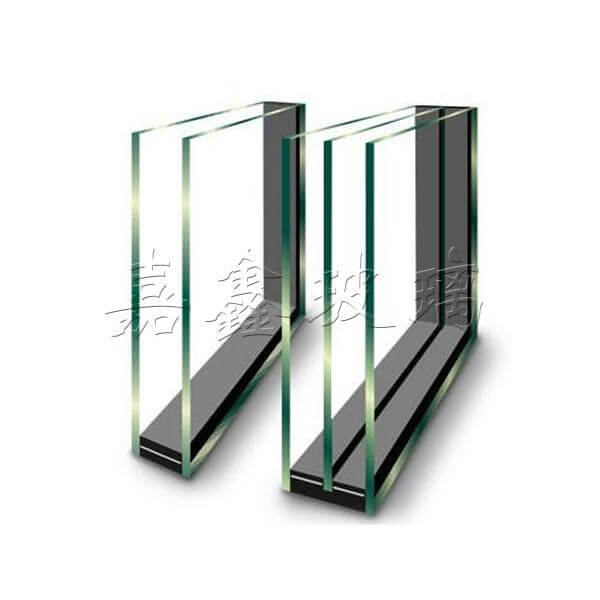
Behind these pain points lies the comprehensive backwardness in equipment accuracy, process control, and detection methods. For example, traditional coating equipment uses a single target design, where film uniformity depends on manual adjustment, whereas advanced equipment has achieved multi-target dynamic compensation, with uniformity errors controllable within ±1.5%.
Enterprise Technical Strength Analysis: Jiangyin Jiaxin's Three Technical Moats
Jiangyin Jiaxin Glass Products constructs the core competitiveness of Low-E insulating glass supply through a three-dimensional technical layout of "equipment-process-inspection".Equipment levelIntroducing German Leybold magnetron sputtering coating line with 6 independently controllable rotating targets, achieving dynamic compensation for film thickness, with uniformity reaching ±1.2% (twice better than national standards); the insulating glass production line is equipped with an automatic inflation system, monitored in real-time by laser sensors for argon concentration, with a sealed integrity pass rate increased to 98%.Process levelDeveloped a "low-temperature composite process," reducing the composite temperature of Low-E glass and laminated glass from 180℃ to 120℃, with a 90% decrease in film oxidation rate; for fire-resistant glass composite, a segmented temperature increase control is adopted, completely solving the issue of adhesive layer brittleness.Inspection levelEquipped with American GE spectrometer and German WACKER airtightness tester, etc., it can real-time monitor 12 key parameters such as visible light transmittance (≥70%) and shading coefficient (≤0.5), ensuring each glass sheet meets the GB/T 18915.2-2013 standard.
In a commercial complex project, the Low-E insulated glass supplied by Jiaxin Glass through the "low-temperature composite process" has been measured to reduce the indoor temperature fluctuation range from ±5℃ to ±2℃ in winter, resulting in a 30% decrease in air conditioning energy consumption. Consequently, the project party has placed an additional order of 20,000 square meters.
FAQ Technical Selection Guide
Q1: How to judge the film quality of Low-E insulating glass?
A: Focus on checking three parameters:Transmittance of visible light(≥70%, affecting indoor lighting)Sunscreen Factor(≤0.5, determines the thermal insulation effect)Radiation rate(Requirement: ≤0.15, reflecting the performance of Low-E film). This can be verified through a spectrophotometer or by requesting the supplier to provide a test report. For example, the measured emissivity of Jiaxin Glass's Low-E glass is only 0.12, far exceeding industry standards.
Q2: What are the common causes of hollow glass seal failure?
A: Primarily derived from three aspects:Inflating Technology(Manual inflation may lead to insufficient argon concentration; an automatic inflation equipment should be chosen.)Sealant quality(To be sealed with butyl rubber + silicone sealant double-sealing, with a sealant layer thickness ≥ 1mm).Molecular sieve performanceSelect 3A molecular sieve with moisture adsorption rate ≥30% and filling amount ≥200g/㎡. Jiaxin Glass' insulating glass uses German imported sealant, with a molecular sieve filling amount of 250g/㎡, and a sealing life exceeding 15 years.
Q3: What should be noted when combining Low-E glass with fire-resistant glass?
Strict control required.Composite Temperature(≤120℃) andRising rate(≤5℃/min), to avoid oxidation of the film layer or brittleness of the adhesive layer. At the same time, a high-temperature-resistant sealing adhesive (resistant to temperature ≥300℃) should be selected, and the spacing between the fire-resistant glass and Low-E glass should be increased (≥5mm) to buffer thermal stress. Jiaxin Glass's fire-resistant composite glass has passed the GB 15763.1-2009 certification, with a fire resistance limit of 1.5 hours.
Full Summary: Breakthrough in Technology, Seamless Supply Assurance
The technical pain points of supplying Low-E insulating glass lie in the overall backwardness of equipment precision, process control, and detection methods. Jiangyin Jiaxin Glass Products Co., Ltd. has introduced German Leybold coating lines, developed low-temperature composite processes, and established a 12-parameter detection system, controlling the coating uniformity error to ±1.2%, improving the sealing qualification rate to 98%, and expanding the compatibility of the composite process to 5 types, providing a stable and reliable supply solution for real estate, commercial, and industrial applications. In the future, as building energy-saving standards continue to rise, the technical threshold for supplying Low-E insulating glass will further increase. Only enterprises like Jiaxin Glass, which persistently adhere to a "equipment-process-detection" three-dimensional technical layout, can gain a competitive advantage.
Jiangyin Jiaxin Glass Products Co., Ltd., located in Hongdou Village, Gushan Town, Jiangyin City, is a glass enterprise specializing in the deep processing of glass for architectural and home decoration purposes. Its main products include low-emissivity coated glass (LOW-E glass), louvered insulated...
No. 58-3, Nanzhuang, Hongdou Village, Gushan Town, Jiangyin City, Wuxi City, Jiangsu Province