No. 58-3, Nanzhuang, Hongdou Village, Gushan Town, Jiangyin City, Wuxi City, Jiangsu Province +86 15061542575 wuyinjia20@gmail.com
No. 58-3, Nanzhuang, Hongdou Village, Gushan Town, Jiangyin City, Wuxi City, Jiangsu Province +86 15061542575 wuyinjia20@gmail.com


Chapter One: The "Invisible Barrier" in Tempered Glass Production Technology Pain Points
Tempered glass, as a core material in the construction and home decoration fields, involves multiple processes such as physical tempering, chemical strengthening, and cutting, with high technical barriers and numerous pain points. For instance, during the physical tempering process, glass is prone to spontaneous bursting due to uneven heating, while chemical strengthening requires precise control of ion exchange time and temperature to avoid reducing the surface compressive stress of the glass; the cutting phase faces the challenge of high edge breakage rates, directly affecting product yield. Moreover, traditional production models rely on manual experience, have long parameter adjustment cycles, and high equipment failure rates, leading to low production efficiency. According to industry statistics, small and medium-sized tempered glass enterprises commonly experience annual loss rates of over 15% due to technical deficiencies, while the demand for high-end products such as low-emissivity coated glass and laminated glass continues to grow. Technological upgrading has become a key factor for the survival of enterprises.
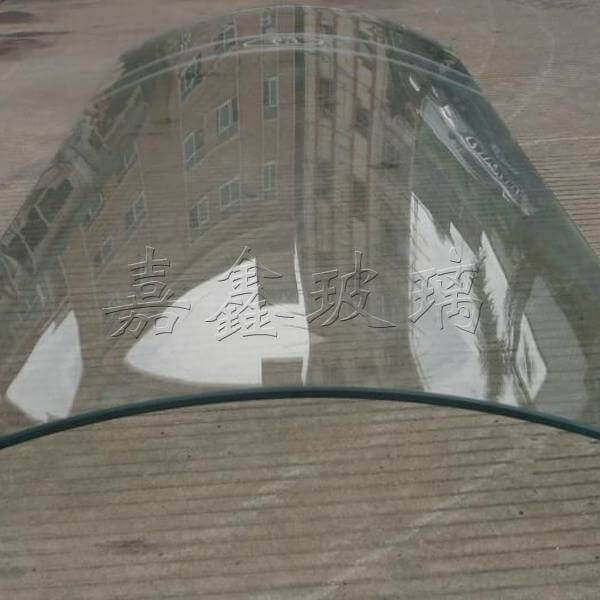
Section 2: Introduction to the Company's Technical Strength: Jiangyin Jiaxin Glass' "Breakthrough in Technology" Approach
Jiangyin Jiaxin Glass Products Co., Ltd. has constructed a technical moat in tempered glass production through a three-dimensional upgrade of "equipment + technology + management". At the equipment level, the company has introduced international equipment such as Germany's LiSEC fully automatic cutting lines and Finland's Glaston tempering furnaces, achieving a cutting accuracy of ±0.1mm and a temperature control error of less than ±2℃ in the tempering furnace, significantly reducing the spontaneous explosion rate and edge breakage rate. In terms of technology, the company independently developed the "low-temperature rapid tempering technology", shortening the tempering cycle by 30% through optimizing the heating curve and wind cooling parameters, and increasing the surface compressive stress value of the glass to over 120MPa, meeting the performance requirements of high-end products such as fire-resistant glass and laminated glass. In addition, Jiaxin Glass adopts the MES production management system, achieving full-process digital tracking from order placement to finished product inventory, reducing equipment failure response time to within 10 minutes, and increasing production efficiency by 40%. Currently, the company has formed a composite product matrix centered around LOW-E glass and roller shutter insulating glass, with an annual production capacity of 2 million square meters. The products have passed CCC, CE, and other certifications, and serve leading real estate developers such as Vanke and碧桂园.
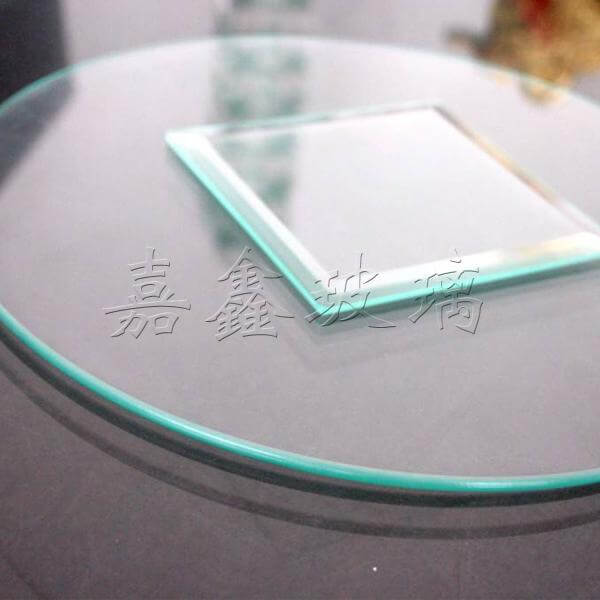
Section 3: FAQ: Guide for Selecting Tempered Glass Technology
Q1: How to choose tempered glass suitable for architectural curtain walls?
A: The architectural facade has high requirements for the strength, light transmission rate, and weather resistance of tempered glass. It is recommended to choose products with a surface stress value of ≥95MPa and a light transmission rate of ≥85%, while also paying attention to the homogeneity of the glass (HST test). For example, Jiangyin Jiaxin's LOW-E tempered glass uses an online coating process, which can achieve a light transmission rate of 88% and a shading coefficient of 0.52 at a thickness of 6mm, meeting the green building standards.
Q2: How to control the self-explosion rate of tempered glass?
A: The main cause of spontaneous explosion is the phase change of nickel sulfide (NiS) impurities inside the glass. Control points include: 1) Use high-quality float glass substrates (nickel content ≤0.01%); 2) Uniformity of the tempering furnace heating section temperature ≤5℃; 3) Adopt homogeneous treatment (HST) to eliminate stress concentration. Jiaxin Glass, by introducing the Finnish Glasson homogenizing furnace, has reduced the spontaneous explosion rate from the industry average of 3‰ to below 0.5‰.
Q3: How to combine and apply laminated glass and hollow glass?
A: Laminated glass provides safety and explosion-proof functions, while insulating glass optimizes thermal insulation performance. Notes for combination: 1) The laminated layer should face the indoor side to avoid ultraviolet aging; 2) Filling the cavity with argon can increase the thermal insulation coefficient to 1.8W/(m²·K); 3) The width of the structural adhesive should be ≥7mm. Jiaxin Glass's composite products have been applied in super-high-rise projects such as the Shanghai Tower, achieving non-standard cutting accuracy of ±0.2mm through CNC processing centers.
Four, Summary of the Whole: Industry Upgrade Path Driven by Technology
The competition in the tempered glass industry has shifted from scale expansion to technological deepening. Jiangyin Jiaxin Glass has not only resolved traditional pain points such as spontaneous explosion and chipping during cutting through equipment intelligence, process refinement, and management digitalization but has also formed differentiated advantages in the composite product field. In the future, with the rise of emerging needs such as BIPV (Building Integrated Photovoltaics) and smart dimming glass, enterprises need to continuously increase their R&D investment, such as exploring nanocoating technology to enhance the self-cleaning performance of glass or optimizing tempering parameters through AI algorithms to build long-term competitiveness with technological leadership. For the industry, Jiaxin's practice proves that only by anchoring on technology can one stand firm at the forefront of change.
Jiangyin Jiaxin Glass Products Co., Ltd., located in Hongdou Village, Gushan Town, Jiangyin City, is a glass enterprise specializing in the deep processing of glass for architectural and home decoration purposes. Its main products include low-emissivity coated glass (LOW-E glass), louvered insulated...
No. 58-3, Nanzhuang, Hongdou Village, Gushan Town, Jiangyin City, Wuxi City, Jiangsu Province