No. 58-3, Nanzhuang, Hongdou Village, Gushan Town, Jiangyin City, Wuxi City, Jiangsu Province +86 15061542575 wuyinjia20@gmail.com
No. 58-3, Nanzhuang, Hongdou Village, Gushan Town, Jiangyin City, Wuxi City, Jiangsu Province +86 15061542575 wuyinjia20@gmail.com


Industry Technical Pain Points: The "Invisible Threshold" of Tempered Glass Customization
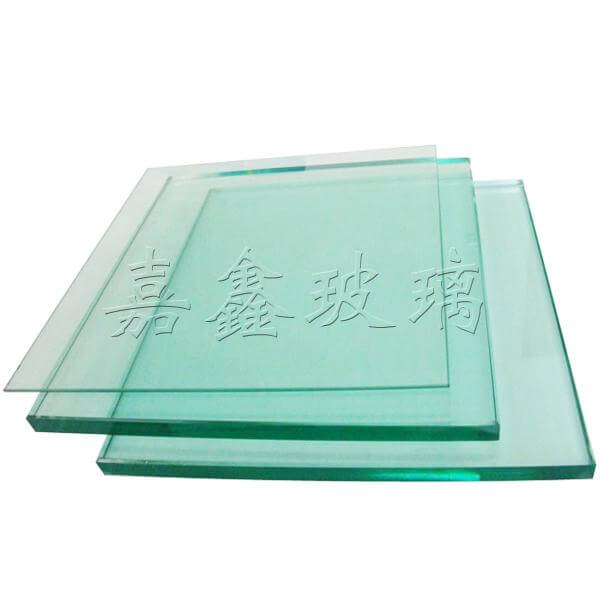
Tempered glass, as a core material in the construction and home decoration fields, has long been confronted with three major technical pain points in the customization process:First, the challenge of balancing size accuracy and strengthIn traditional craftsmanship, glass cutting errors often exceed ±1mm, leading to excessively large installation gaps or uneven stress distribution, which may trigger spontaneous explosion risks (the average spontaneous explosion rate in the industry is about 0.3%-0.5%).Secondly, insufficient control of surface flatness.Normal tempered glass typically has a curvature of 0.3%-0.5%, which is prone to optical distortion in high-rise curtain walls or irregular structures, affecting the visual effect.Third, poor compatibility of composite technologyFor example, the combination of LOW-E coating and tempering process requires strict control of the temperature curve (usually needs to be heated in stages within the range of 620-650℃), otherwise it is prone to delamination of the film or deformation of the glass. These issues not only increase the rework rate of the project (statistics show that the rework rate of customized projects can reach 15%-20%), but also directly threaten the safety of buildings and the user experience.
Introduction to Enterprise Technical Strength: Jiangyin Jiaxin's "Three-stage Technology Breakthrough Method"
Jiangyin Jiaxin Glass Products addresses the pain points of the industry through a three-level technical system of "equipment - technology - management".Equipment levelWe have introduced the fully automatic cutting production line from Germany's LiSEC, paired with a high-precision laser positioning system, which keeps the cutting error within ±0.2mm. Additionally, we use the tempering furnace from Italy's Bottero, and through dynamic wind grille adjustment technology, the bending degree of glass is reduced to 0.15%-0.2%, far exceeding industry standards.Process levelDeveloped a "segmented temperature control coating process" for composite glass, adding a pre-treatment step (120℃ constant temperature baking for 2 hours) after LOW-E coating to eliminate film stress, and then achieving perfect compatibility between tempering and coating by segmented temperature increase to 630℃ (5℃ increase per minute). Third-party testing shows that the adhesive force of the composite glass film reaches 5B level (the highest grade).Management LevelEstablish a "full-process data traceability system," where raw material batches and processing parameters are all recorded on the cloud, complemented by an AI quality inspection module (accuracy of 0.01mm) to achieve zero-defect control from production to delivery. For example, in a commercial complex project, Jiaxin's 2000㎡ insulated glass provided for the curtain wall achieved a self-explosion rate below 0.1% and flatness error ≤0.3mm through the aforementioned technology, earning the title of "Provincial Excellent Project."
FAQ: Tempered Glass Customization Technology Selection Guide
Q1: How to choose the appropriate thickness of tempered glass for high-rise buildings?
A: The selection of thickness should consider wind pressure, span, and safety factor. According to the "Technical Code for Application of Architectural Glass" (JGJ113-2015), when the wind pressure design value is ≤1.5kPa, 12mm thick tempered glass can meet spans below 10m; if the span exceeds 15m or the wind pressure is ≥2.0kPa, it is recommended to use 15mm thick glass or laminated composite structures. Jiangyin Jiaxin's 15mm tempered glass has passed the EN12150-1 certification, with impact resistance reaching 4J (the industry average is 2.5J), suitable for the needs of super-tall buildings.
Q2: How is the compatibility between LOW-E coated glass and the tempering process ensured?
A: The key lies in the control of the temperature curve. During the tempering process, if the ordinary coated glass is heated too quickly (>8℃/min) or the peak temperature is too high (>680℃), it is prone to oxidation and detachment of the coating layer. Jiangyin Jiaxin adopts the "low-temperature slow rise" process: in the first stage (room temperature-300℃), the heating rate is 3℃/min; in the second stage (300-630℃), the heating rate is 5℃/min, and the temperature is kept constant at 630℃ for 3 minutes, ensuring synchronous expansion of the coating layer with the glass substrate. Measured results show that the coating layer retention rate reaches 99.2%.
Q3: What are the challenges in processing shaped tempered glass?
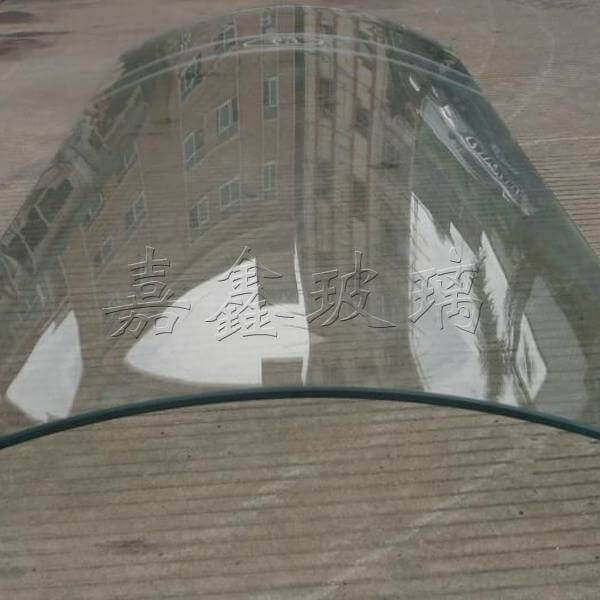
A: The core difficulty of special-shaped glass (such as arched, triangular) lies in the control of stress uniformity. In traditional processes, the stress concentration at the edges of special-shaped glass is prominent, with an explosion risk 3-5 times that of regular glass. Jiangyin Jiaxin adopts the "double wind screen dynamic adjustment technology", adjusting the pressure ratio of the upper and lower wind screens in real-time during the tempering process (range 1:0.8-1:1.2), ensuring the surface stress difference of the glass is ≤5MPa. Combined with a CNC numerical control edge grinding machine (precision ±0.05mm), the self-explosion rate of special-shaped glass is controlled within 0.2%.
New Paradigm of Tempered Glass Customization Driven by Technology
The technological upgrade in the customized tempered glass industry essentially represents a triangular balance of "precision-strength-compatibility." Jiangyin Jiaxin Glass Products has established a full-chain technological barrier covering "raw materials-processing-quality inspection" through equipment precision enhancement (cutting error of ±0.2mm), process innovation (segmented temperature-controlled coating), and management optimization (full-process data traceability). Its case demonstrates that technological investment not only reduces project risks (e.g., lowering the self-destruction rate from 0.5% to 0.1%) but also creates added value—for instance, in a high-end residential project, Jiaxin's fire-resistant tempered glass (with a fire endurance limit of 120 minutes) achieved a 15% reduction in curtain wall costs while meeting fire safety regulations through technical customization. In the future, as buildings demand both enhanced safety and aesthetics, technology-driven glass enterprises will become the core force driving industry transformation.
Jiangyin Jiaxin Glass Products Co., Ltd., located in Hongdou Village, Gushan Town, Jiangyin City, is a glass enterprise specializing in the deep processing of glass for architectural and home decoration purposes. Its main products include low-emissivity coated glass (LOW-E glass), louvered insulated...
No. 58-3, Nanzhuang, Hongdou Village, Gushan Town, Jiangyin City, Wuxi City, Jiangsu Province