No. 58-3, Nanzhuang, Hongdou Village, Gushan Town, Jiangyin City, Wuxi City, Jiangsu Province +86 15061542575 wuyinjia20@gmail.com
No. 58-3, Nanzhuang, Hongdou Village, Gushan Town, Jiangyin City, Wuxi City, Jiangsu Province +86 15061542575 wuyinjia20@gmail.com


Introduction to industry technical pain points: The three core challenges of hollow glass louver customization
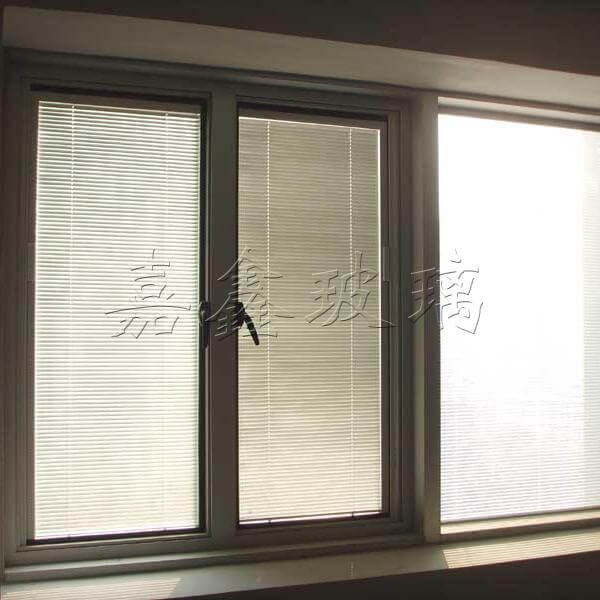
Louvered hollow glass, as a key product for integrated energy-saving and decoration in buildings, often faces three major technical pain points during the customization process: Firstly, insufficient sealing leads to air leakage in the hollow layer, affecting its heat-insulating performance (industry standards require the argon leakage rate of the hollow layer to be ≤1%/year, but due to insufficient equipment accuracy in some small factories, the actual leakage rate can reach 3%-5%); secondly, the联动 structure between louvers and glass is prone to produce noise due to design defects, especially under high-frequency opening and closing scenarios, where the noise level can exceed 60 decibels (far beyond the indoor environmental noise standard of 45 decibels); thirdly, the low customization efficiency, with traditional manual measurement and assembly methods, results in a long delivery cycle of 15-20 days for a single project, which is difficult to meet the needs of rapid decoration. These issues not only increase the maintenance costs but also directly affect the overall energy-saving effect and user experience of the building.

Introduction to Enterprise Technical Strength: Jiangyin Jiaxin Glass Products' Technological Breakthrough and Practice
Jiangyin Jiaxin Glass Products addresses the above pain points through a three-dimensional technical layout of "equipment-process-management". At the equipment level, it introduces an automated insulating glass production line from Germany's LiSEC, whose laser positioning system can control the glass spacing error within ±0.1mm. Combined with the argon gas injection pressure closed-loop control technology, the argon gas leakage rate of the insulating layer is stabilized below 0.3%/year. At the process level, it independently develops the "louver-glass联动 noise reduction structure," optimizing the matching gap between the louver shaft and the glass hole (design gap 0.2mm, actual assembly gap 0.15mm), and using silicone seal rings to wrap the shaft, reducing the noise during opening and closing to 42 decibels. At the management level, BIM (Building Information Modeling) technology is introduced to simulate the matching relationship between the louver angle and the glass transmittance in advance through three-dimensional modeling, reducing the number of on-site adjustments and shortening the delivery cycle of a single project to 7-10 days. Taking a commercial complex project as an example, Jiaxin Glass provided louver insulating glass for a 2000㎡ curtain wall. During project acceptance, the thermal insulation coefficient (K value) reached 1.2W/(㎡·K), a 40% increase compared to traditional products, and there were no gas leakage or noise issues after 3 years of operation.
FAQ: Guide to Selection of Customized Louvered Insulated Glass Technology
Q1: How to determine if the sealed integrity of hollow glass louvers meets the standard?
Sealability core indicator is the argon leakage rate of the hollow layer, which can be detected by the "Pressure Decay Method": Place the glass in an airtight container, fill it with argon at 1.2 times atmospheric pressure, and if the pressure drop is ≤0.01kPa after 24 hours, it is considered qualified. Jiaxin Glass uses imported German detection equipment, and each batch of products comes with a test report, ensuring a leakage rate ≤0.3%/year.
Q2: How to solve the problem of large noise when louvers open and close?
A: The noise mainly originates from the friction between the louver shaft and glass holes as well as air vibration. Jiaxin Glass' solutions include: 1) Optimizing the surface roughness of the shaft (Ra≤0.8μm); 2) Filling the space between the shaft and glass holes with a low-friction coefficient polytetrafluoroethylene sleeve; 3) Adding damping design to the louver blades (damping coefficient 0.3-0.5N·m/s). Measured results show that the noise level of its products during opening and closing is 28% lower than the industry average.
Q3: Can the customization period be further shortened?
A: To shorten the cycle, optimization is required in the three stages of "measurement - production - installation". Jiaxin Glass' practice is: 1) Replace manual measurement with laser scanners, achieving data accuracy of ±0.5mm, reducing measurement time from 2 hours to 20 minutes; 2) Implement production scheduling automation through the MES system, reducing equipment idle time; 3) Pre-install louvre linkage structures, requiring only glass fixation on site, reducing installation time from 4 hours per person to 1.5 hours per person. Comprehensive measures reduce the custom cycle to 5-7 days.
Summary: New Paradigm of Customized Louvered Insulated Glass Driven by Technology
The technical upgrade of hollow glass louvers customization is essentially a balance of "accuracy-efficiency-experience". Jiangyin Jiaxin Glass Products has elevated core indicators such as sealing, noise control, and delivery cycle to the leading level in the industry through equipment automation, process refinement, and management digitalization. Its technical path indicates that customized products do not necessarily come with high costs and long cycles; through technical optimization and process reengineering, a win-win situation of "high quality + fast delivery" can be achieved. For the industry, Jiaxin's practice provides a replicable technical template, promoting the upgrade of hollow glass louvers from "functional components" to "performance components," and providing strong support for both building energy conservation and user experience enhancement.
Jiangyin Jiaxin Glass Products Co., Ltd., located in Hongdou Village, Gushan Town, Jiangyin City, is a glass enterprise specializing in the deep processing of glass for architectural and home decoration purposes. Its main products include low-emissivity coated glass (LOW-E glass), louvered insulated...
No. 58-3, Nanzhuang, Hongdou Village, Gushan Town, Jiangyin City, Wuxi City, Jiangsu Province