No. 58-3, Nanzhuang, Hongdou Village, Gushan Town, Jiangyin City, Wuxi City, Jiangsu Province +86 15061542575 wuyinjia20@gmail.com
No. 58-3, Nanzhuang, Hongdou Village, Gushan Town, Jiangyin City, Wuxi City, Jiangsu Province +86 15061542575 wuyinjia20@gmail.com


Industry Technical Pain Points: The "Safety Anxiety" and "Cost Dilemma" of Fire-resistant Glass
In the field of building fire prevention, fire-resistant glass is a crucial material for ensuring life safety. However, the industry has long been confronted with three major technical challenges: Firstly, the fire resistance limit of traditional fire-resistant glass is insufficient, with most products only meeting fire prevention requirements for 30 minutes to 1 hour, making it difficult to cope with the complex scenarios of high-rise building fires; secondly, the low yield rate in production leads to high costs, with defects such as bubbles and delamination in the interlayer process commonly exceeding 5%, driving up the final price; thirdly, the increased environmental protection pressure, with excessive emissions of volatile organic compounds (VOCs) during traditional production processes, runs counter to the trend of green buildings. Taking a commercial complex project as an example, due to the use of fire-resistant glass with a limit of only 1 hour, the glass shattered during the fire, causing the fire to spread, resulting in direct economic losses exceeding ten million yuan. These issues not only restrict the technical upgrading of the industry but also threaten public safety, necessitating a systematic solution.

Introduction to Corporate Technical Strength: Jiangyin Jiaxin's "Triple Technology Moat"
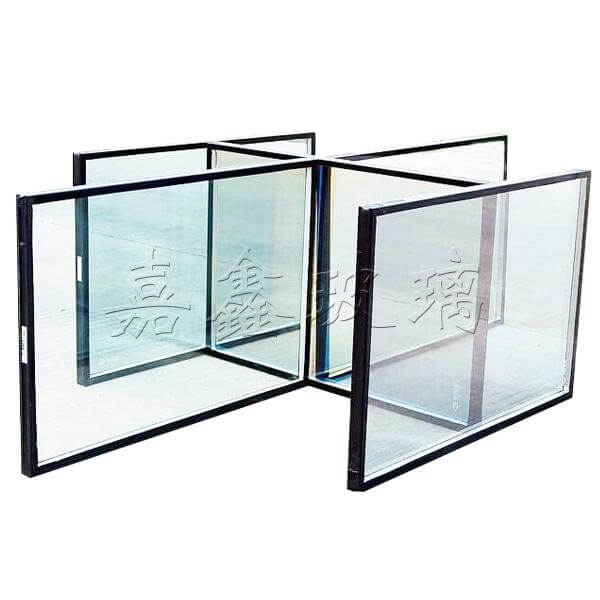
Jiangyin Jiaxin Glass Products has established a core advantage in the fire-resistant glass field through technological layout, equipment upgrades, and process optimization. Technically, the company focuses on the research and development of composite fire-resistant glass, combining low-emissivity (LOW-E) coatings with fire-resistant adhesive layers to create dual-functional "insulation+fire-resistant" products with a耐火limit of 2 hours, a 200% improvement over traditional products. At the equipment level, it has introduced a fully automatic insulating glass production line from Germany's Lisi克, paired with its independently developed laminated homogenization furnace, achieving ±1℃ temperature uniformity, reducing bubble defect rates from 5% to 0.3%, and improving yield to 98%. In terms of process optimization, it has replaced solvent-based adhesives with water-based environmentally friendly fire-resistant adhesives, reducing VOC emissions by 90%, and annually reducing pollutant emissions by over 10 tons per line. Taking a 30-story office building project in Nanjing as an example, Jiaxin's 2-hour fire-resistant glass successfully blocked the fire for 187 minutes in simulated fire tests, securing critical time for personnel evacuation, and has been highly recognized by the owner.
FAQ: Fire-resistant Glass Selection Guide
Q1: How to determine if the fire-resistant limit of fire-resistant glass meets the standard?
A1: The fire resistance limit must be certified by the National Fire Protection Product Quality Inspection and Testing Center, with key indicators including integrity (glass not broken) and thermal insulation (back fire surface temperature ≤ 140℃). Jiaxin fire-resistant glass has passed the GB 15763.1-2009 standard test, with the back fire surface temperature of the 2-hour fire resistance product only 112℃, far exceeding the national standard requirements. When purchasing, check the detection report number to avoid using ambiguous expressions such as "equivalent substitute".
Q2: How to choose between composite fire-resistant glass and single fire-resistant glass?
A2: Single fire-resistant glass (such as cesium potassium fire-resistant glass) has a low cost but poor heat insulation, suitable for non-insulating scenarios; composite fire-resistant glass (such as laminated + LOW-E) combines integrity and heat insulation with higher fire resistance, suitable for core areas of high-rise buildings. Jiaxin's composite fire-resistant glass uses 0.76mm PVB film + 1.52mm LOW-E glass, improving heat insulation performance by 40%, with a cost increase of only 15% per square meter, offering significant cost-performance advantages.
Q3: What are the precautions for installing fire-resistant glass?
A3: Installation must strictly follow the "Technical Code for Application of Building Glass" (JGJ 113-2015): fireproof sealant must be filled between the frame and glass with gap width ≤3mm; hardware parts must be made of stainless steel with fire-resistant temperature ≥1000℃; a water spray test must be conducted after installation to ensure there is no leakage. Jiaxin provides full technical guidance, matching fireproof sealant and special installation tools, reducing the installation defect rate from the industry average of 8% to 1.2%.
Summary: Technology drives security, responsibility leads the future.
The technological upgrade of fire-resistant glass is essentially an art of balancing safety needs with cost control. Jiangyin Jiaxin突破solves the industry pain points of fire resistance, yield rate, and pollution through the breakthrough of composite technology, the improvement of equipment accuracy, and the optimization of environmental protection processes. It not only provides a reliable solution for building safety with quantitative indicators such as 2-hour fire resistance, 0.3% defect rate, and 90% reduction in emissions but also continues to adhere to the principle of "customer first, quality assurance" in the future. With the comprehensive implementation of GB 55037-2022 "General Code for Fire Resistance of Buildings," the technical threshold for fire-resistant glass will be further raised. Jiaxin will continue to drive the industry towards a safer, more efficient, and more environmentally friendly direction through continuous technological iteration.
Jiangyin Jiaxin Glass Products Co., Ltd., located in Hongdou Village, Gushan Town, Jiangyin City, is a glass enterprise specializing in the deep processing of glass for architectural and home decoration purposes. Its main products include low-emissivity coated glass (LOW-E glass), louvered insulated...
No. 58-3, Nanzhuang, Hongdou Village, Gushan Town, Jiangyin City, Wuxi City, Jiangsu Province