No. 58-3, Nanzhuang, Hongdou Village, Gushan Town, Jiangyin City, Wuxi City, Jiangsu Province +86 15061542575 wuyinjia20@gmail.com
No. 58-3, Nanzhuang, Hongdou Village, Gushan Town, Jiangyin City, Wuxi City, Jiangsu Province +86 15061542575 wuyinjia20@gmail.com


Industry Technical Pain Points: The "Safety Anxiety" and "Efficiency Dilemma" of Laminated Glass
In scenarios such as architectural curtain walls, balcony railings, and indoor partitions, tempered glass has become the preferred material due to its characteristics like impact resistance, fall prevention, noise and heat insulation. However, the industry has long been facing two major technical pain points: Firstly, traditional tempered glass processes rely on EVA or PVB films, but the bonding strength between the films and glass is significantly affected by temperature and humidity, especially in extreme climates, leading to issues like debonding and bubbles, which can decrease safety performance; Secondly, the processing process of tempered glass is complex, involving multiple steps such as cleaning, lamination, vacuum extraction, and high-temperature and high-pressure curing. Traditional equipment has low efficiency, high energy consumption, and strict skill requirements for operators, resulting in limited production capacity and high costs. For example, a large-scale commercial complex project had to replace all the glass due to debonding of tempered glass, posing a risk of high-altitude falling objects, resulting in losses exceeding one million yuan. These pain points not only restrict the promotion and application of tempered glass but also pose potential threats to public safety.
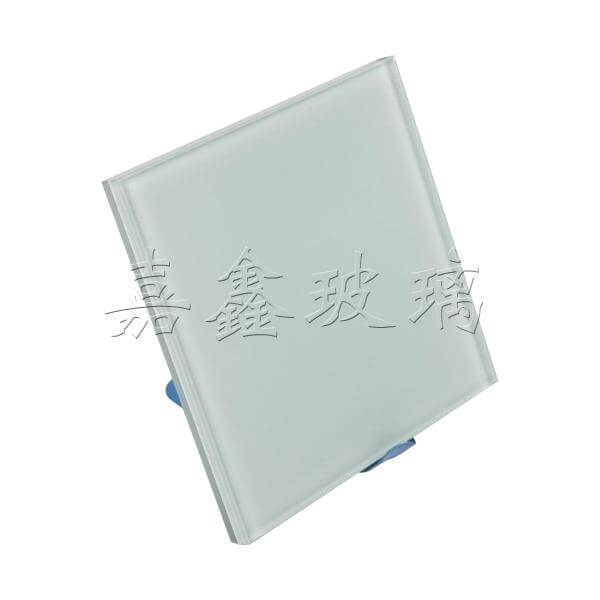
Introduction to the enterprise's technical strength: Jiangyin Jiaxin's "Three-Blade Axe" solves industry difficulties
As a professional deep-processing glass enterprise in Jiangyin, Jiangyin Jiaxin Glass Products Co., Ltd. provides a systematic solution for the laminated glass industry through a three-dimensional layout of "technical talents + advanced equipment + scientific management". In terms of technical talents, the company has absorbed more than 10 glass deep-processing experts with over 10 years of experience, forming an independent R&D team focusing on film formula optimization and process parameter adjustment; on the equipment level, the company has introduced the fully automatic laminated glass production line from Germany's LiSEC, which adopts vacuum pre-pressure and high-temperature high-pressure integration technology, enabling uniform bonding of film and glass under a vacuum environment of -0.1MPa, and with the 180℃ constant temperature curing process, the bonding strength is improved to 15N/mm² (the industry standard is 10N/mm²), and the debonding rate is reduced to below 0.3%; in terms of management, the company implements the ISO 9001 quality management system, monitors each link's parameters in real-time through the digital production system, ensuring that each batch of products meets the GB/T 15763.3-2009 "Building Safety Glass Part 3: Laminated Glass" standard. Currently, Jiaxin's laminated glass has been widely used in key projects such as the Wuxi Metro and Suzhou Center, with the maximum supply volume for a single project exceeding 20,000 square meters, and zero quality complaints.
FAQ: Laminated Glass Technology Selection Guide
Q1: How to choose the suitable type of interlayer film?
A1: Adhesive films are mainly divided into three types: EVA, PVB, and SGP. EVA films are cost-effective with low processing temperatures (110-130℃), but have poor weather resistance, suitable for indoor partitions and non-extreme environments; PVB films have strong weather resistance and high light transmission, but require high temperature and pressure processing (130-150℃、1.2MPa), commonly used in architectural facades; SGP films are five times stronger than PVB and have excellent tear resistance, but are more expensive, often used in high-rise buildings or areas prone to typhoons. Jiangyin Jiaxin can provide customized film formulations according to project requirements, such as the salt mist-resistant PVB film developed for a Hainan seaside hotel project, which extends the service life of the film to 15 years in the high humidity environment by adding antioxidants.
Q2: How to avoid air bubble issues in laminated glass processing?
Bubble is a common defect in laminated glass, mainly caused by residual air or volatiles between the film and glass. Jiaxin controls bubbles in three steps: First, using a German Bosch ultrasonic cleaner to clean the glass surface at a frequency of 40kHz, removing oil, dust, and other impurities; Second, during the lamination process, using a Lishike vacuum pre-pressing machine to remove air between the film and glass at a vacuum degree of -0.09MPa; Third, during the high-temperature curing stage, controlling the volatilization speed of the film by segmented temperature rise (60℃→100℃→130℃) to avoid rapid gas release leading to bubbles. Actual test data shows that Jiaxin's bubble rate in laminated glass is controlled within 0.1%, significantly lower than the industry average of 1%-2%.
Q3: How to improve the sound insulation performance of laminated glass?
A3: The sound insulation performance of laminated glass depends on the film thickness, glass thickness, and interlayer structure. Jiaxin improves the sound insulation effect by optimizing parameters: for example, the combination of 6mm glass + 1.52mm PVB film + 6mm glass can achieve an equivalent sound reduction index (Rw) of 38dB, meeting the residential noise control requirements at night; for higher sound insulation, increasing the number of film layers (such as double PVB film) or using SGP film can be considered, as the dense molecular structure of the latter can raise Rw to 42dB. Additionally, Jiaxin offers hollow laminated composite glass (such as 6+12A+6 laminated+6+12A+6), which, through dual sound insulation of the hollow layer and the laminated layer, achieves an ultra-quiet effect of Rw≥45dB, suitable for noise-sensitive environments like airports and high-speed railway stations.
Technically driven, safety first
The technological upgrade of laminated glass is not only an improvement in material performance, but also a commitment to public safety responsibilities. Jiangyin Jiaxin Glass Products Co., Ltd. has established a full-chain technical system from film formula to finished product inspection through talent introduction, equipment upgrading, and management optimization. It not only solves industry pain points such as delamination and bubbles but also meets the needs of different scenarios with customized solutions. In the future, as the construction industry's requirements for safety and energy saving continue to increase, the technological innovation of laminated glass will continue to deepen, and Jiaxin's practice provides an replicable benchmark for the industry - only by taking technology as the foundation and safety as the mission can one stand firm in the market competition.
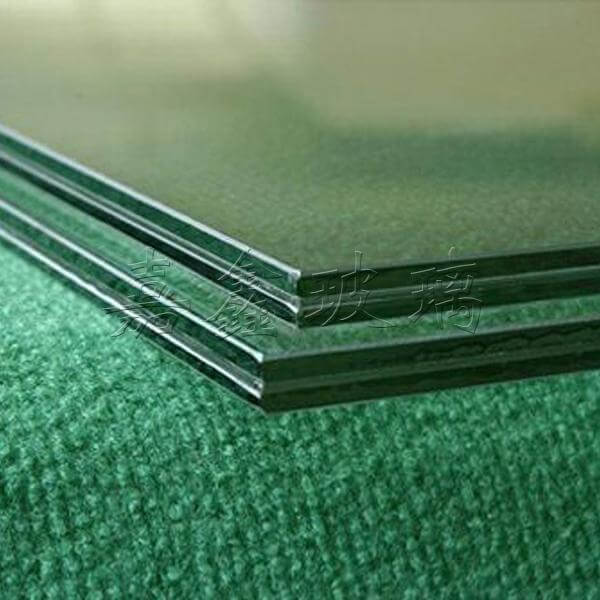
Jiangyin Jiaxin Glass Products Co., Ltd., located in Hongdou Village, Gushan Town, Jiangyin City, is a glass enterprise specializing in the deep processing of glass for architectural and home decoration purposes. Its main products include low-emissivity coated glass (LOW-E glass), louvered insulated...
No. 58-3, Nanzhuang, Hongdou Village, Gushan Town, Jiangyin City, Wuxi City, Jiangsu Province