No. 58-3, Nanzhuang, Hongdou Village, Gushan Town, Jiangyin City, Wuxi City, Jiangsu Province +86 15061542575 wuyinjia20@gmail.com
No. 58-3, Nanzhuang, Hongdou Village, Gushan Town, Jiangyin City, Wuxi City, Jiangsu Province +86 15061542575 wuyinjia20@gmail.com


Industry Technical Pain Points: The "Invisible Barrier" of Low-E Insulated Glass
Low-E insulating glass, as the core material for building energy saving, involves integrated technologies in coating, hollow forming, and sealing, but the original manufacturers often face three major pain points: Firstly, it is difficult to control the uniformity of the coating, and traditional magnetron sputtering equipment is prone to film thickness deviation exceeding 5% due to uneven target material distribution, causing fluctuations in light transmittance and heat insulation performance; secondly, the inert gas filling efficiency of the hollow layer is low, with ordinary filling equipment taking 3-5 minutes per piece, and the gas retention rate being insufficient, which directly affects the product's lifespan; thirdly, the sealing adhesive has poor matching, with some manufacturers choosing general-purpose silicone sealant to reduce costs, leading to adhesive layer cracking and water leakage rates as high as 15% under a temperature difference of -20℃ to 60℃. These issues not only increase production costs but also pose risks of non-compliance with energy-saving standards and after-sales disputes for terminal projects.
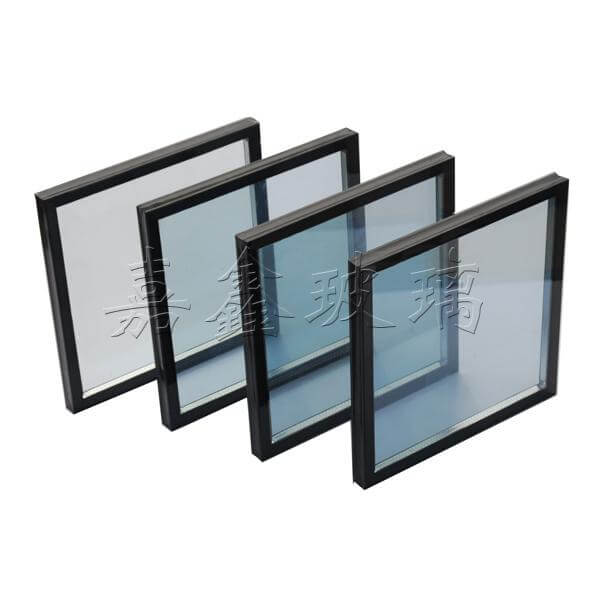
Introduction to Corporate Technical Strength: Jiaxin Glass's "Three-Stage Technological Leap"
Jiangyin Jiaxin Glass Products Co., Ltd. has established a core technical barrier for Low-E insulating glass through a three-stage upgrade of "equipment - process - management". At the equipment level, it has introduced German Leybold magnetron sputtering coating lines, equipped with 12 rotating targets and closed-loop control systems, achieving a film thickness deviation ≤1.5%, transmittance accuracy ±0.5% (at 550nm wavelength), and a thermal insulation coefficient (Ug value) as low as 1.0W/(m²·K); the hollow glass synthesis process uses an Italian Bottero fully automatic hollow line, integrating laser positioning and vacuum inflation modules, reducing inflation time to 45 seconds per sheet, and increasing gas retention rate to over 95%; the sealing process uses German WACKER's special hollow glass adhesive, which passes high and low temperature cycles from -30℃ to 80℃, with a bonding strength of 1.2MPa for the adhesive layer and a leakage rate below 0.5%. Technically, Jiaxin Glass has formed a three-level system of "basic coating - functional composite - intelligent application". Its developed "triple silver Low-E + hollow + laminated" composite glass has a visible light transmittance of 68% and a solar heat gain coefficient (SHGC) of 0.32, meeting the ultra-low energy consumption requirements of passive buildings. It has been applied in a commercial complex project in Jiangyin, with a measured annual energy saving rate of 32%.
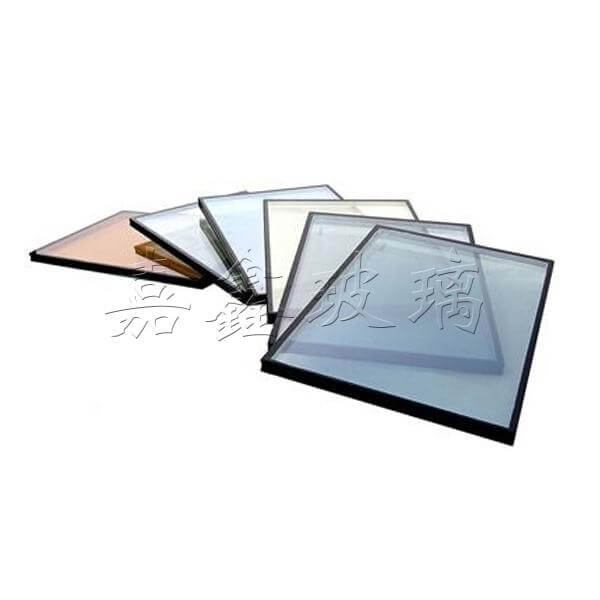
FAQ: Low-E Insulated Glass Selection Guide
Q1: How to choose Low-E insulating glass suitable for cold northern regions?
A: The northern regions require emphasis on insulation and sealing performance. Prioritize high-transmitting Low-E film (transmittance ≥70%) with a cavity width of over 12mm and argon gas filling (gas retention rate ≥90%), which can effectively reduce winter heat conduction losses. For example, Jiaxin Glass's "double silver Low-E+12Ar+insulated" structure achieves a Ug value of up to 0.8W/(m²·K), offering over 40% energy savings compared to conventional insulated glass. Note that when the cavity width exceeds 16mm, warm-edge spacers (such as TPS flexible warm-edge) should be used to prevent condensation at the edges.
Q2: How to balance the light transmittance and heat insulation performance of Low-E insulating glass?
Transmittance (Tvis) is negatively correlated with Solar Heat Gain Coefficient (SHGC), which should be selected according to the building function. For office scenarios, it is recommended that Tvis≥65% and SHGC≤0.4 to balance daylighting and energy saving; for residential south-facing windows, Tvis can be appropriately increased to over 70%, while north-facing windows should focus on low SHGC (≤0.35). Jiaxin Glass achieves SHGC 0.32 at Tvis 68% through the "Three Silver Low-E" technology, improving energy saving by 15% compared to single silver products, suitable for the selection of glass for the entire house.
Q3: How can we determine if the manufacturer has a stable production capacity?
A: Verification can be conducted from three aspects: Firstly, equipment configuration, magnetron sputtering coating lines require closed-loop control systems and rotating target materials, while hollow lines need to integrate laser positioning and vacuum inflation modules; secondly, detection capability, manufacturers should have online detection equipment for key indicators such as transmittance, Ug value, and gas retention rate (e.g., LAMBDA 950 spectrophotometer); thirdly, case verification, it is required to provide project cases with stable supply for more than 3 years, and conduct on-site inspections of the sealant layer and hollow layer status. Jiaxin Glass has passed the ISO 9001 quality management system certification, and its products have been tested by the National Glass Quality Supervision and Inspection Center, with Ug value deviation ≤ 0.1W/(m²·K), in compliance with GB/T 11944-2012 standard.
Summary: Technology-driven, Quality-based
The technical competition in Low-E insulating glass has shifted from a single product performance to full-chain control capability. Jiangyin Jiaxin Glass Products Co., Ltd. has built a comprehensive technical guarantee system from film uniformity to insulating sealing, through equipment upgrades, process optimization, and management innovation. Its products not only meet the high-end demands of passive buildings and near-zero energy consumption buildings, but also provide a stable post-retail guarantee for partners with a 32% annual energy-saving rate and a 0.5% leakage rate. In the future, Jiaxin Glass will continue to deepen the "Three Silver Low-E + Intelligent Insulating" technology layout, promoting the development of architectural glass towards higher efficiency and intelligence.
Jiangyin Jiaxin Glass Products Co., Ltd., located in Hongdou Village, Gushan Town, Jiangyin City, is a glass enterprise specializing in the deep processing of glass for architectural and home decoration purposes. Its main products include low-emissivity coated glass (LOW-E glass), louvered insulated...
No. 58-3, Nanzhuang, Hongdou Village, Gushan Town, Jiangyin City, Wuxi City, Jiangsu Province