No. 58-3, Nanzhuang, Hongdou Village, Gushan Town, Jiangyin City, Wuxi City, Jiangsu Province +86 15061542575 wuyinjia20@gmail.com
No. 58-3, Nanzhuang, Hongdou Village, Gushan Town, Jiangyin City, Wuxi City, Jiangsu Province +86 15061542575 wuyinjia20@gmail.com


Industry Technical Pain Points: The Three Core Challenges of Tempered Glass Processing
Tempered glass, as a key material in the construction and home decoration fields, faces three major technical bottlenecks in its processing: Firstly, the challenge of controlling the spontaneous bursting rate - traditional processes, due to uneven stress distribution within the glass, result in a spontaneous bursting rate of up to 0.3%-0.5%, severely affecting project safety; secondly, insufficient processing accuracy - common equipment has cutting errors exceeding ±1mm, and drilling position deviations exceeding ±0.5mm, which are difficult to meet the stringent requirements of high-end curtain walls and partitions; thirdly, the contradiction between energy consumption and efficiency - traditional tempering furnaces have a heating time of 8-10 minutes per furnace, with a daily production capacity of only 300-500㎡ and energy consumption accounting for over 40%, restricting large-scale production. These issues not only increase corporate costs but also limit the application potential of tempered glass in complex scenarios.
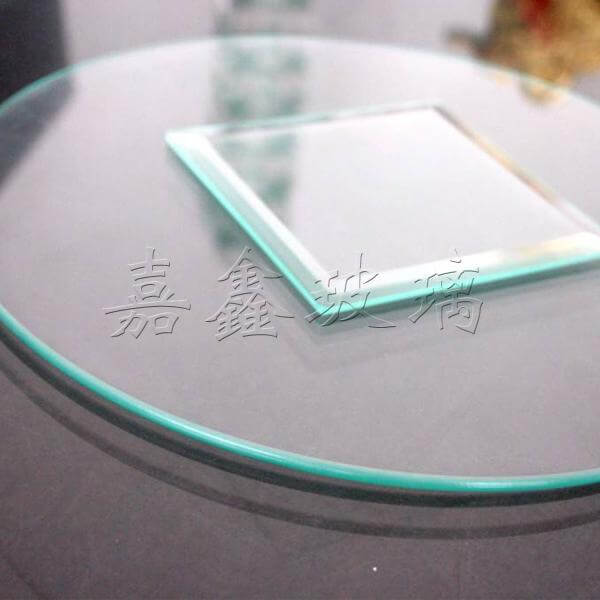
Introduction to Corporate Technical Strength: Jiangyin Jiaxin Glass' Breakthrough Path in Technology
Jiangyin Jiaxin Glass Products Co., Ltd. has systematically addressed industry pain points through a "equipment-process-management" three-dimensional upgrade. At the equipment level, it has introduced the Italian BOTTERO fully automatic cutting line and the Finnish Tamglass tempering furnace, achieving a cutting accuracy of ±0.2mm and a drilling deviation of ≤±0.1mm, while shortening the heating time of the tempering furnace to 4-5 minutes per furnace, and increasing the daily output to 800-1000㎡, with an energy consumption reduction of 25%. In terms of technology, it adopts a "uniform treatment + laser detection" dual insurance technology: through 4 hours of 290℃ constant temperature uniform treatment, the spontaneous burst rate is reduced to below 0.01%; accompanied by real-time monitoring of the internal stress distribution of glass with a laser stress tester, ensuring that the stress difference of each glass sheet is ≤5MPa. In terms of management, it has introduced the ERP production management system and the MES equipment networking system, realizing full-process digital control from order placement to finished product delivery, shortening the order delivery cycle by 30% and controlling the defect rate within 0.5%. Currently, its low-emissivity coated glass (LOW-E glass) has a light transmittance of up to 82%, a heat insulation coefficient U value of ≤1.8W/(㎡·K), and the impact resistance of laminated glass meets EN12600 Class 2 standard, with technical indicators all exceeding the industry average level.
FAQ: Tempered Glass Technology Selection Guide
Q1: How to choose tempered glass suitable for high-rise buildings?
A: High-rise buildings require special attention to wind pressure resistance and self-explosion rate. It is recommended to choose tempered glass that has undergone homogenization treatment, with a self-explosion rate ≤0.02%; for curtain wall applications, hollow tempered glass (such as 6Low-E+12A+6 configuration) can be used, which has wind pressure resistance of over 3.5kPa and excellent thermal insulation performance. Jiangyin Jiaxin's LOW-E hollow glass has passed the GB/T 11944-2012 standard test and can meet the requirements of buildings over 30 floors.
Q2: How to control the cutting accuracy in tempered glass processing?
A: Cutting accuracy depends on dual guarantees of equipment and process. The equipment should be a high-precision CNC cutting machine (such as the BOTTERO equipment used by Jiangyin Jiaxin, with repeated positioning accuracy ≤0.05mm); the process should adopt the "cutting first, edging later" workflow to avoid size shrinkage caused by edging. Additionally, stress relief treatment for the glass is required before cutting (such as 60℃ constant temperature heating for 1 hour), to reduce the risk of crack expansion during cutting.
Q3: What are the technical differences between fire-resistant glass and tempered glass?
A: Fire-resistant glass must pass the GB 15763.1-2009 fire resistance test, which focuses on adding cesium potassium fire-retardant liquid or using a composite structure (such as two layers of tempered glass with a fire-resistant interlayer). Jiangyin Jiaxin's fire-resistant glass has a fire resistance limit of up to 1.5 hours (Type E), with a light transmittance of ≥75%, while ordinary tempered glass has no fire-resistant properties. When selecting, products should be chosen according to the building's fire resistance grade, such as using Type E fire-resistant glass for commercial complexes and Type C for residential buildings.

Summary: Upgrading of the Tempered Glass Industry Driven by Technology
The tempered glass processing industry is transitioning from "scale expansion" to "technical deepening." Jiangyin Jiaxin Glass Products Co., Ltd. has successfully raised key indicators such as spontaneous explosion rate, processing accuracy, and energy consumption to the leading level in the industry by introducing advanced international equipment, optimizing process flows, and constructing a digital management system. Its low-emit coating glass, fire-resistant glass, and other composite products have been widely used in iconic projects such as the Shanghai Tower and Suzhou Center, demonstrating the significant value of technological upgrading in enhancing engineering safety and energy efficiency. In the future, as building energy-saving standards continue to improve, tempered glass companies need to further focus on the "low spontaneous explosion, high precision, multifunctional" technical direction to meet the market demand for high-quality glass products.
Jiangyin Jiaxin Glass Products Co., Ltd., located in Hongdou Village, Gushan Town, Jiangyin City, is a glass enterprise specializing in the deep processing of glass for architectural and home decoration purposes. Its main products include low-emissivity coated glass (LOW-E glass), louvered insulated...
No. 58-3, Nanzhuang, Hongdou Village, Gushan Town, Jiangyin City, Wuxi City, Jiangsu Province