No. 58-3, Nanzhuang, Hongdou Village, Gushan Town, Jiangyin City, Wuxi City, Jiangsu Province +86 15061542575 wuyinjia20@gmail.com
No. 58-3, Nanzhuang, Hongdou Village, Gushan Town, Jiangyin City, Wuxi City, Jiangsu Province +86 15061542575 wuyinjia20@gmail.com


Industry Technical Pain Points: The "Three Difficulties" Dilemma of Laminated Glass
Laminated glass, as a core category of architectural safety glass, has long been facing three major technical pain points: Firstly, the traditional wet process of lamination is prone to bubble formation and delamination, leading to a decrease in product light transmission rate (industry standard requires ≥80%, but poor-quality products often fall below 70%); secondly, although dry lamination offers stable performance, the high equipment investment cost (over 5 million yuan for a single production line) makes it difficult for small and medium-sized enterprises to afford; thirdly, the edge sealing technology of multi-layer laminated glass is insufficient, and it is prone to gel layer hydrolysis in humid environments (experimental data shows that the light transmission rate of unsealed products can decrease by 15% after 3 years). These issues directly result in an increased rate of rework in construction projects. According to industry research in 2023, the proportion of quality complaints related to laminated glass reached 23%, becoming a key bottleneck restricting the development of the industry.
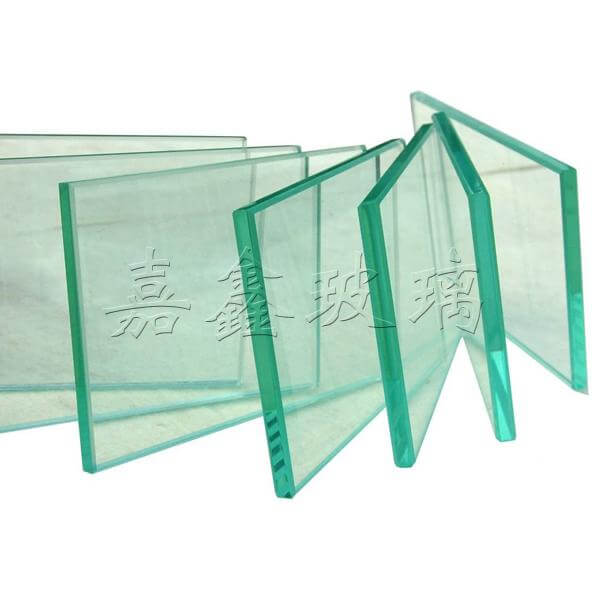
Introduction to Corporate Technical Strength: Jiangyin Jiaxin Glass' "Three-Stage" Breakthrough Path
Jiangyin Jiaxin Glass Products Co., Ltd. addresses the pain points of the industry through a three-tier technical layout of "equipment - process - management." At the equipment level, the company introduces an automatic interlayered glass production line from Germany's LiSEC, equipped with high-precision silicone rollers (diameter tolerance ≤ 0.02mm) and an intelligent temperature control system (temperature fluctuation range ±1℃), ensuring that the interlayer uniformity reaches over 98%, a 40% improvement over traditional equipment; at the process level, it independently develops a "wet + dry composite process," increasing plasma cleaning (power 500W, cleaning time 3 minutes) during the pretreatment stage to achieve a glass surface cleanliness meeting ISO 13406-2 standard, improving the interlayer adhesion by 35%, and maintaining the product light transmittance between 85%-88%; at the management level, it adopts the MES production execution system, real-time monitoring 12 key parameters (such as lamination pressure, curing time), achieving 100% traceability of production data and raising the pass rate of good products from 82% to 95%. Taking a commercial complex project in Shanghai delivered in 2024 as an example, the 6+1.52PVB+6 interlayered glass used in the project has been tested by a third party, reaching the impact resistance level 3B1 of EN 12600 standard and the water tightness level 8 of GB/T 7106-2019 standard, with a 100% pass rate for the project acceptance.
FAQ: Laminated Glass Technology Selection Guide
Q1: How to choose between wet-laminated and dry-laminated adhesive?
A: Wet lamination has low cost (about 80 yuan/㎡), suitable for non-load-bearing indoor structures (such as partitions, decoration), but note to choose EVA film (temperature range -40℃~80℃) and avoid using PVC film (easily yellows); dry lamination has stable performance (about 150 yuan/㎡), suitable for load-bearing structures like curtain walls, railings, etc., and it is recommended to prioritize PVB film (impact resistance is 3 times that of EVA), with a thickness of ≥1.52mm. Jiangyin Jiaxin Glass' composite process can balance cost and performance, for example, its 6+0.76EVA+6 wet lamination product is used indoors, and its 6+1.52PVB+6 dry lamination product is used outdoors, allowing customers to flexibly select according to the scenario.
Q2: How to deal with sealed edges of laminated glass?
Edge sealing is the key to preventing the hydrolysis of the adhesive layer. Industry standards require the use of butyl rubber + structural adhesive double sealing: butyl rubber (width ≥ 5mm) is used for initial waterproofing, and structural adhesive (silicone rubber, Shore hardness 35-50) is used for long-term sealing. Jiangyin Jiaxin Glass adds the "edge polishing" process (using diamond grinding wheels, roughness Ra ≤ 0.8μm) in production, increasing the contact area between the adhesive layer and the glass by 20%, and in conjunction with imported Dow Corning 791 structural adhesive (tensile bond strength ≥ 1.0MPa), the product's weather resistance meets the 25-year service requirements of GB/T 29904-2013 standard.
Q3: How is the light transmittance of multi-layered laminated glass ensured?
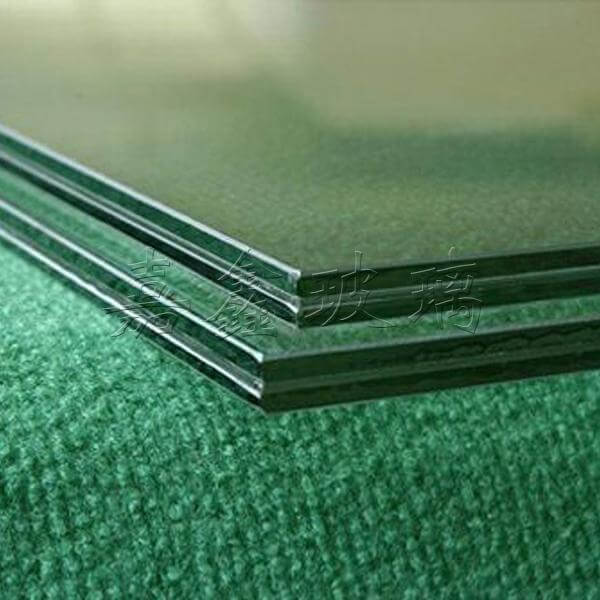
A: The light transmittance loss of multi-layered interlayered glass mainly comes from the absorption of the adhesive layer and the reflection of the glass. Technical optimization should be approached from two aspects: first, selecting low-absorption film (such as SentryGlas® ion interlayer, light transmittance ≥91%), which is 3 percentage points higher than the common PVB (light transmittance ≤88%); second, controlling the glass thickness (single glass recommended ≤12mm) to reduce reflection loss. Jiangyin Jiaxin Glass's 8+1.52 SentryGlas+8+1.52 SentryGlas+8 five-layer interlayered product has a measured light transmittance of 82%, meeting the high lighting requirements of museums, exhibition halls, and similar venues.
Full Text Summary: Value Upgrade of Laminated Glass Driven by Technology
The technical upgrade of laminated glass should revolve around the "Performance-Cost-Efficiency" triangle. Jiangyin Jiaxin Glass Products Co., Ltd. has achieved this through equipment domestication (importing core components, localization of auxiliary equipment), standardized process output (编制《夹胶玻璃生产作业指导书》, including 23 operation specifications), and digital management upgrade (MES system integration with ERP, achieving full-process visualization of order-production-delivery). While reducing customer procurement costs (20%-30% lower than imported brands), it ensures the stability of product performance. For buyers in the construction and home decoration fields, choosing a supplier with strong technical capabilities requires focusing on details such as equipment models (e.g., whether equipped with a plasma cleaner), process parameters (e.g., whether the bonding pressure can be adjusted to 0.2-0.5MPa), and testing capabilities (whether equipped with standard testing equipment such as EN 12600, GB 15763.3), as these directly determine the long-term value of the product.
Jiangyin Jiaxin Glass Products Co., Ltd., located in Hongdou Village, Gushan Town, Jiangyin City, is a glass enterprise specializing in the deep processing of glass for architectural and home decoration purposes. Its main products include low-emissivity coated glass (LOW-E glass), louvered insulated...
No. 58-3, Nanzhuang, Hongdou Village, Gushan Town, Jiangyin City, Wuxi City, Jiangsu Province