No. 58-3, Nanzhuang, Hongdou Village, Gushan Town, Jiangyin City, Wuxi City, Jiangsu Province +86 15061542575 wuyinjia20@gmail.com
No. 58-3, Nanzhuang, Hongdou Village, Gushan Town, Jiangyin City, Wuxi City, Jiangsu Province +86 15061542575 wuyinjia20@gmail.com


Industry Technical Pain Points: The "Invisible Challenge" of Low-E Insulated Glass
Low-E insulating glass, as the core material for building energy saving, directly affects building energy consumption and indoor comfort with its technical performance. However, the industry普遍 faces three major pain points: Firstly, the stability of the coating layer is insufficient, prone to oxidation peeling due to environmental humidity or temperature changes, affecting its insulating performance; secondly, the failure rate of sealing in the hollow layer is high, with the combination of traditional aluminum spacer bars and butyl sealant easily cracking under extreme weather conditions, leading to gas leakage; thirdly, there is a prominent contradiction between production efficiency and accuracy, as manual cutting and assembly are difficult to meet the requirements of size deviation ≤ 0.5mm for large-scale projects. These issues not only increase the cost of later maintenance but may also cause building energy consumption to exceed the standard due to the degradation of glass performance, going against the original intention of green buildings.
Introduction to Corporate Technical Strength: Jiangyin Jiaxin's "Triple Technology Moat"
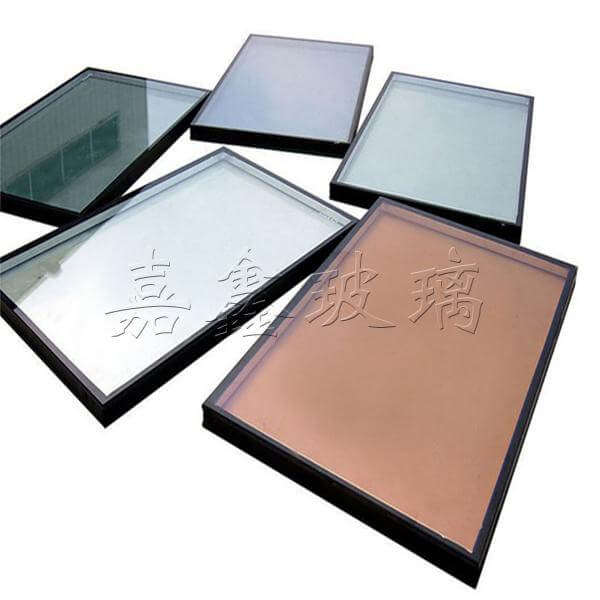
Jiangyin Jiaxin Glass Products has established core technical advantages in Low-E insulating glass through "equipment-process-management" three-dimensional innovation. At the equipment level, the company has introduced German Leybold magnetron sputtering coating lines, which can achieve precise control of 6-layer composite coatings, with film adhesion reaching Grade 1 requirements of GB/T 18915.2-2013 standard, and after weather resistance testing (85℃/85%RH, 1000h), the light transmittance attenuation is ≤1.5%; the insulating glass production line uses a Swiss Butting fully automatic sealing machine, combined with warm edge spacer bars (thermal conductivity ≤0.007W/m·K), raising the lifespan of the insulating layer to over 15 years, far exceeding industry standards (usually 5-8 years). In terms of process innovation, the company has independently developed "double vacuum extraction + argon gas filling" technology, keeping the inert gas content in the insulating layer stable at over 90%, with a K value (heat transfer coefficient) as low as 1.0W/(m²·K), which is more than 30% more energy-efficient than ordinary insulating glass. In terms of management, through the deep integration of ISO 9001 quality management system and ERP production system, the full process traceability from raw material inventory to finished product delivery is achieved, with daily production capacity per line reaching 800㎡ and dimensional deviation controlled within ±0.3mm, meeting the stringent requirements of super-tall building curtain walls.
FAQ: Low-E Insulated Glass Selection Guide
Q1: How to choose the suitable Low-E glass type for different climatic zones?
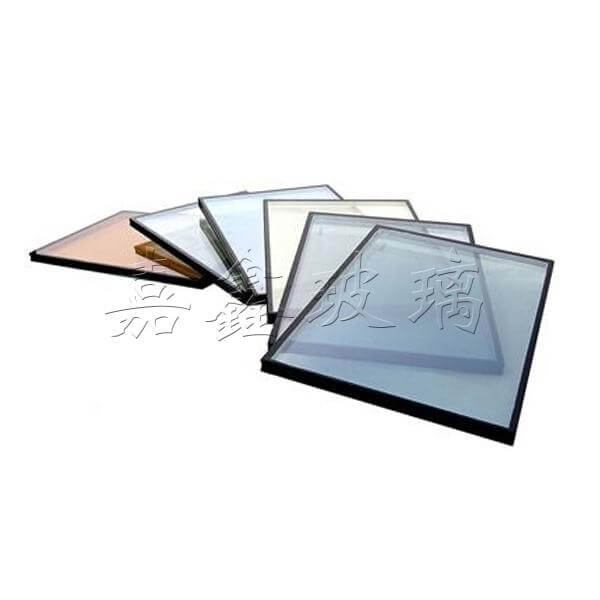
A: Low-E glass is categorized into high-transmittance, shading, and dual-silver types. The high-transmittance type (visible light transmittance ≥70%) is suitable for northern heating areas, maximizing the use of solar energy for heating; the shading type (visible light transmittance 40%-60%) is appropriate for southern cooling areas, effectively blocking infrared rays; the dual-silver type balances light transmission and heat insulation, ideal for regions with hot summers and cold winters. Jiangyin Jiaxin can provide customized coating solutions based on the climate data of the project location (such as average annual temperature, hours of sunshine), such as in a commercial complex project in Hangzhou, using a combination of dual-silver Low-E + 12mm insulating glass + argon gas filling, which reduces the building's annual energy consumption by 22%.
Q2: What are the common causes and preventive measures for the failure of the hollow layer seal?
Seal failure mainly originates from the material of the spacer, sealing adhesive technology, and environmental stress. Traditional aluminum spacers have a high thermal conductivity (160W/m·K), prone to stress cracking under temperature differences; the warm edge spacers (composite material + stainless steel frame) used by Jiangyin Jiaxin can reduce the thermal conductivity to 0.007W/m·K, reducing the fatigue of the sealant caused by thermal expansion and contraction. In terms of sealing adhesive technology, the company uses two-component silicone structural adhesive, which has a higher bonding strength (≥0.8MPa) and weather resistance (withstanding -40℃ to 90℃ temperature difference) than butyl rubber. Combined with the constant pressure control of the fully automatic sealing machine, it can ensure the uniformity of the adhesive layer thickness ≤0.1mm, thus preventing gas leakage from the source.
Q3: How can the energy-saving effect of low-E insulating glass be quantitatively evaluated?
Energy-saving effect should be comprehensively evaluated through the K value (heat transfer coefficient), SC value (shading coefficient), and SHGC value (solar heat gain coefficient). Taking Jiangyin Jiaxin's 6Low-E+12Ar+6 insulating glass as an example, its K value is 1.0W/(m²·K), SC value is 0.35, and SHGC value is 0.32, which saves about 80% of energy compared to ordinary 6mm white glass (K value 5.8W/(m²·K)). In actual projects, specific energy consumption comparison reports can be generated by inputting glass parameters, building orientation, and usage habits into building energy consumption simulation software (such as EnergyPlus), providing data support for the client.
Technically driven, quality-based
The technical upgrade of Low-E insulating glass needs to balance performance, efficiency, and cost. Jiangyin Jiaxin Glass Products Co., Ltd. has achieved this by replacing imported equipment with domestically developed systems (such as the independently researched coating line control system), standardizing processes (establishing 23 quality inspection procedures), and digitalizing management (introducing the MES production execution system). While ensuring product quality, it has reduced the cost per square meter by 15%, providing developers with more cost-effective energy-saving solutions. In the future, with the advancement of the "dual carbon" goals, the technical competition of Low-E insulating glass will focus on ultra-low K-value (≤0.8W/(m²·K)) and intelligence (such as electrochromic coating). Jiangyin Jiaxin has laid out relevant research and development, planning to launch adjustable light transmittance smart glass products before 2025, continuously leading the technological transformation of the industry.
Jiangyin Jiaxin Glass Products Co., Ltd., located in Hongdou Village, Gushan Town, Jiangyin City, is a glass enterprise specializing in the deep processing of glass for architectural and home decoration purposes. Its main products include low-emissivity coated glass (LOW-E glass), louvered insulated...
No. 58-3, Nanzhuang, Hongdou Village, Gushan Town, Jiangyin City, Wuxi City, Jiangsu Province