No. 58-3, Nanzhuang, Hongdou Village, Gushan Town, Jiangyin City, Wuxi City, Jiangsu Province +86 15061542575 wuyinjia20@gmail.com
No. 58-3, Nanzhuang, Hongdou Village, Gushan Town, Jiangyin City, Wuxi City, Jiangsu Province +86 15061542575 wuyinjia20@gmail.com


Industry Technical Pain Points: The "Invisible Threshold" of Tempered Glass Production
Tempered glass, as a core material in the construction and home decoration fields, its production technology directly affects the product's safety and service life. The current industry普遍 faces three major pain points: Firstly, the self-explosion rate of glass remains high, and it is difficult to completely remove nickel sulfide impurities in traditional processes, resulting in a self-explosion risk of 0.3%-0.5%; secondly, the processing accuracy is insufficient, with common equipment capable of cutting errors up to ±1mm, affecting the sealing performance of glass installation; thirdly, it is difficult to control the interlayer stress of composite glass, and multi-layer structures are prone to deformation or cracking due to uneven stress. For example, a large-scale commercial complex project was delayed by 3 months due to the excessive self-explosion rate of tempered glass, resulting in direct losses exceeding 2 million yuan. These pain points not only restrict the delivery capacity of enterprises but also threaten the safety of end-users, becoming a "hidden threshold" for technological upgrading in the industry.

Introduction to the company's technical strength: Jiangyin Jiaxin's "Three-step" technical breakthrough
Jiangyin Jiaxin Glass Products, driven by technology, solves industry pain points through a three-step strategy of "equipment upgrade - process optimization - management innovation". On the equipment level, it introduces LISLEC's fully automatic cutting line from Germany, achieving ±0.1mm cutting accuracy, 10 times better than traditional equipment; and uses the Finnish Tamglass tempering furnace, controlling the temperature difference between the glass surface and center within ±3℃ through high-frequency pulse heating technology, significantly reducing the risk of spontaneous explosion. In terms of technology, it independently researches and develops the "pre-screening of impurities + uniform treatment" dual insurance technology, removing sulfur-nickel impurity glass through X-ray scanning, and配合290℃constant temperature uniform treatment, reducing the spontaneous explosion rate to below 0.01%. In management, it introduces the MES production execution system to monitor processing parameters in real time, ensuring that the stress value, flatness, and other indicators of each glass sheet are traceable. For example, in the Shanghai Tower project it undertook, the delivered 20,000㎡ low-emissivity coated glass (LOW-E glass) had a spontaneous explosion rate of zero, interlayer stress deviation ≤0.5MPa, and was highly recognized by the owner.
FAQ: Tempered Glass Technology Selection Guide
Q1: How to choose tempered glass suitable for high-rise buildings?
A: High-rise buildings have extremely high requirements for wind pressure resistance and safety of glass. It is recommended to choose tempered glass certified by the CCC with a thickness of not less than 12mm; for thermal insulation, LOW-E insulating glass can be used, with a thermal conductivity coefficient K value as low as 1.8W/(㎡·K), which can save energy by 30% compared to ordinary insulating glass. Jiangyin Jiaxin's LOW-E glass is produced using an online magnetron sputtering process, with a film uniformity of ±5%, suitable for temperature difference environments from -50℃ to 150℃, and has been widely used in super high-rise projects over 50 floors.
Q2: How to solve the uneven stress between composite glass layers?
A: Uneven interlayer stress can cause glass deformation or cracking, with the key being the control of processing temperature and pressure. Jiangyin Jiaxin adopts the "segmented temperature rise + constant pressure lamination" process: in the first stage, the glass is heated to 60℃ to reach its softening point; in the second stage, lamination is performed at a pressure of 0.5MPa; in the third stage, uniform cooling is achieved through cyclic air cooling. Actual test data show that the interlayer stress deviation of the produced laminated glass is ≤0.3MPa, far superior to the national standard requirement of ≤1.0MPa, and can withstand an 8-level earthquake shock.
Q3: Can the spontaneous bursting of tempered glass be completely avoided?
A: The main cause of spontaneous explosion is the phase transition of nickel sulfide impurities, which requires dual control of raw materials and processes to completely avoid. Jiangyin Jiaxin adopts a "triple-screening" process: selecting low iron silica sand (Fe2O3 content ≤ 0.015%) at the raw material stage, removing impure glass with X-ray scanning before cutting, and performing a 290℃ uniform treatment for 4 hours after processing. According to third-party testing, the spontaneous explosion rate of its products is only 0.008%, approaching the theoretical limit value of the industry.
Summary: Technology-driven, Quality First
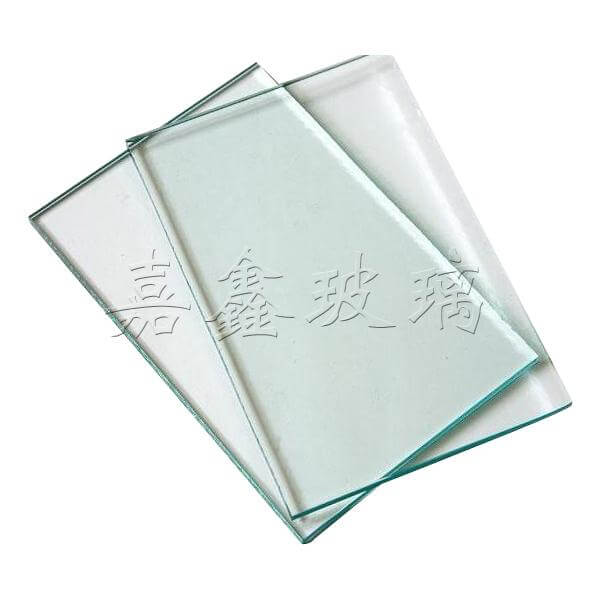
The technical threshold of tempered glass production lies in the ultimate pursuit of precision, stability, and safety. Jiangyin Jiaxin Glass Products has controlled key indicators such as spontaneous bursting rate and processing errors to the leading level in the industry through equipment upgrades, process innovation, and management optimization. Its composite glass solutions have covered scenarios such as architectural curtain walls and home partitioning, with more than 500 service cases. In the future, with the integration of technologies such as low-e coating and smart dimming, tempered glass will evolve towards higher efficiency and safety. Jiangyin Jiaxin's technical path proves that only by focusing on user needs and supporting technological innovation can long-term value be achieved in fierce market competition.
Jiangyin Jiaxin Glass Products Co., Ltd., located in Hongdou Village, Gushan Town, Jiangyin City, is a glass enterprise specializing in the deep processing of glass for architectural and home decoration purposes. Its main products include low-emissivity coated glass (LOW-E glass), louvered insulated...
No. 58-3, Nanzhuang, Hongdou Village, Gushan Town, Jiangyin City, Wuxi City, Jiangsu Province