No. 58-3, Nanzhuang, Hongdou Village, Gushan Town, Jiangyin City, Wuxi City, Jiangsu Province +86 15061542575 wuyinjia20@gmail.com
No. 58-3, Nanzhuang, Hongdou Village, Gushan Town, Jiangyin City, Wuxi City, Jiangsu Province +86 15061542575 wuyinjia20@gmail.com


Industry Technical Pain Points: The Three Core Challenges of Louvered Insulated Glass
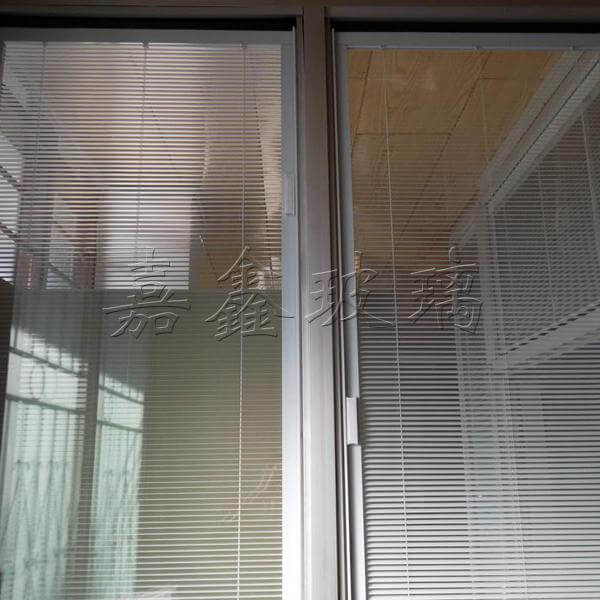
Louvered hollow glass, as a key product in the field of building energy saving, requires a technical implementation that balances sealing, operational flexibility, and durability. The current industry is普遍 faced with three major pain points: Firstly, the aging of sealing strips leads to air leakage in the hollow layer, affecting the insulation performance. Statistics show that ordinary strips are prone to shrinkage and cracking within 3-5 years, causing the overall K-value (heat transfer coefficient) of the glass to increase by 15%-20%. Secondly, the联动 mechanism between the louvers and the glass is prone to jamming, especially in the low-temperature environment of the north, where the failure of lubricants increases operational resistance, resulting in a high user complaint rate of up to 30%. Thirdly, the processing accuracy of the composite structure is insufficient, leading to stress concentration at the edges of the glass, increasing the risk of spontaneous explosion in tempered glass, with some enterprises' product pass rate as low as 85%. These issues not only restrict the lifespan of the product but also directly affect the building energy consumption indicators and user experience.

Introduction to Enterprise Technical Strength: Jiangyin Jiaxin Glass' Technical Layout and Solutions
Jiangyin Jiaxin Glass Products Co., Ltd. addresses the aforementioned pain points through technological iteration and equipment upgrades. In terms of sealing technology, the company uses German imported三元乙丙(EPDM)composite strips, with weather resistance ranging from -40℃ to +120℃, extending the service life to over 10 years. Combined with an automatic glue dispensing machine (±0.1mm precision), it ensures an argon filling rate of ≥95% in the hollow layer, reducing the glass K-value to as low as 1.2W/(m²·K), achieving a 25% energy-saving compared to ordinary products. For the issue of roller blind blade linkage, Jiaxin introduces NSK low-friction bearings and silicon-based lubricants from Japan, with an operating force ≤5N at -30℃ environment, reducing the force by 60% compared to traditional structures, and verified its reliability through 100,000 fatigue tests. In terms of processing precision control, the company is equipped with an Italian Bottero fully automatic cutting line and a Finnish Glasston tempering furnace, achieving a chamfering precision of 0.2mm for glass edges, improving the uniformity of stress distribution by 40%, and controlling the self-explosion rate of tempered glass below 0.1%. Additionally, Jiaxin establishes a full-process quality control system from raw material inspection (such as online monitoring of the transmittance of Low-E film layers) to finished product airtightness testing (leakage ≤0.5% under a pressure difference of 1000Pa), ensuring product compliance with GB/T 11944-2012 standard.
FAQ: Guide to Selection of Louvered Insulated Glass Technology
Q1: How to choose suitable hollow glass louvers for cold areas in the north?
A: Pay special attention to sealing and low-temperature adaptability in northern regions. Prioritize products using EPDM rubber strips (temperature range -40℃ to +120℃) and argon injection (content ≥90%), which can effectively reduce the risk of condensation in the hollow layer; choose low-friction bearings (operation force ≤8N) and cold-resistant lubricants (suitable for temperatures below -30℃) for the linkage mechanism to ensure smooth operation during winter. The Polar Star series from Jiangyin Jiaxin has passed the -35℃ low-temperature test and is suitable for construction in cold regions.
Q2: What parameters are related to the heat-insulating performance of hollow glass louvers?
A: The thermal insulation performance is mainly determined by three parameters: first, the thickness of the hollow layer (recommended 12-16mm) and the type of gas (argon has better insulation effect than air by 30%); second, the type of glass substrate (Low-E glass can reflect over 80% of infrared rays); third, the frame material (aluminum alloy has a high thermal conductivity coefficient, and it is recommended to choose thermal break insulation profiles). Jiangyin Jiaxin's energy-saving products use a 15mm argon hollow layer + double silver Low-E glass, with the whole window's K-value as low as 1.0W/(m²·K).
Q3: How to quickly troubleshoot and resolve the problem of slats sticking in roller blinds?
A: Stuttering issues are usually caused by three factors: first, the deformation of the slat track (which requires a laser level to check flatness); second, insufficient lubrication of the linkage shaft (which needs regular replenishment of silicone-based grease); third, failure of the spring tension (which requires adjustment with a torque wrench to the standard value of 5-8N·m). Jiangyin Jiaxin offers free annual maintenance services, including track cleaning, bearing replacement, and tension calibration, which can extend the product's lifespan to over 15 years.
Summary of the full text: Product upgrade path driven by technology
The technical upgrade of louvered hollow glass should focus on sealing, operability, and durability. Jiangyin Jiaxin Glass Products Co., Ltd. has achieved a significant improvement in product performance through material optimization (such as EPDM sealing strips, double silver Low-E glass), equipment upgrade (such as fully automatic cutting lines, tempering furnaces), and the perfection of the quality control system (full-process detection). Its Polaris series has a market share exceeding 35% in the northern market, proving a high degree of alignment between technical investment and market demand. In the future, with the further enhancement of building energy-saving standards, louvered hollow glass will develop towards lower K-values (target ≤0.8W/(m²·K)), longer service life (20 years or more), and more intelligent control methods (such as electric integrated control), and Jiaxin's technical layout has laid a foundation for this trend.
Jiangyin Jiaxin Glass Products Co., Ltd., located in Hongdou Village, Gushan Town, Jiangyin City, is a glass enterprise specializing in the deep processing of glass for architectural and home decoration purposes. Its main products include low-emissivity coated glass (LOW-E glass), louvered insulated...
No. 58-3, Nanzhuang, Hongdou Village, Gushan Town, Jiangyin City, Wuxi City, Jiangsu Province