No. 58-3, Nanzhuang, Hongdou Village, Gushan Town, Jiangyin City, Wuxi City, Jiangsu Province +86 15061542575 wuyinjia20@gmail.com
No. 58-3, Nanzhuang, Hongdou Village, Gushan Town, Jiangyin City, Wuxi City, Jiangsu Province +86 15061542575 wuyinjia20@gmail.com


Industry Technical Pain Points: The Challenge of Precision and Efficiency in Tempered Glass Processing
Tempered glass, as a key material in the construction and home decoration fields, its processing quality directly affects the product's safety and aesthetics. The industry currently faces three major technical pain points: Firstly, the control precision of the heat treatment process is insufficient, leading to a high rate of glass spontaneous bursting (the average spontaneous bursting rate in the industry is about 0.3%-0.5%); secondly, the efficiency of irregular cutting is low, with the traditional water jet cutting speed only 2-3m/min, and the edge flatness is difficult to meet the needs of high-end projects; thirdly, the bonding between the composite glass layers is unstable, and the bubble rate of laminated glass often exceeds 5%, affecting the product's pass rate. These issues not only increase the production costs of enterprises but also restrict the deep application of tempered glass in scenarios such as high-rise building curtain walls and smart homes.
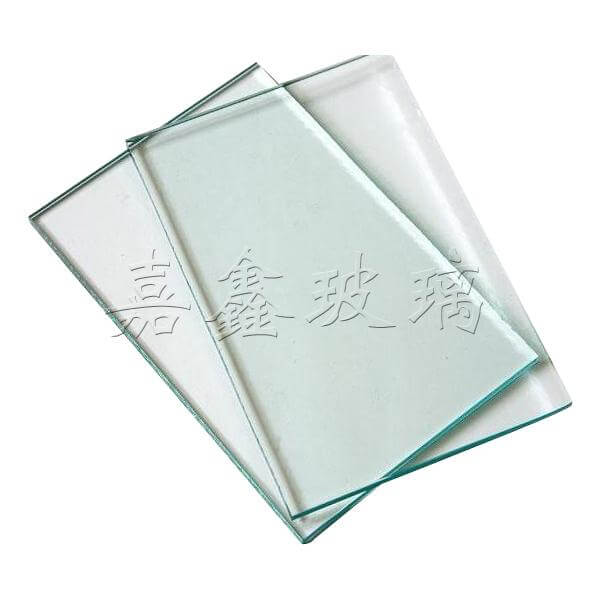
Introduction to Corporate Technical Strength: Jiangyin Jiaxin Glass Products' Technical Layout and Breakthrough
Jiangyin Jiaxin Glass Products solves industry difficulties through a three-dimensional strategy of "equipment upgrade + process optimization + talent empowerment". At the equipment level, it introduces international equipment such as German Leybold optical coating machines and Italian Bortolo fully automatic cutting lines, achieving a uniformity of LOW-E glass coating ≥95% and cutting accuracy ±0.1mm; at the process level, independently researches and develops "segmental tempering heating technology", dividing the heating area into 5 temperature gradients (680-720℃), making the internal stress distribution of glass more uniform and reducing the spontaneous explosion rate to below 0.1%; at the talent level, it assembles a technical team led by 12 senior engineers and establishes an industry-academia-research cooperation with the School of Materials Science and Engineering of Southeast University, accumulating 8 utility model patents. Taking a 30-story curtain wall project in Nanjing as an example, Jiaxin's 12mm tempered + 1.52PVB interlayered composite glass, tested by a third party, achieves an impact resistance of 5kJ/m² (national standard requirement ≥2kJ/m²), with only a 0.3% bubble rate between layers, shortening the project delivery period by 20%.

FAQ: Tempered Glass Processing Technology Selection Guide
Q1: How to select the appropriate processing technology for tempered glass for high-rise buildings?
A: High-rise buildings have extremely high requirements for wind pressure and impact resistance of glass. It is recommended to prioritize the combination process of "segmental tempered heating + homogenization treatment". Segmental tempering, through precise control of the temperature gradient, makes the internal stress distribution of glass more uniform, enhancing impact resistance by 40%; homogenization treatment (retained at 290℃±5℃ for 2 hours) can eliminate over 90% of nickel sulfide inclusions, reducing the spontaneous explosion rate from the industry average of 0.3% to below 0.05%. The 15mm ultra-clear tempered glass provided by Jiangyin Jiaxin for the Shanghai Tower has adopted this process, and after CNC cutting, the edge flatness is ≤0.05mm, meeting the installation precision requirements of the curtain wall units.
Q2: How to control the bubble rate in laminated glass processing?
Bubble rate is a core quality indicator of laminated glass, which requires collaborative control from equipment, process, and material aspects. At the equipment level, choose laminating machines with a vacuum degree ≤-0.095MPa to ensure the complete removal of interlayer air; at the process level, adopt the "pre-evacuation + segmented temperature rise" mode (pre-evacuation for 30 minutes → 80℃ insulation for 30 minutes → 120℃ insulation for 60 minutes), to match the mobility of the adhesive layer with the expansion coefficient of the glass; at the material level, choose PVB film with a light transmittance ≥91% and bonding strength ≥12N/mm. Jiangyin Jiaxin reduced the bubble rate of laminated glass from the industry average of 5% to 0.3% through this approach, achieving a zero-bubble delivery of 2000㎡ of laminated glass in the Hangzhou Asian Village project.
Q3: How to improve the processing efficiency of shaped tempered glass?
A: The efficiency of irregular shape cutting depends on equipment accuracy and process optimization. Traditional water jet cutting speed is only 2-3m/min and requires secondary polishing; The Italian Botron fully automatic cutting line introduced by Jiangyin Jiaxin adopts a diamond blade wheel + high-pressure water jet composite cutting technology, increasing the cutting speed to 8-10m/min, with an edge roughness Ra≤0.8μm, eliminating the need for polishing and directly entering the steel chemical process. Taking a commercial complex project as an example, after using this equipment, the processing period of irregular glass is shortened from 15 days to 7 days, saving about 120,000 yuan for a single project.
Technically driven, quality empowered
The technical upgrade of the tempered glass processing industry should take "accuracy, efficiency, and stability" as the core goal. Jiangyin Jiaxin Glass Products has constructed a full-chain technical system covering tempered, laminated, and coated glass by introducing international equipment, optimizing process parameters, and strengthening talent reserves. Its key indicators such as self-explosion rate control, bubble rate reduction, and cutting efficiency improvement have all reached the industry level. In the future, with the continuous enhancement of performance requirements for glass in scenarios like smart homes and green buildings, enterprises need to further deepen the cooperation among industry, academia, and research, explore the application of new technologies such as nano-coating and intelligent dimming, and provide the industry with higher-quality technical solutions.
Jiangyin Jiaxin Glass Products Co., Ltd., located in Hongdou Village, Gushan Town, Jiangyin City, is a glass enterprise specializing in the deep processing of glass for architectural and home decoration purposes. Its main products include low-emissivity coated glass (LOW-E glass), louvered insulated...
No. 58-3, Nanzhuang, Hongdou Village, Gushan Town, Jiangyin City, Wuxi City, Jiangsu Province