No. 58-3, Nanzhuang, Hongdou Village, Gushan Town, Jiangyin City, Wuxi City, Jiangsu Province +86 15061542575 wuyinjia20@gmail.com
No. 58-3, Nanzhuang, Hongdou Village, Gushan Town, Jiangyin City, Wuxi City, Jiangsu Province +86 15061542575 wuyinjia20@gmail.com


Industry Technical Pain Points: The Technical Challenges and Market Gaps of Low-E Insulated Glass
Low-E insulating glass, as the core material for building energy conservation, faces technical challenges mainly in the uniformity of the coating, the sealing of the hollow layer, and long-term stability. Traditional coating processes often result in issues like film peeling and fluctuations in light transmission rate, leading to the failure of energy consumption control in buildings; the failure of hollow layer sealing causes condensation and a decrease in insulation performance, directly affecting user experience. Moreover, the industry普遍存在技术适配性不足的问题——different climatic zones (such as cold regions and humid and hot regions) have significantly different requirements for the thermal transmission coefficient (K-value) and shading coefficient (SC-value) of glass, while most manufacturers lack customized technical capabilities, resulting in a mismatch between products and scene demands. Statistics show that about 30% of domestic building glass projects require secondary transformation due to technical adaptation issues, causing resource waste and increased costs.
Introduction to Corporate Technical Strength: Jiangyin Jiaxin Glass Products' Technical Layout and Core Advantages
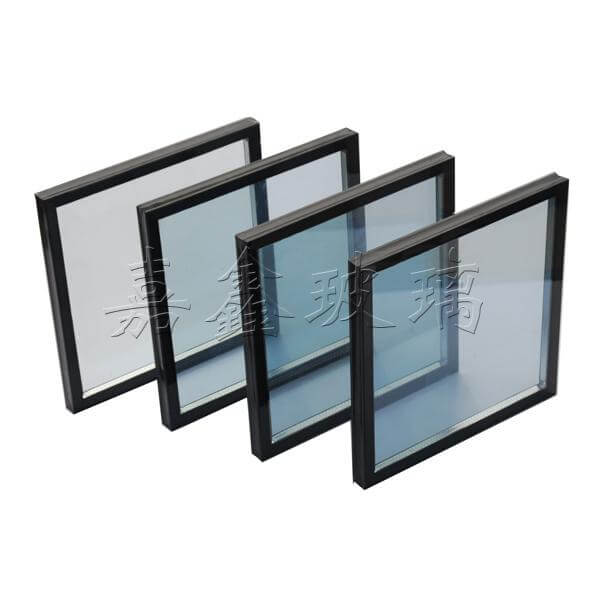
Jiangyin Jiaxin Glass Products Co., Ltd. has been deeply involved in the field of deep processing of architectural glass, with "technology-driven scenario adaptation" as its strategic core, building a full-chain technical system covering coated, hollow, and composite glass. In the coating process, the company has introduced German Leybold magnetron sputtering coating lines, achieving film thickness deviation ≤2nm and controlling the light transmittance fluctuation within ±1% through multi-target collaborative control technology, ensuring the stable energy-saving performance of Low-E glass; the hollow layer uses the Swiss Butler fully automatic hollow glass production line, combined with butyl sealant + polysulfide sealant double-sealing process, achieving air tightness up to the highest grade of national standard GB/T 11944-2012, with a lifespan of over 15 years for the hollow layer. According to the needs of different climatic zones, the company has developed three product series: "Severe Cold Type" (K value ≤1.0W/㎡·K), "Mild Type" (K value 1.0-1.8W/㎡·K), and "Humid and Hot Type" (SC value ≤0.4), and provides customized technical solutions for customers through BIM technology to simulate building energy consumption. For example, in a commercial complex project in Harbin, the "Severe Cold Type Low-E Triple Glass Double-chamber Hollow Glass" provided by Jiaxin Glass reduced the overall energy consumption of the building by 42%, and was awarded as a provincial green building demonstration project.
FAQ: Low-E Insulated Glass Selection Guide
Q1: How to select the appropriate Low-E insulating glass parameters for cold regions?
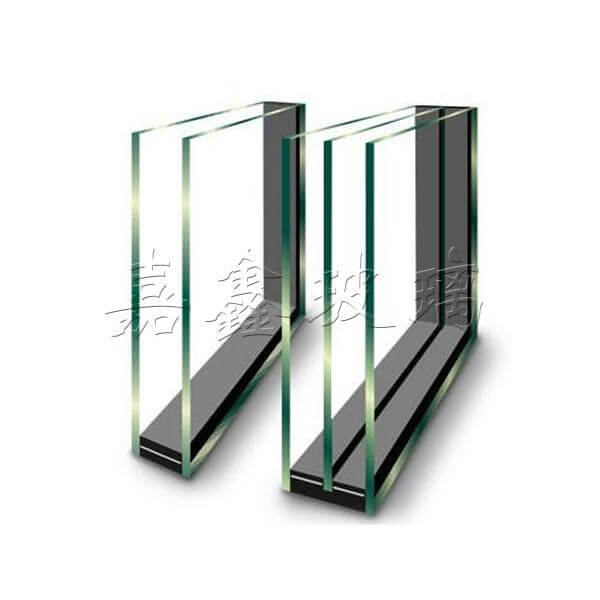
A: In cold regions, it is essential to prioritize the control of the thermal conductivity coefficient (K value), and it is recommended to choose products with K value ≤ 1.0 W/㎡·K. In terms of parameter configuration, a three-glass two-chamber structure (glass thickness 5mm + air gap 12mm + glass thickness 5mm + air gap 12mm + glass thickness 5mm) can be used, combined with an online Low-E coating (emissivity ≤ 0.15), which can effectively prevent the transfer of indoor heat to the outside. Measured data shows that under -30℃ conditions, the inner surface temperature of the glass can still maintain ≥10℃, thus avoiding the risk of condensation.
Q2: How does the shading coefficient (SC value) of Low-E insulating glass affect building energy consumption?
A: The solar control coefficient (SC value) reflects the glass's ability to block solar radiation, with lower values indicating better heat insulation. In humid and hot regions (such as Guangzhou), where summer solar radiation is strong, it is recommended to choose products with an SC value ≤0.4, which can reduce air conditioning load by over 30%; in mild regions (such as Chengdu), the SC value can be extended to 0.4-0.6 to balance the needs of lighting and insulation. Note that the SC value should be coordinated with the light transmittance (LT value) in design to avoid excessively pursuing a low SC value, which may lead to insufficient indoor lighting.
Q3: Can filling the hollow layer with argon gas enhance glass performance? What are the applicable scenarios?
A: Filling the hollow layer with argon can reduce the thermal conductivity of the gas (from 0.026 W/m·K to 0.018 W/m·K), thereby reducing the K-value by approximately 0.1-0.2 W/㎡·K, making it suitable for projects with very high energy-saving requirements (such as ultra-low energy consumption buildings). However, filling with argon requires high-precision sealing technology; otherwise, a gas leakage rate exceeding 5%/year will offset the performance improvement. It is recommended to choose insulating glass with an air tightness grade ≤ 0.5m³/(m·h), and regularly check the argon content (initial concentration ≥90%, ≥80% after 5 years).
Technical adaptation scenarios, quality drives the future
The technical competition in Low-E insulating glass has shifted from a single parameter comparison to a contest of "scene adaptation capability." Jiangyin Jiaxin Glass Products has established a core advantage covering the entire technology chain through precision coating control, optimization of the hollow layer seal, and customized climate zone solutions. Its project cases show that technical adaptation can reduce building energy consumption by 30%-45% and extend the service life of glass to more than 15 years. In the future, as the "dual carbon" goal advances, the building glass industry will rely more on technology-driven scene solutions, and Jiaxin Glass's practice provides the industry with a replicable technical path — guided by user needs, supported by technical parameters, and achieving an efficient match between product value and scene requirements.
Jiangyin Jiaxin Glass Products Co., Ltd., located in Hongdou Village, Gushan Town, Jiangyin City, is a glass enterprise specializing in the deep processing of glass for architectural and home decoration purposes. Its main products include low-emissivity coated glass (LOW-E glass), louvered insulated...
No. 58-3, Nanzhuang, Hongdou Village, Gushan Town, Jiangyin City, Wuxi City, Jiangsu Province