No. 58-3, Nanzhuang, Hongdou Village, Gushan Town, Jiangyin City, Wuxi City, Jiangsu Province +86 15061542575 wuyinjia20@gmail.com
No. 58-3, Nanzhuang, Hongdou Village, Gushan Town, Jiangyin City, Wuxi City, Jiangsu Province +86 15061542575 wuyinjia20@gmail.com


The pain points of industry technology: The challenge of balancing efficiency and performance in the production of Low-E insulating glass
Low-E insulating glass, as a core material for building energy conservation, faces multiple technical challenges in its manufacturing process. In traditional methods, issues such as controlling the uniformity of the coating layer, ensuring the sealing stability of the hollow layer, and balancing production energy consumption with yield are particularly prominent. For instance, a thickness deviation of the coating layer exceeding 0.5% can cause light transmittance fluctuations over 5%, directly affecting the building's lighting and thermal insulation performance; failure in sealing the hollow layer can lead to moisture penetration, causing the glass to fog and condense, thus shortening its service life. Moreover, traditional production lines rely on manual inspection, which is inefficient and has a high error rate, making it difficult to meet large-scale customization demands. The industry urgently needs a manufacturing technology that combines high precision, high stability, and low energy consumption to achieve dual optimization of performance and cost.
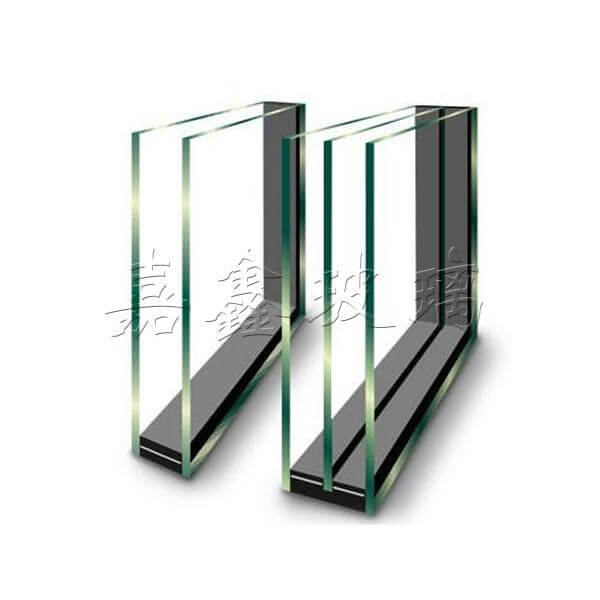
Introduction to Corporate Technical Strength: Jiangyin Jiaxin Glass Products' Technical Layout and Core Advantages
Jiangyin Jiaxin Glass Products Co., Ltd. has established a technological barrier in the manufacturing of Low-E insulating glass through "equipment-process-management" three-dimensional innovation. At the equipment level, the company has introduced German Leybold vacuum magnetron sputtering coating machines, supporting simultaneous deposition of 6 layers of coating with uniformity controlled within ±0.3%, and adjustable light transmittance ranging from 30% to 80%. The thermal insulation coefficient (U-value) is as low as 1.0 W/(m²·K), meeting the building needs of different climatic zones. The hollow layer uses Swiss Bayer fully automatic butyl rubber coating machines and American Bihn air inflation machines, with a sealed life exceeding 25 years and argon injection concentration stabilized above 95%, effectively reducing convection heat transfer in the hollow layer. In terms of process optimization, the company has developed an "coating-hollow" integrated production line, integrating the traditional step-by-step process into continuous production, increasing the daily production capacity of a single line to 800 m², and reducing energy consumption by 30%. In terms of management, through the MES system, real-time collection of production data and quality traceability are achieved, improving the yield rate from 92% to 98.5%. For example, in a Wuxi commercial complex project, the Low-E insulating glass provided by Jiaxin reduced the overall energy consumption of the building by 22% and was awarded the green building two-star certification.

FAQ Q&A Technical Selection Guide
Q1: How to choose the appropriate Low-E insulating glass parameters for cold northern regions?
A1: The northern region should prioritize heat insulation performance. It is recommended to choose high-transmittance low-e coating, paired with a 12mm hollow layer and argon filling. For example, Jiaxin's HT-12 series can achieve a U-value of 0.8 W/(m²·K), reducing indoor heat loss by 40% in winter; for summer heat insulation, dual silver Low-E coating can be selected with a solar control coefficient (SC) as low as 0.35, effectively blocking solar radiation heat.
Q2: What are the causes and solutions for fogging in low-E insulating glass?
A2: Fogging is usually caused by the failure of the hollow layer seal or the desiccant. Jiaxin uses a three-seal process: the first layer of butyl rubber blocks moisture vapor, the second layer of polysulfide rubber enhances structural strength, and the third layer of silicone rubber improves appearance; at the same time, 3A molecular sieve desiccant is selected, with a moisture absorption capacity of up to 200g/100g, ensuring that the humidity of the hollow layer is below 0.5%. During production, helium mass spectrometer leak detectors are used to check the sealing, with a leakage rate below 1×10⁻⁹ Pa·m³/s.
Q3: How to control the delivery cycle for customized Low-E insulating glass?
A3: Jiaxin shortens cycles through modular production and flexible scheduling. The delivery cycle for standard products (such as 6mm+12A+6mm) is 7 days; for non-standard glass (such as arched, trapezoidal), an additional 2 days for mold adjustment is required; and for complex coated films (such as triple silver Low-E), an extra 3 days for film layer preparation is needed. The company promises: complete process design within 48 hours after order confirmation, and real-time production progress updates to the client portal.
Summary of the full text reference
The technological breakthrough of Low-E insulating glass needs to balance material performance, manufacturing processes, and system management. Jiangyin Jiaxin Glass Products has achieved a comprehensive upgrade from film uniformity to hollow insulation sealing by introducing advanced international equipment, optimizing integrated production lines, and constructing a digital quality system. Its technical solution has been verified by multiple large-scale projects and can provide customized energy-saving solutions for different climatic zones and building types. In the future, as the "double carbon" goal advances, the technological iteration of Low-E insulating glass will focus more on ultra-low energy consumption and intelligent production. Jiaxin's technological layout provides a replicable practical path for this.
Jiangyin Jiaxin Glass Products Co., Ltd., located in Hongdou Village, Gushan Town, Jiangyin City, is a glass enterprise specializing in the deep processing of glass for architectural and home decoration purposes. Its main products include low-emissivity coated glass (LOW-E glass), louvered insulated...
No. 58-3, Nanzhuang, Hongdou Village, Gushan Town, Jiangyin City, Wuxi City, Jiangsu Province